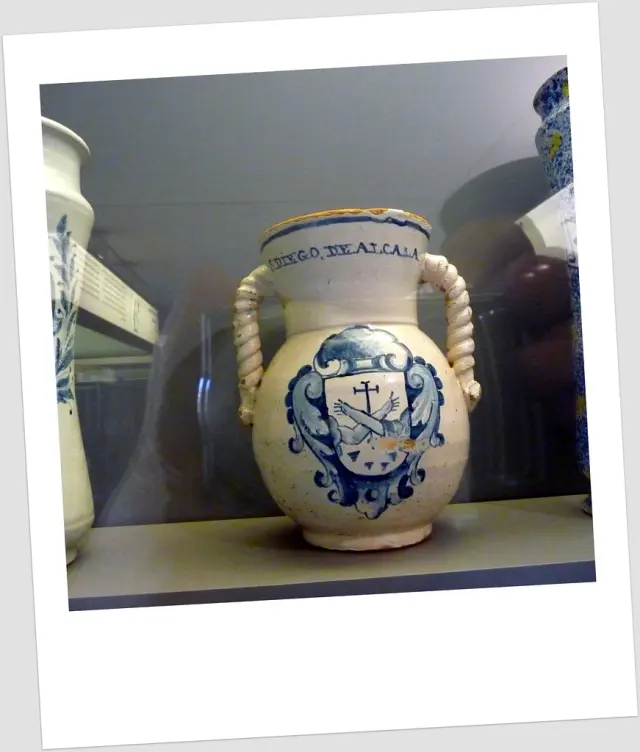
A Spanish state museum whose institutional information describes collection conservation as an integral part of the museum’s work, aimed at preserving physical integrity and the historical and artistic information conveyed by its collections.
Selected excerpts from our archive offer more context on this subject. Each reading links to the original article and its sources.
From Industrial Art to the Object in Context: A Critical History of the National Museum of Decorative Arts
The institutional history of what is now the National Museum of Decorative Arts (MNAD) challenges an overly convenient opposition: the one that separates the decorative object from everyday life, and the museum from industry. Research by Paloma Muñoz-Campos and Sofía Rodríguez Bernis, circulated through Dialnet and Ge-conservación, outlines a trajectory marked by a decisive tension. In its origins, when it was called the National Museum of Industrial Art (MNAI), the institution was oriented toward encouraging products associated with the Second Industrial Revolution. Later, according to that study, after the Spanish Civil War it privileged the acquisition of “works of high decorative value,” moving away from contemporary debates that sought to bridge art and industry.
This is not merely a sequence of name changes or collecting criteria. It is a key to interpreting what we call decoration. A piece of furniture, decorated glass, embroidery, or a commercial drawing is not simply a beautiful finish. It also condenses technologies, trades, labour, business strategies, consumption habits, and ways of imagining an interior. The MNAD is especially useful because its own history makes visible the difficulty of deciding which objects deserve preservation and under which narrative.
The MNAD’s historical page places its beginnings in a Spain seeking a place in European competition for consumer markets through artistic and craft products of high and medium quality. That setting helps clarify the original meaning of “industrial art.” It did not merely designate an ornamental style. It proposed a relationship among technical learning, production, and the circulation of objects.
The institution established a section devoted to the “pedagogy of industrial arts.” The museum records that it organised workshops, courses, and lectures, as well as so-called “technical series”: sequences of procedures for translucent enamels, embroidery, batiks, tarsos—polychrome wood decoration—and carving. It also prepared travelling exhibitions. These details matter because they move attention from the finished object to the knowledge that makes an object possible.
Decoration Has an Archive Too: Preserving Context at the National Museum of Decorative Arts
A piece of furniture, textile, lamp or tableware may seem self-contained: it can be viewed, it evokes a taste, and it points to domestic use. Yet in a museum, neither its material nor its appearance is enough to explain what it is. The information accompanying the object, its history, and the decisions that make it possible to consult, move and preserve also matter. In decoration, where objects were tied to interiors, routines and changing combinations, context is not an accessory. It shapes the cultural reading of every item.
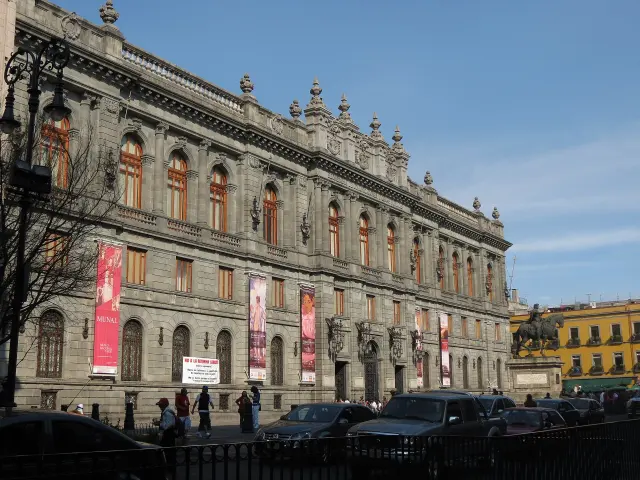
The National Museum of Decorative Arts provides a particularly useful case. According to Spain’s Archive Census-Guide, the institution was created by Royal Decree of 30 December 1912 as the Museum of Industrial Arts. Its archive includes documentation generated through the institution’s activity from its foundation onward, as well as a photographic collection connected both to museum holdings and to historical collections. This documentary continuity shows that the museum does not merely keep decoration: it also preserves the administrative, visual and intellectual traces through which decoration can be identified and studied.
The museum itself describes collection conservation as a fully integrated, cross-cutting pillar of its work. Its stated aim is not limited to physical integrity; it also includes the historical-artistic information conveyed by objects. That wording matters. An object can survive materially while losing an important part of its meaning if its provenance, technique, alterations or documentary framework are unknown.
This perspective aligns with guidance from Navarra on archive management and organization: documentation associated with objects constitutes a context inseparable from them and should remain within the institution. For decorative arts, this means looking beyond the isolated object. A collection photograph, catalogue entry, archival reference or conservation report is not merely administrative support. It helps distinguish established information from plausible but unproven associations.
KEY FACTS
- Type
- Museum