An image is not a room
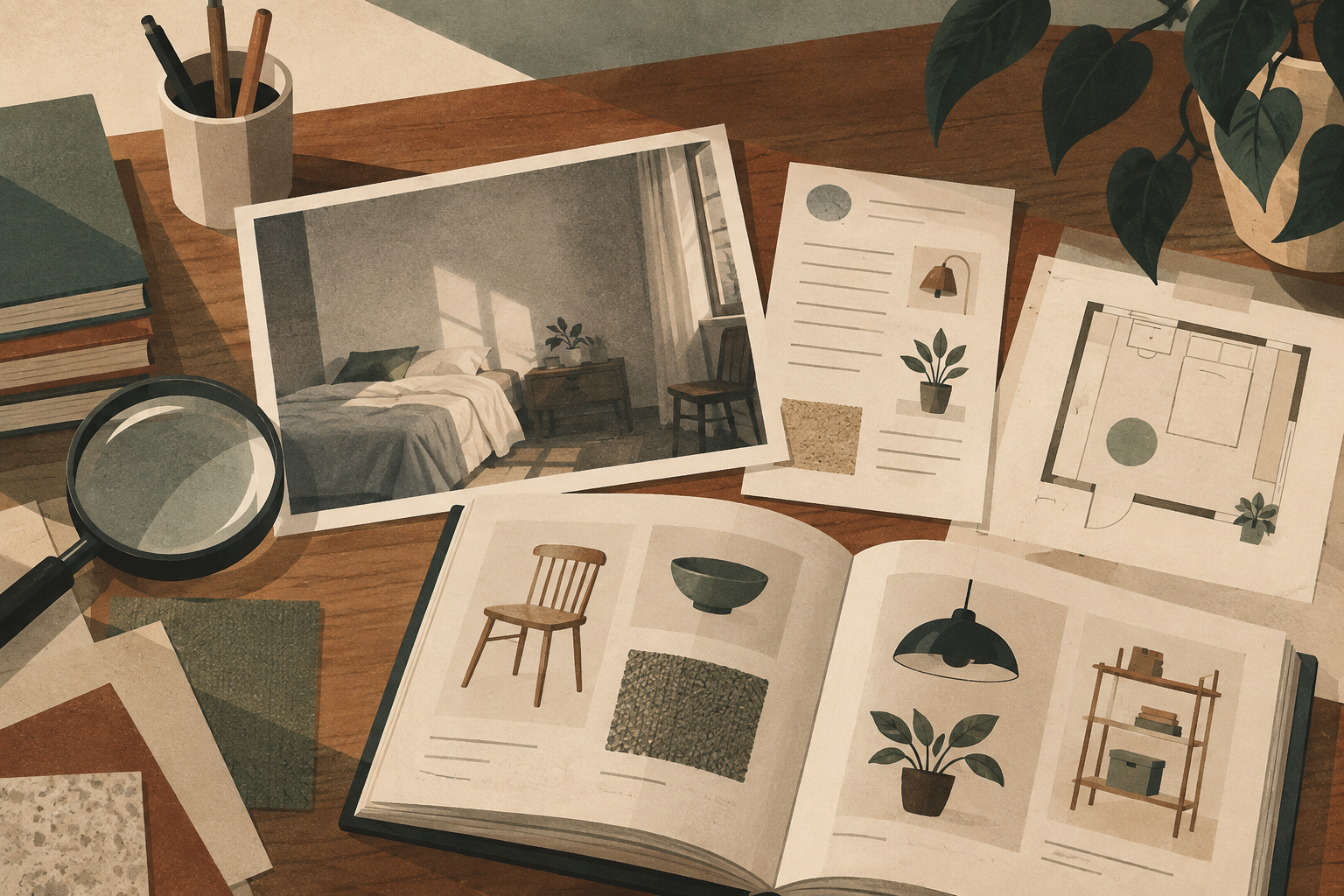
A photograph may show the visible arrangement of an interior, but it is not the whole interior. The frame leaves things out, and a still image does not, by itself, record how a space was used. This distinction is a starting point for researching home decoration without filling gaps with memories or familiar visual conventions.
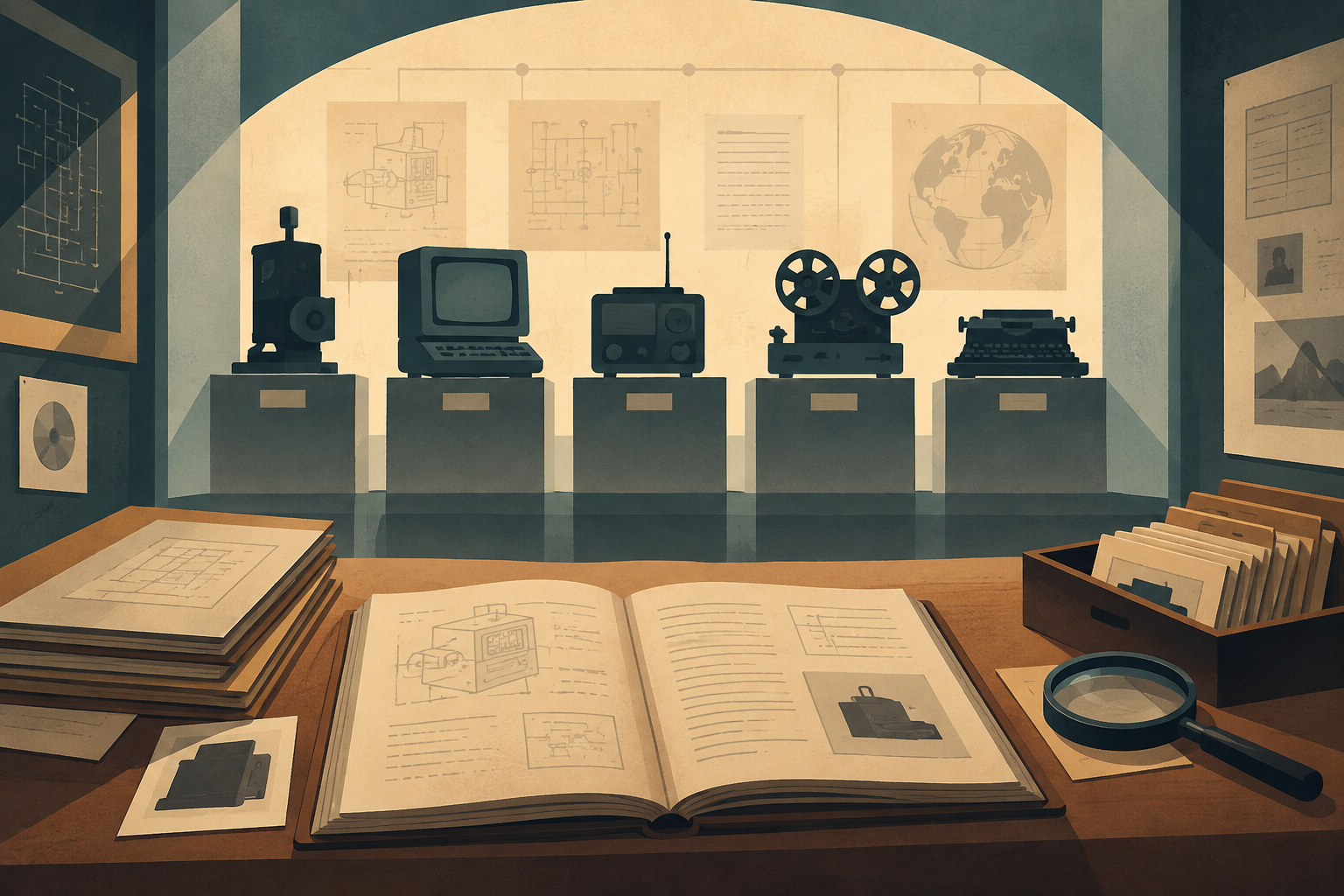
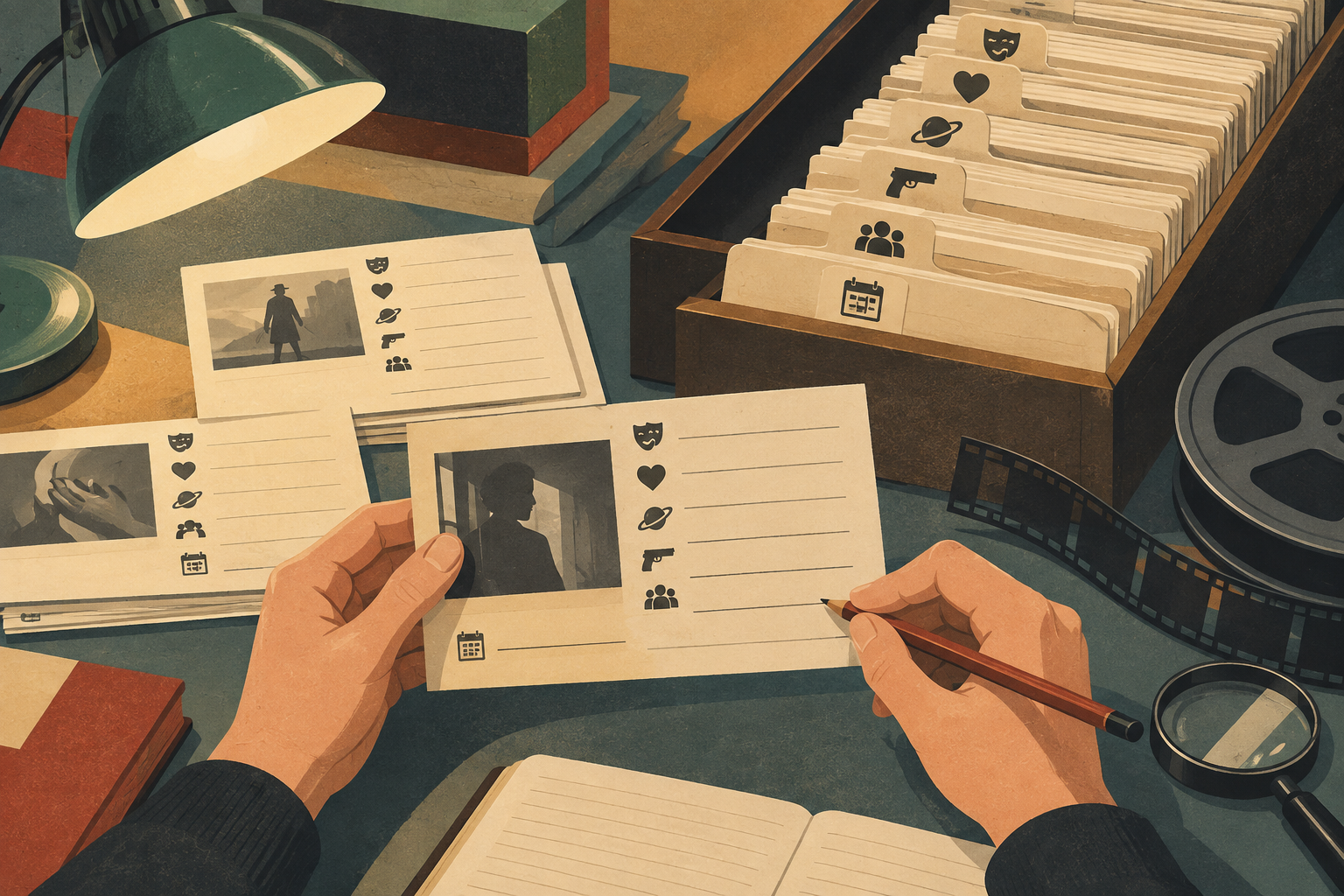
The practical question is not only “what furniture appears?” It is also what kind of document we have, what information it preserves and what it cannot prove. The museum-documentation text on Scribd describes administrative, descriptive, historical and graphic records. Although intended for museum collections, that distinction suggests useful layers: an image may show a form; a record may identify or describe an object; another entry may retain information about its documentation. None automatically replaces the others.
Identify the source before interpreting it
Before treating a photograph as evidence of a home, note what actually accompanies the image: title, credited author if given, documented date if available, medium, provenance and any description. If the source does not provide those details, leave them unknown. A date inferred from the style of a lamp or wallpaper is not equivalent to a date recorded in a source.
Collection documentation is also the subject of the University of Buenos Aires teaching material on collections management. Its available summary describes documentation as necessary for preserving and managing collections and producing information about object histories. Applied cautiously to interior research, this encourages a distinction between an identified object and the space a photograph allows us to observe. Recognizing an item does not prove who bought it, who used it or how long it remained in the room.
Catalogues: description and limits
A catalogue can help search, organize and compare records, provided its descriptions are sufficiently precise. But the presence of an object in a catalogue does not, on its own, prove that it stood in a particular room. Establishing that connection requires evidence: for example, an unambiguous identification in the image or a record explicitly linking object and space.
The guide to good conservation practice in museums, archives and libraries, and EVE Museography’s introduction to museum archive management, place the organization and preservation of documentary materials within institutional practices. They are not direct evidence of how a particular home was decorated. Their methodological value is different: they remind us that documents need care, description and context to be consulted and interpreted. A rigorous search records where each item comes from and does not present a decontextualized copy as though its history were known.
From object to use: keeping inference in check
The appearance of a room and its everyday use are connected but distinct questions. A photograph may suggest which areas were visible from the photographer’s viewpoint. Without further evidence, it cannot establish routines, family hierarchies or the personal meaning of every object. Nor should a room arranged for a photograph automatically be treated as an unposed everyday scene.
The difference between observation and interpretation can be made explicit in research notes. “The image shows a table beside a window” describes what is visible. “The table was used for a particular activity” requires additional evidence. “The family preferred this style” is a broader interpretation and should not be presented as fact without documentation to support it. This approach does not eliminate interpretation; it makes clear where interpretation begins and what evidence it would need.
Compare sources without forcing agreement
The conservation page of Spain’s National Museum of Decorative Arts explains that preserving collections includes both their physical integrity and the historical and artistic information they convey. This institutional example shows why an object and its associated information are not separate concerns in museum work. It does not, by itself, demonstrate how to reconstruct a domestic room; it does reinforce the importance of preserving and consulting information connected to objects.
Disagreements between sources matter too. A record might describe an object without placing it in a room; a photograph might show an item that cannot be identified; a catalogue might offer contextual information but nothing about use. Rather than making every source appear to confirm the same story, state what each contributes and which connection remains unverified.
A reconstruction with visible boundaries
The Spanish Association of Paper, Pulp and Board Manufacturers’ text on historical museum archives concerns institutional archives, not household archives. That difference in scale must be preserved. Documentary-management tools can guide questions about description and access, but they do not justify attributing documents to a home when none have been located.
A responsible account of domestic decoration can show a photograph, describe what is visible, cite the record identifying an object and acknowledge what remains unknown. If there is not enough evidence to establish who used a room, when its arrangement changed or what its objects meant to its occupants, the account should stop there. Uncertainty is not a flaw to conceal: it marks the limits of what the sources allow us to say.
Conclusion
Reconstructing an interior begins by distinguishing image, record and catalogue, and by asking exactly what each one claims. The museum documentation and conservation materials included here can guide that work, but they do not provide a documented domestic case. They therefore support a method of reading, not a description of a particular historical home. Photographs and catalogues help us understand a space when their provenance, limits and unverified inferences remain visible.
- Decade
- Contemporary
- Region
- Global
- Level
- Enthusiast
- Entities
- Museum, Museo Nacional de Artes Decorativas
Sources and references
- Estructura Documental en Museos | PDF | Museo | Catalogaciónes.scribd.com · 2026-10-03
- Manejo de colecciones: conservación y documentación de ...posgrado.filo.uba.ar · 2026-10-03
- Guía de Buenas Prácticas de Conservación en Museos, Archivos ...evemuseografia.com · 2026-10-03
- Introducción a la Gestión de Archivos en Museosevemuseografia.com · 2026-10-03
- Conservación - Museo Nacional de Artes Decorativas ...www.cultura.gob.es · 2026-10-03
- Cómo se organizan los archivos históricos en los museosaefp.org.es · 2026-10-03