The room as a question
Reconstructing an interior does not mean finding an image and treating it as a transparent window onto the past. A photograph records a scene from one viewpoint; a catalogue arranges objects for presentation; an institutional archive preserves materials gathered for its own purposes. Each source illuminates something different and leaves other things out. Reading them together can help us ask better questions, but it does not automatically turn a hypothesis into a fact.
The evidence available here illustrates this range of materials. The National Museum of Decorative Arts is associated with collections and an institutional history useful for studying decoration as production, while a reference to its library and archive describes books, periodicals and pamphlets. These are clues about research resources, not an exhaustive account of every collection or of what it contains about any particular room.
What a photograph preserves
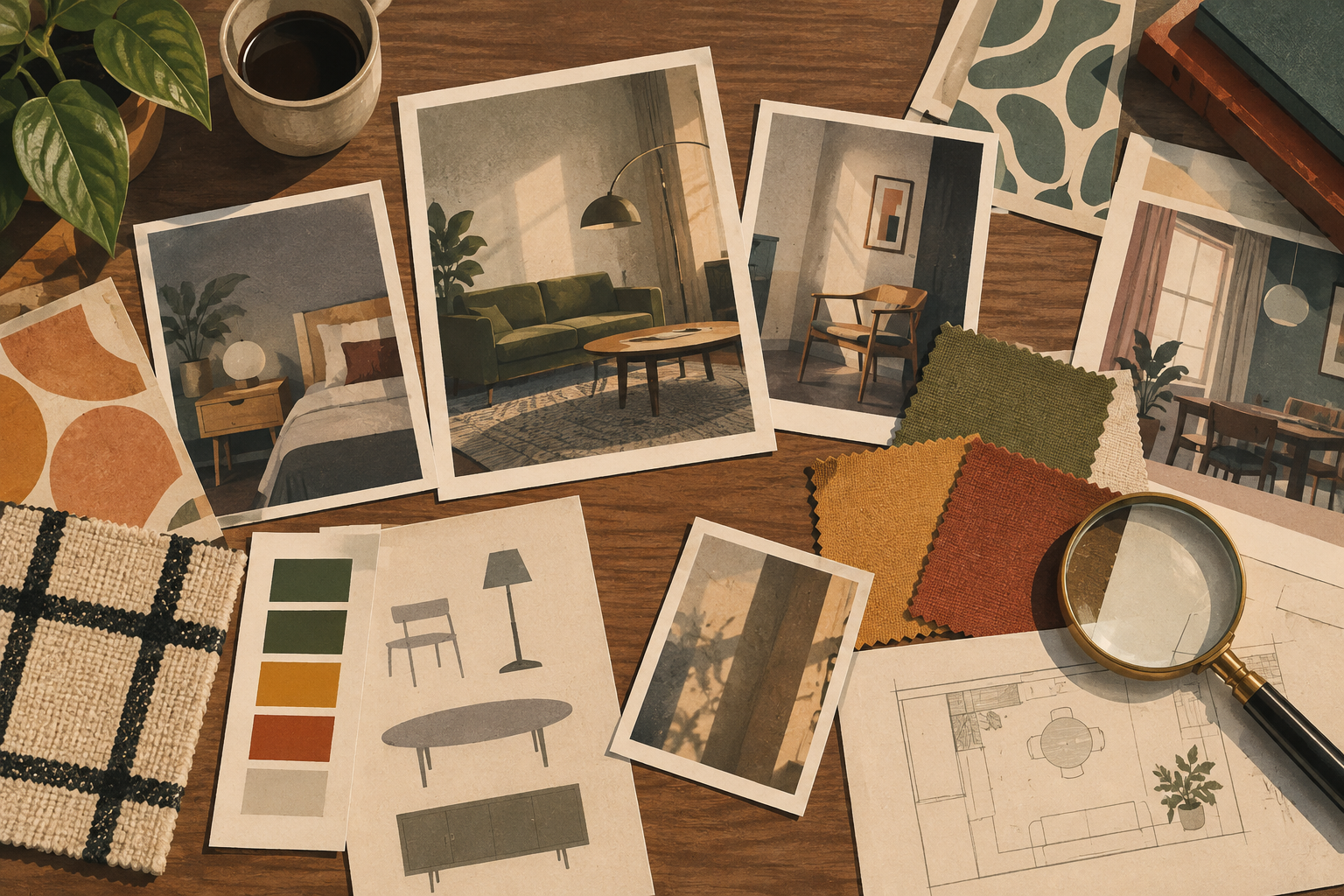
A photograph can show the arrangement of visible elements and the spatial relationships within its frame. Its usefulness depends on what the image actually shows: visible furniture, fabric or a lamp can be described; a room’s function, its occupants’ identities or the exact date of the scene require other evidence if the source itself does not document them.
What falls outside the frame matters too. The image alone cannot tell us how often an object was used, whether it normally stayed in that place or who chose it. This caution does not diminish the photograph’s value; it defines which questions it can help answer and which need corroboration.
Catalogues arrange and select
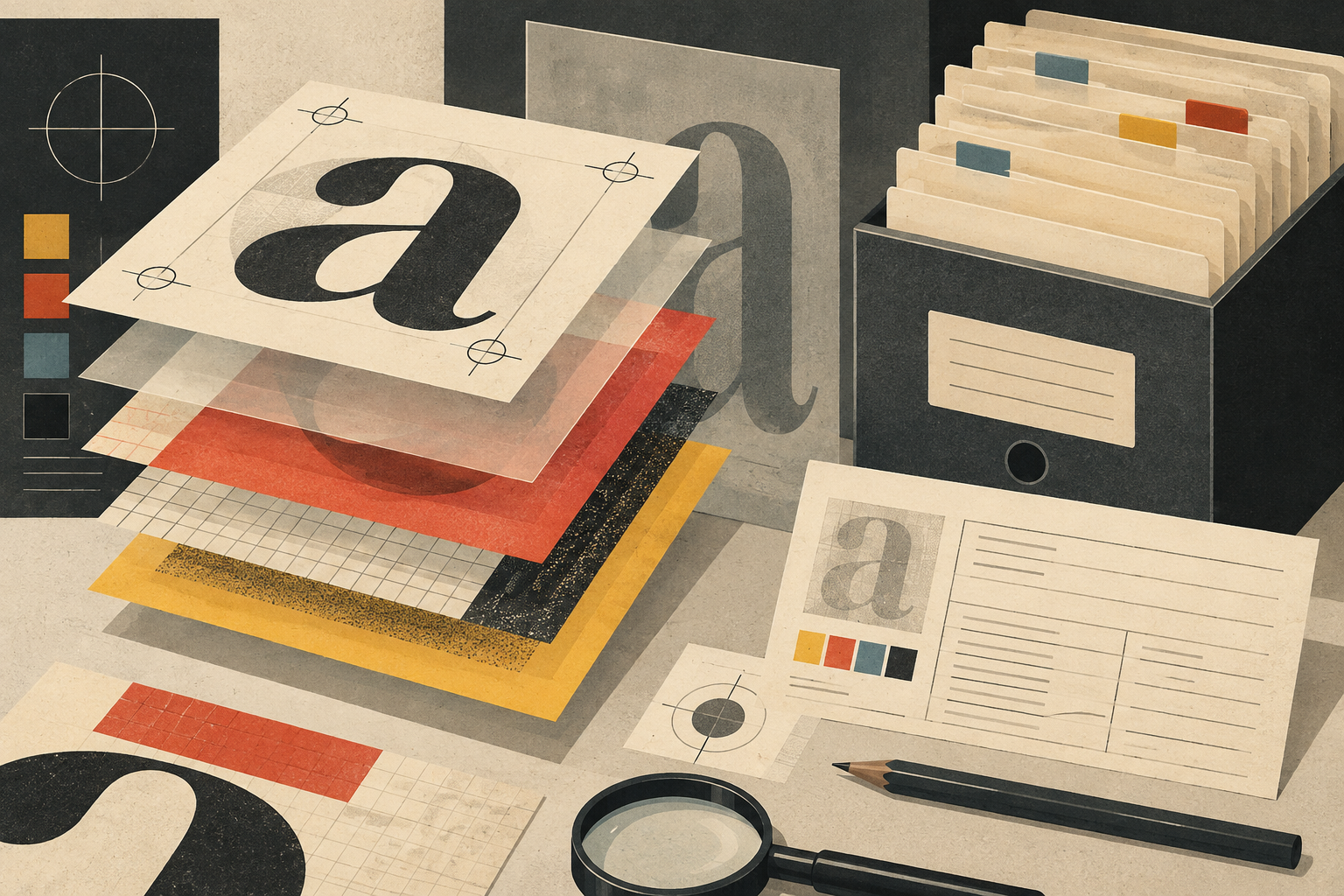
A catalogue can provide a vocabulary for classifying objects and show which products or pieces were presented together. But its structure serves an editorial or commercial purpose that does not necessarily reproduce the arrangement of a home. An illustrated grouping may suggest a possible combination; it cannot prove that anyone adopted it in their own dwelling.
It is therefore useful to distinguish three levels: what the document shows, how it arranges that material, and what interpretation the researcher proposes. The supplied references discuss catalogues and archives as ways to understand interiors, but they do not provide a specific domestic catalogue. We cannot infer particular styles, colours or habits from them; we can explain why such documents may matter and why they must be read in context.
Archives provide context, not omniscience
Information about the National Museum of Decorative Arts’ archive and the museum’s bulletin points to resources that may connect objects, design and institutional history. A researcher could consult these materials for descriptions, images or provenance information. Without access to the detailed contents of each document, however, it would be inappropriate to attribute specific information about a room to them.
The academic reference from UNED studies correspondences and parallels in the context in which the museum was founded. Its subject is the institution, not a documented reconstruction of a particular home. This distinction guards against a misleading association: the fact that an institution preserves or studies decorative objects does not mean that every source it holds describes domestic uses.
Textiles, furniture and the limits of comparison
The reference to textile museums and archives offers another way to think about the materials in an interior. A textile archive may be relevant to research on fabrics, but the available reference presents these collections as inspiration for designers; it does not, by itself, document a particular textile in a historical home. Similarly, a bulletin on furniture-design history may guide further research without replacing evidence about how a piece was used in a household.
Bringing sources together means comparing their scope, not just their subject matter. An image may place an object in a setting; a catalogue may help identify a category; an archival record may clarify how an item is preserved or described. When sources disagree, that difference is part of the finding, not an obstacle to be erased.
An honest reconstruction
The strongest method begins by recording what each document claims and what it cannot establish. Researchers can then look for agreement across independent sources—for instance, an identification visible in an image that can be checked against an archival description. If there is no corroboration, it is better to preserve uncertainty than to complete the scene using memory or visual convention.
The available references support a modest but useful conclusion: photographs, catalogues and institutional archives can be complementary tools for researching interiors, and their differences matter. In this case, they are not enough to reconstruct a specific room or attribute particular practices to its occupants. That boundary between clue and interpretation does not impoverish domestic history; it makes the account clearer and opens the way to the next research question.
- Decade
- Contemporary
- Region
- Spain
- Level
- Enthusiast
- Entities
- Museum, Museo Nacional de Artes Decorativas
Sources and references
- Los Museos de Empresasevemuseografia.com · 2026-10-05
- Bienvenidos a palacio 2018. Conferencias "El coleccionismo" y ...www.youtube.com · 2026-10-05
- Cuando la decoración también fue industria - RetroPausewww.retropause.com · 2026-10-05
- boletín del museo nacional de artes decorativaswww.cultura.gob.es · 2026-10-05
- Museos y archivos textiles en el mundo para inspiración de ...pinkermoda.com · 2026-10-05
- La biblioteca y el archivo del Museo Nacional de Artes ...artstatementmagazine.com · 2026-10-05
- TEXTO Y CONTEXTO. EL MUSEO NACIONAL DE ARTES ...revistas.uned.es · 2026-10-05