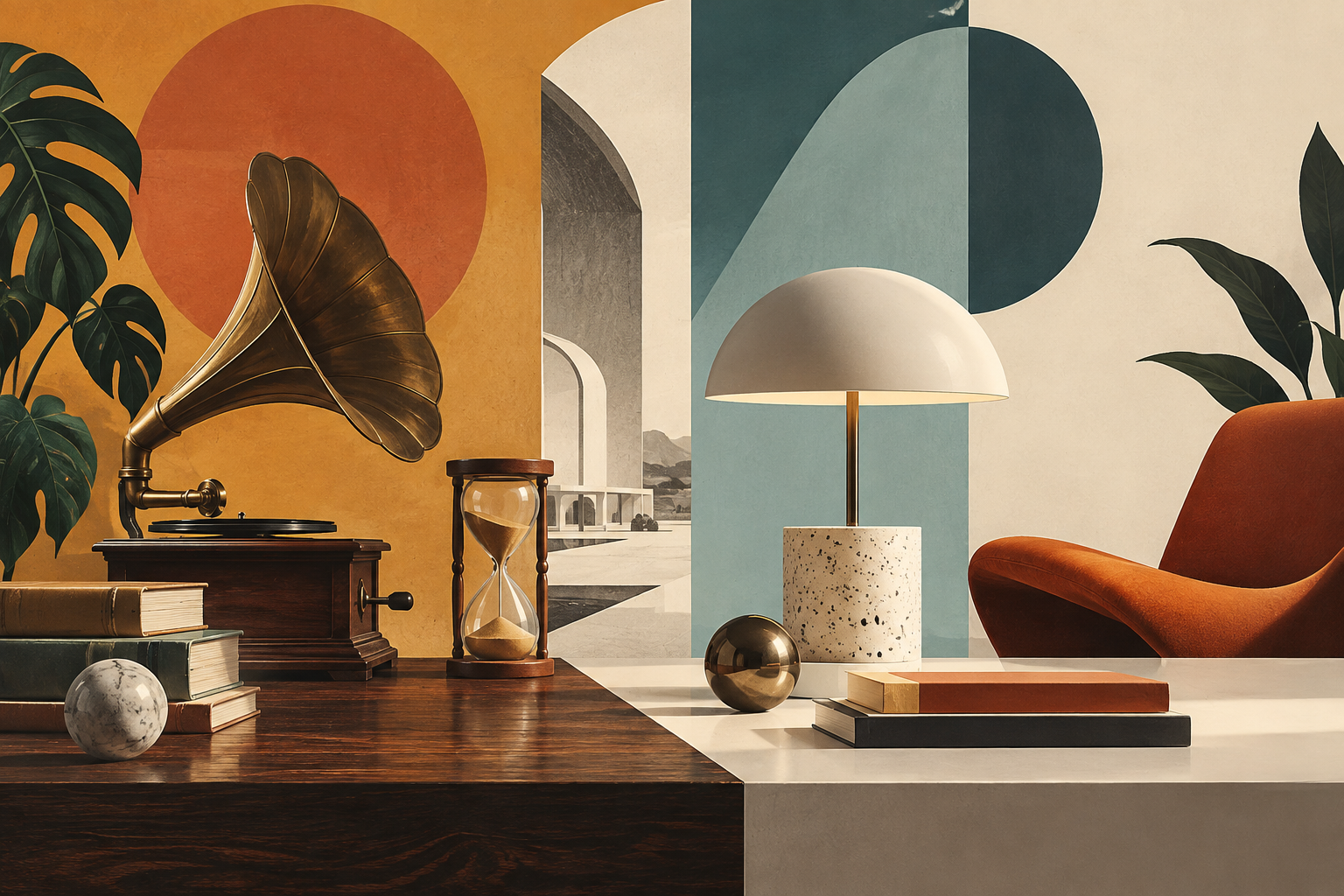
The Museo Nacional de Artes Decorativas makes it possible to ask a useful question when looking at an old room or a piece of furniture: what does decoration tell us beyond aesthetic preference? The material available points to one possible answer. Decoration can also be studied through production, design and material culture. This is not a complete history of the collections or the institution: the supplied evidence identifies no specific objects and provides too few dates to reconstruct one. It does, however, allow us to consider how our reading changes when an interior is treated as more than ornamental background.
From private taste to material culture
A decorative object can be considered for its form and appearance, but that approach does not exhaust what can be investigated. The academic article by Paloma Muñoz-Campos and Sofía Rodríguez Bernis connects industry, decoration and design with the history of the Museo Nacional de Artes Decorativas. As presented in the supplied information, its approach places decoration in relation to processes broader than individual taste.
This perspective does not, by itself, prove how each object was made or used. Instead, it invites verifiable questions: what materials does the catalogue record, what information survives about production and design, and what remains undocumented? Caution matters: an exhibited object may suggest a story, but suggestion is not a substitute for documentation.
The museum as a framework for interpretation
Institutional history is also part of the account. A study published in the UNED journal examines correspondences and parallels in the context in which the museum was created. The available abstract confirms that focus, but does not provide its detailed arguments or conclusions here. It would therefore be inappropriate to attribute a specific interpretation to it.
Another source, a museum bulletin published by Spain’s Ministry of Culture, mentions a room devoted to chairs representative of the history of interior design. This reference shows that furniture can be arranged and presented as design history. It does not establish which specific objects are in the room, how they were selected or what complete route the bulletin proposes.
What a gallery can—and cannot—explain
An exhibition makes a selection visible, not the entirety of material life. A chair in a gallery can prompt questions about its design, but an isolated image does not automatically tell us how it was made, who used it or where it stood. Answering those questions would require collection records, technical documentation and historical sources that do not appear in the material available here.
This distinction is especially useful when discussing domestic decoration. Interiors are often presented as coherent scenes, while research requires separating observation from inference. A piece of furniture may be associated with a period because of its formal language, but that association needs documentary corroboration before it becomes a date or a history of use.
Design and industry, without shortcuts
Connecting decoration and industry broadens the focus from the finished object to the conditions of design and production. The title and abstract of the cited academic study establish that this relationship is a subject of research in the museum’s history. They do not, however, specify companies, techniques, manufacturing volumes or particular economic changes. Those details must remain open until the full text and relevant collection sources have been consulted.
The same caution applies to the institutional bulletin: its mention of representative chairs supports the idea that furniture is used to tell a history of interior design, but does not justify treating that selection as a definitive canon. Museum display is a way of organising knowledge, and also a selection that can be reconsidered.
An archive for asking better questions
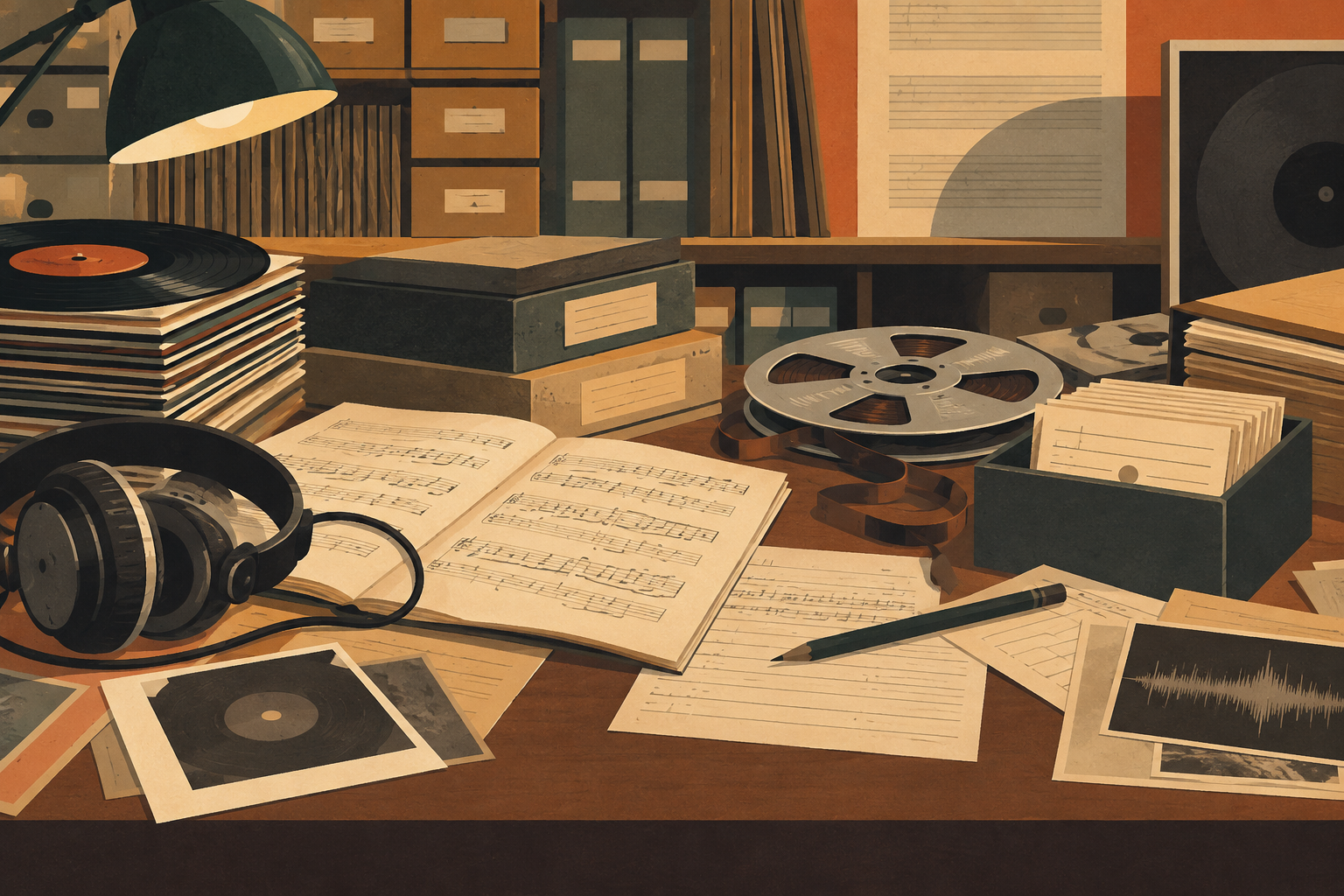
A specialist source describes the museum library and archive as bringing together periodicals, pamphlets and other material as well as books. This points to resources for investigating how the history of decorative arts has been written and circulated. The figures reported by that source are not presented here as current statistics because the supplied material does not establish whether they remain up to date.
An archive’s value is not simply that it adds titles to a bibliography. It can help researchers compare vocabularies, selection criteria and institutional accounts, provided each document is examined in context. The existence of a collection does not guarantee that a particular question can be answered; it does provide a basis for distinguishing editorial interpretation from claims supported by documents.
An open reading, not a closed conclusion
Here, decoration appears less as a style category than as a field where design, industry and institutional memory meet. The sources support that general framework and show that the museum has presented furniture within a history of design. They are not sufficient to describe the entire collection, date particular objects or narrate how the interiors represented were lived in.
That limitation does not invalidate the reading; it makes it more precise. To look at a decorative object as a document is to ask what evidence accompanies it, what remains unknown and what story its display constructs. The Museo Nacional de Artes Decorativas offers a concrete place from which to ask those questions, while specific answers must await wider consultation of its catalogues, archives and research.
- Decade
- Contemporary
- Region
- Spain
- Level
- Introduction
- Entities
- Museum, Museo Nacional de Artes Decorativas
Sources and references
- Vista de Industria, decoración y diseño. Historias ...revista.ge-iic.com · 2026-09-29
- boletín del museo nacional de artes decorativaswww.cultura.gob.es · 2026-09-29
- Cuando la decoración también fue industria - RetroPausewww.retropause.com · 2026-09-29
- La biblioteca y el archivo del Museo Nacional de Artes ...artstatementmagazine.com · 2026-09-29
- TEXTO Y CONTEXTO. EL MUSEO NACIONAL DE ARTES ...revistas.uned.es · 2026-09-29