An academic journal named in the Crossref record for Rubén Varillas’s article on comic formats. The evidence identifies its title but does not document its publishing history or frequency here.
Selected excerpts from our archive offer more context on this subject. Each reading links to the original article and its sources.
From Newsstand to Display Case: Comics Change Places
A magazine can tell us about its time through its format, pages and circulation; an exhibition, by contrast, selects objects and establishes relationships among them. The academic study “Las exposiciones de cómics. Historia y contexto global,” published in CuCo, Cuadernos de cómic, places these displays in a broader history. The available bibliographic information and excerpts cite, among other cases, an exhibition from 1969 that travelled to the University Art Museum in Berkeley and remained there until March 1970. The material also refers to exhibitions in museums and art spaces. These examples show that the dialogue between comics and museums did not begin in Spain and cannot be reduced to a single exhibition.
Comic format is part of the story
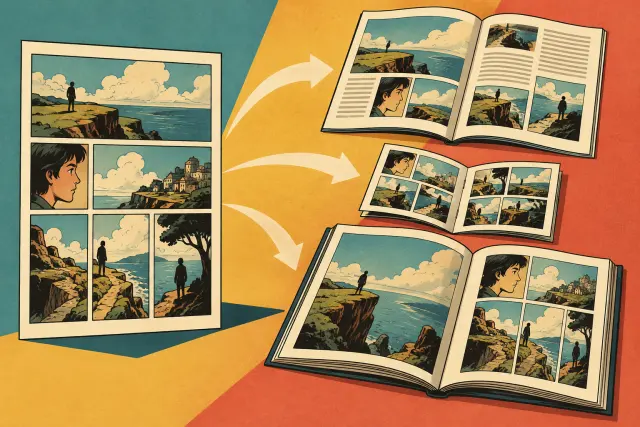
When people talk about comics, they often think of characters and pages, but the object that brings them together matters too. An article by Rubén Varillas in CuCo, Cuadernos de cómic addresses the question of formats and names magazines, fanzines, minicomic booklets, albums and graphic novels. That list alone points to a useful distinction: “comic” does not necessarily mean one kind of publication or one material way of reading.
KEY FACTS
- Type
- Magazine