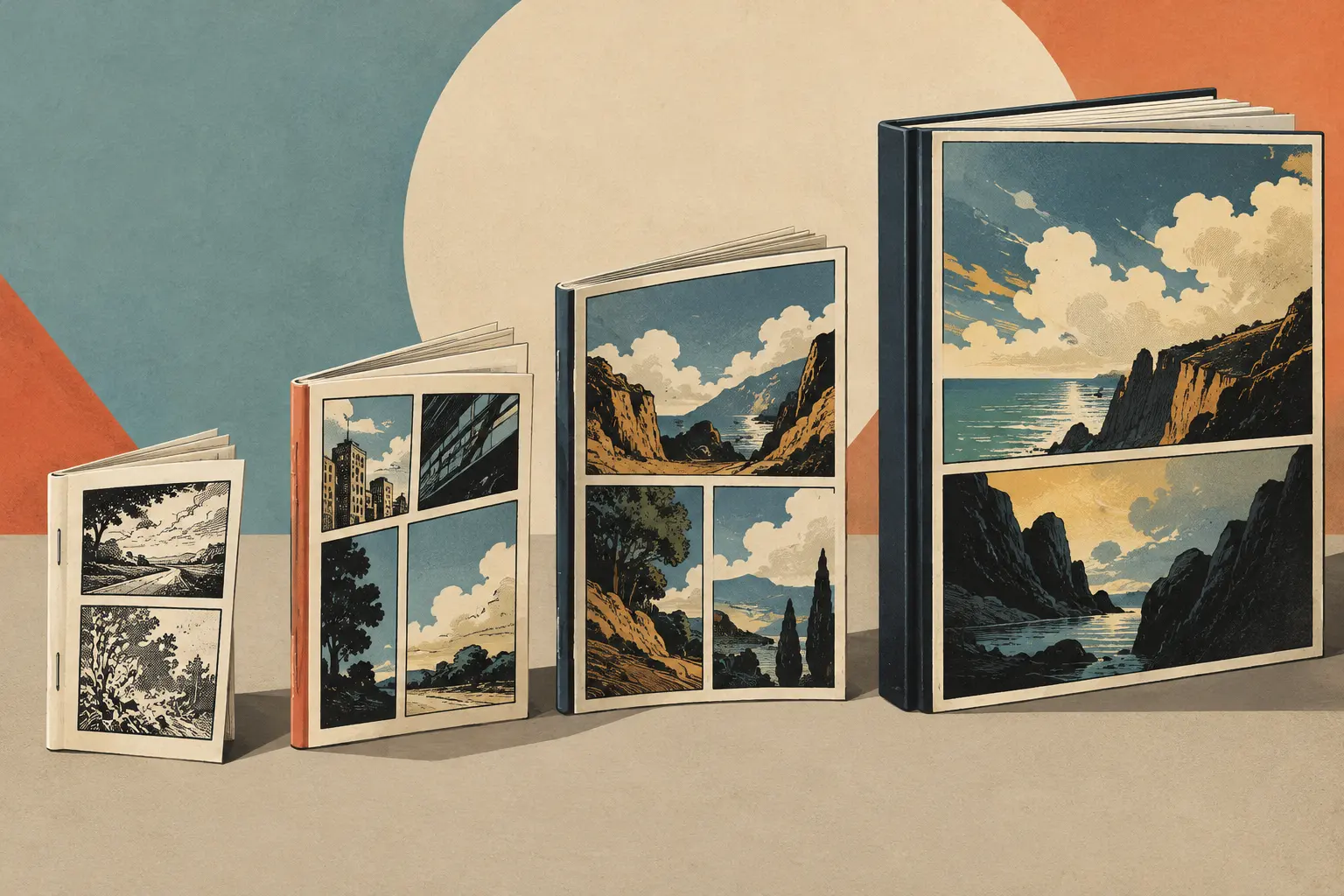
The printed object is not a passive container for graphic narrative. The materiality of comics, from page size to publication frequency, actively intervenes in how readers construct the meaning of a work. A recent study in the academic journal CuCo, Cuadernos de cómic, addresses this issue by examining the structural differences among five main formats: comic magazines, fanzines, mini-comics, albums, and graphic novels. This classification does not aim to establish a line of progress but to understand how each support modifies the conditions of production, circulation, and reception of the medium.
The distinction between periodicity and volume
The first major division proposed by the analysis is the temporal nature of the publication. Comic magazines and fanzines operate under a regime of periodicity, implying a continuous relationship with the reader through regular installments. This format encourages fragmented reading, where the story advances in episodes that can be interrupted or accumulated. In contrast, albums and graphic novels are conceived as closed units, designed for a more linear and complete reading experience. This difference is not merely administrative; it affects narrative structure, pacing management, and audience expectation.
The role of the fanzine and mini-comic
Within non-commercial or low-circulation formats, fanzines and mini-comics occupy a specific place. These supports are often characterized by greater formal freedom and a direct proximity to the creator, often outside major editorial structures. Their circulation is more limited, but their impact on aesthetic experimentation and the building of reader communities can be significant. The study highlights that these formats allow for a more intimate relationship with the object, where technical imperfection or scarcity of resources becomes part of the work's identity.
The album as a collectible object
The album, especially in the European tradition, has consolidated itself as a format of prestige. Its size, print quality, and binding distinguish it from pocket magazines. This format favors the contemplation of the page as an artistic unit, allowing the reader to control the pace of progress. The graphic novel, for its part, is often associated with greater narrative extension and thematic complexity, although the boundary between both terms is often blurred and depends more on editorial intention than on a strict norm.
Limitations of available evidence
It is important to note that the analysis is based on the theoretical categorization presented in the academic article. The provided evidence does not include quantitative data on sales, nor specific examples of works that empirically illustrate these differences. Therefore, the conclusions should be understood as an interpretive framework rather than a statistical description of the market. The lack of concrete data on how readers perceive these differences in practice limits the ability to generalize about the reading experience.
Historical context and evolution
The history of comics shows that these formats have not existed in isolation. Magazines from the 1930s and 40s, for example, gave way to a greater diversification of supports as the medium matured. However, this is not a linear substitution where one format replaces another, but a coexistence where each format responds to distinct needs of creation and consumption. The persistence of the monthly magazine, despite the rise of the album, demonstrates that periodicity still has its own cultural and commercial value.
Conclusion: Materiality as a narrative factor
The printed format is, ultimately, a narrative element. The decision to publish a work in a magazine, fanzine, mini-comic, album, or graphic novel is not neutral; it defines the context in which the reader encounters the story. By recognizing the specificity of each support, the understanding of comics as a plural and diverse medium is enriched, where form and content are inextricably linked. This perspective invites valuing materiality not as an obstacle, but as a fundamental tool in the construction of meaning.
- Decade
- 2000s
- Region
- Global
- Level
- Enthusiast
- Entities
- CuCo, Cuadernos de cómic, Cuadernos de Cómic, Revistas de cómics
Sources and references
- El cómic, una cuestión de formatos (2): revistas de cómics, fanzines, mini-cómics, álbumes y novelas gráficasdoi.org · 2026-10-20
- Tamaño del mercado de cómics, participación y análisis ...www.fortunebusinessinsights.com · 2026-10-20
- INFORME TEBEOSFERA 2024tebeosfera.com · 2026-10-20
- Mad (revista)es.wikipedia.org · 2026-10-20
- Archie Comicses.wikipedia.org · 2026-10-20