A decade without a uniform
The 2000s are often remembered through a handful of instantly recognisable images: low-rise jeans, wide belts, miniskirts, Ugg boots and velour tracksuits. Yet these garments did not make up a generational uniform. Different styles coexisted, and their presence varied by place, age, gender and access to clothing.
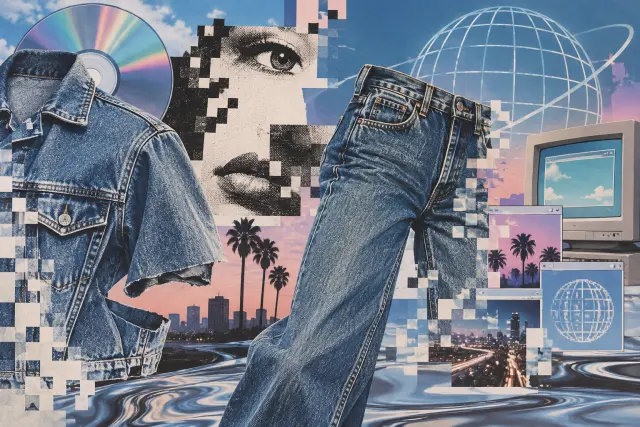
Denim remained a constant, though its shapes changed. Low-rise flared jeans stood out early in the decade; bootcut styles gained ground in the middle years, and skinny jeans began to spread quickly from 2005. Distressed and deliberately ripped denim also became characteristic. The Fashion History Timeline at the Fashion Institute of Technology places these shifts within a decade in which jeans appeared in an increasingly broad range of settings, including the red carpet.
Other aesthetics developed alongside them. Boho mixed vintage references with boutique clothing; miniskirts were sometimes worn with Ugg boots, and velour tracksuits became a highly recognisable look. None of these examples represents the everyday experience of an entire population: they describe visible trends, not a universal way of dressing.
Celebrities, television and recognisable clothes
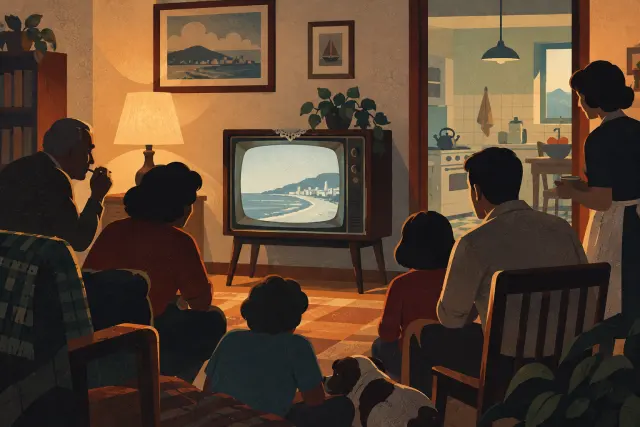
Images of performers and public figures helped fix garments and combinations in the public imagination. Red-carpet photography, tabloids, magazines and television presented looks that audiences could observe and sometimes imitate. Digital circulation expanded that repertoire towards the end of the decade, but it did not immediately replace earlier media; it existed alongside them.
Gossip Girl offers a specific example. In a 2008 article, Ruth La Ferla explained in The New York Times that the show’s website let viewers identify the brands of clothes and accessories in each episode and reach them online. Television fiction was thus connected to garment identification and shopping. The example shows a new possibility at the time, not that every viewer bought what appeared on screen.
The series also illustrates how a television production could work as a fashion showcase. Its characters dressed differently, and clothing helped define them; at the same time, specific brands and garments could enter public conversation. The growth of the internet made it easier to follow those references, share them and look for similar items.
Lagerfeld’s collaboration with H&M
In November 2004, Karl Lagerfeld collaborated with H&M on a collection that brought a haute couture designer’s name to a mass-market retailer. The launch drew queues and, according to contemporary coverage, some stores sold out in less than twenty minutes. The event turned a designer-retailer collaboration into a commercial and media spectacle.
The formula did not erase the distance between haute couture and mass retail, but it made that distance commercially useful: a limited collection linked a recognised designer’s image to prices more accessible than those of his couture pieces. The public response helped other retailers and brands adopt similar collaborations. More than a shopping anecdote, the launch shows how fashion could be organised around anticipation, scarcity and media attention.
The rapid reproduction of styles is also connected to the growth of online retail and fast fashion. More images and sales channels made it easier to identify trends and produce commercial versions, although faster circulation did not mean everyone adopted the same clothes. Garments were selected, combined or rejected differently in different contexts.
Reading fashion through material traces
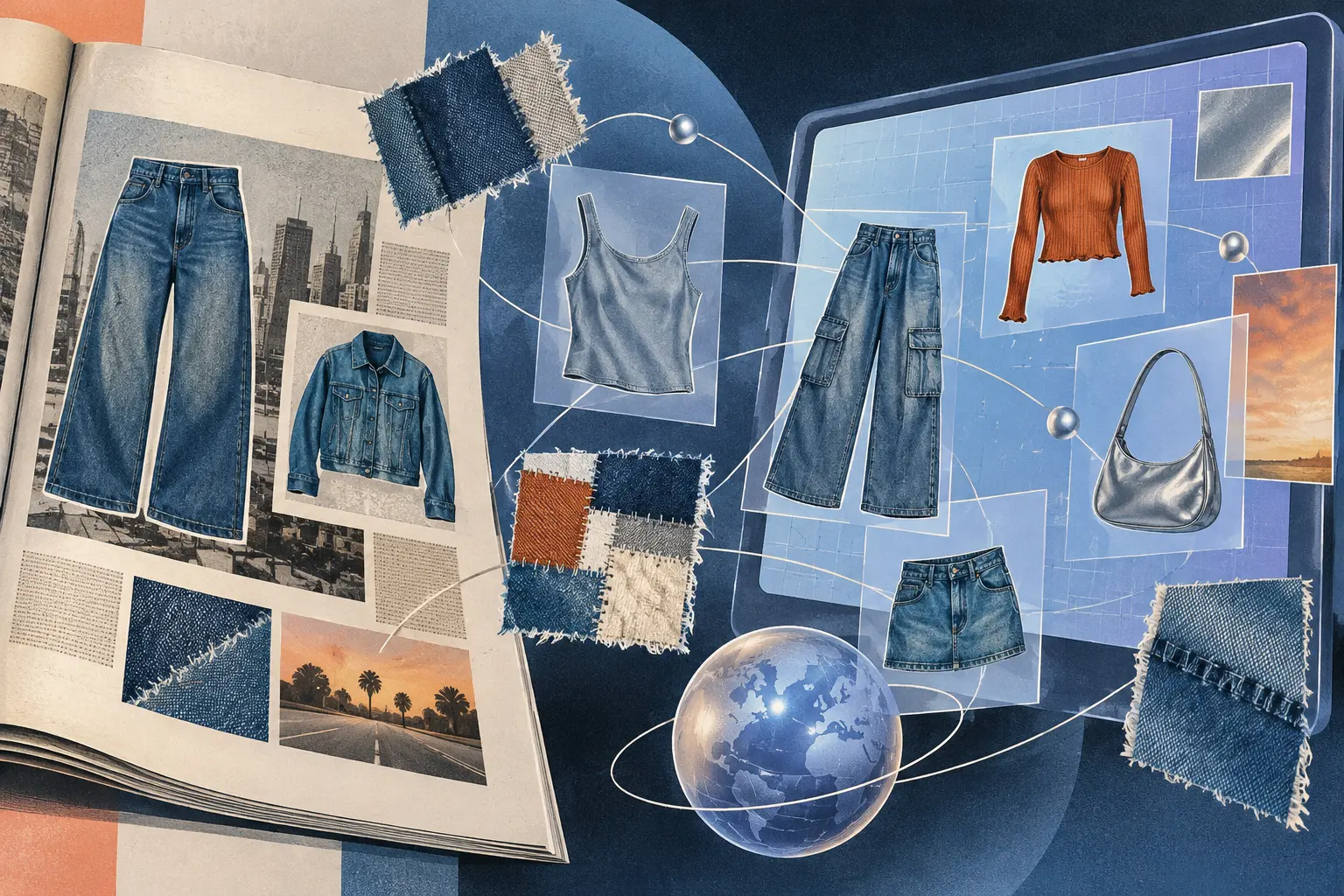
To study what people wore, it helps to distinguish between different kinds of images and objects. A runway photograph records a design proposal; a street photograph documents a particular choice in a specific place and moment; a magazine shows how that choice was presented and recommended to its readers. A preserved garment can reveal materials, construction and signs of use, though it cannot by itself establish who wore it or under what circumstances.
Comparing these traces helps separate advertising and editorial prescription from observed practice. It also prevents the most widely circulated image from being mistaken for the most common experience. Celebrity photographs and television looks are important sources for understanding which styles gained visibility, but they are not a complete record of everyday life.
Fashion in the 2000s is best understood as a coexistence of styles and a shift in the conditions of their circulation. Denim, vintage references, garments associated with public figures and commercial collaborations existed alongside new ways of identifying and buying clothes online. Images did not create trends on their own, but they made certain looks more recognisable and connected the representation of clothing with consumption more quickly.
- Decade
- 2000s
- Region
- Global
- Level
- Introduction
- Entities
- Televisión, Internet, Karl Lagerfeld
Sources and references
- Literaturas ibéricas: historia y críticaopenalex.org · 2026-11-07
- Comunicar la moda en Internet: medios, marcas, "influencers" y usuariosopenalex.org · 2026-11-07
- 2000-2009 | Cronología de la historia de la modatranslate.google.com · 2026-11-07
- Historia de la moda - Wikipedia, la enciclopedia librees.wikipedia.org · 2026-11-07
- Biblioteca — Historia de la Modahistoriadelamoda.net · 2026-11-07