A decade of styles in coexistence
Fashion in the 2000s cannot be reduced to a single silhouette. The Fashion Institute of Technology’s (FIT) timeline describes a decade that carried forward trends from the late 1990s as casual clothing gained ground. Runways, magazines and celebrity photographs document visible changes, but they also show styles shaped by period, setting and audience.
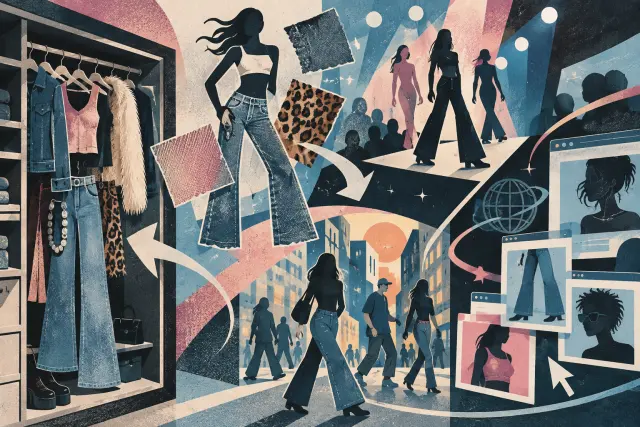
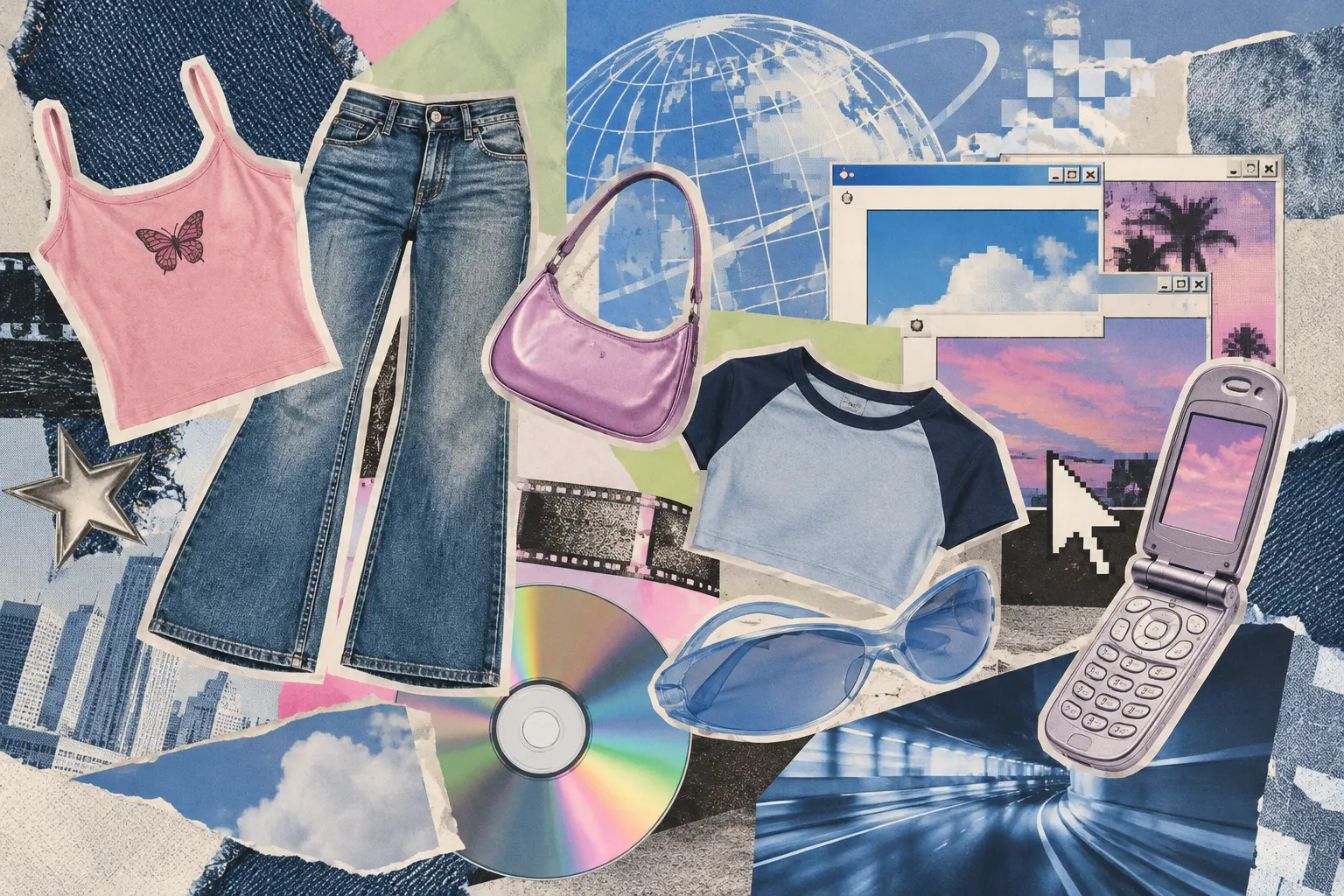
Jeans remained a constant, though their shape changed. Low-rise flares were prominent early in the decade; bootcut styles became more visible by the middle years, followed by skinny jeans. Distressed denim and cropped tops appeared in celebrity images as well as everyday dress. Denim on a red carpet or in an editorial offers a way to examine how some boundaries between casual clothing and public occasion became less distinct, but it does not show that everyone adopted the same practices.
The FIT timeline also records the range of womenswear during these years: vintage-looking boho styling, miniskirts, fitted dresses and, toward the end of the decade, a return to more structured silhouettes. These trends did not arrive in a neat sequence or spread equally everywhere. They coexisted with personal preferences, economic means and the conventions of different settings.
Boho and garments turned into reference points
In the first half of the decade, boho styling combined vintage-looking garments with pieces from boutiques and fashion labels. Historian Kathryn Hennessey, quoted in the FIT timeline, distinguishes this commercial styling from the worn, oversized clothing associated with 1990s grunge. Sienna Miller became a media figure linked to the boho image, but her visibility did not make her representative of all young women.
Trucker hats, Ugg boots, baguette bags and velour tracksuits became prominent in celebrity photography and fashion media. They illustrate how an easily recognized object could crystallize a trend and become a shared reference. Their prominence in images, however, does not tell us how many people actually wore them or how often.
Menswear offers another way to trace the exchanges between music and fashion. The slim silhouette associated with Hedi Slimane and Dior Homme coincided with the visibility of indie bands such as The Strokes and The Libertines. Later, skinny jeans, band T-shirts and narrow ties appeared in high-street shops. At the same time, loose clothing, basketball jerseys and sneakers reflected hip-hop’s influence. Music scenes supplied visual references that designers, brands and consumers interpreted in different ways.
From screen to shopping
Celebrity photographs and television programmes offered recognizable models; the internet sped up their circulation and made it easier for viewers to search for the clothes. Contemporary reporting described that connection. In 2008, Ruth La Ferla wrote in The New York Times about Gossip Girl and viewers’ interest in identifying and buying clothes seen on screen. The show’s website let users look up labels and access products, linking television styling to online shopping.
Karl Lagerfeld’s collaboration with H&M, launched in 2004, showed another way to bring runway design to a wider audience. The FIT timeline notes that many pieces sold out quickly and that the collaboration helped prompt later partnerships between designers and fashion retailers. It was more than a cheaper version of the runway: it turned a designer’s name into a commercial and media event.
Fast copying and accelerating consumption
Online retail and the rapid circulation of images made trends easier to imitate. The FIT connects this process with the expansion of fast fashion and cites a 152% increase in international online fashion sales between 2006 and 2011, drawing on Amy De La Haye and Andrew Tucker’s Costume and Fashion. Affordable copies brought some design codes within reach of more consumers, while the pace of newness accelerated.
Rather than one trend replacing another, different references coexisted and shifted quickly. The decade is better understood as a landscape of competing styles than as a uniform fashion: denim, musical references, sportswear, boho and designer fashion circulated through different media and markets.
What images from the period can show
Different sources document different things. An editorial records a styling proposal; a street photograph, a particular choice; a business report, the strategy or reception of a collaboration. No single image represents an entire population. Read together, such materials help explain how 2000s dress developed at the intersection of garments, music scenes, celebrities, television, magazines and digital commerce.
- Decade
- 2000s
- Region
- Global
- Level
- Enthusiast
- Entities
- Televisión, Internet
Sources and references
- 2000-2009 | Cronología de la historia de la modatranslate.google.com · 2026-10-26
- Historia de la moda - Wikipedia, la enciclopedia librees.wikipedia.org · 2026-10-26
- Biblioteca — Historia de la Modahistoriadelamoda.net · 2026-10-26
- Historia de Barcelonaes.wikipedia.org · 2026-10-26
- Anna Wintoures.wikipedia.org · 2026-10-26