A decade of overlapping styles
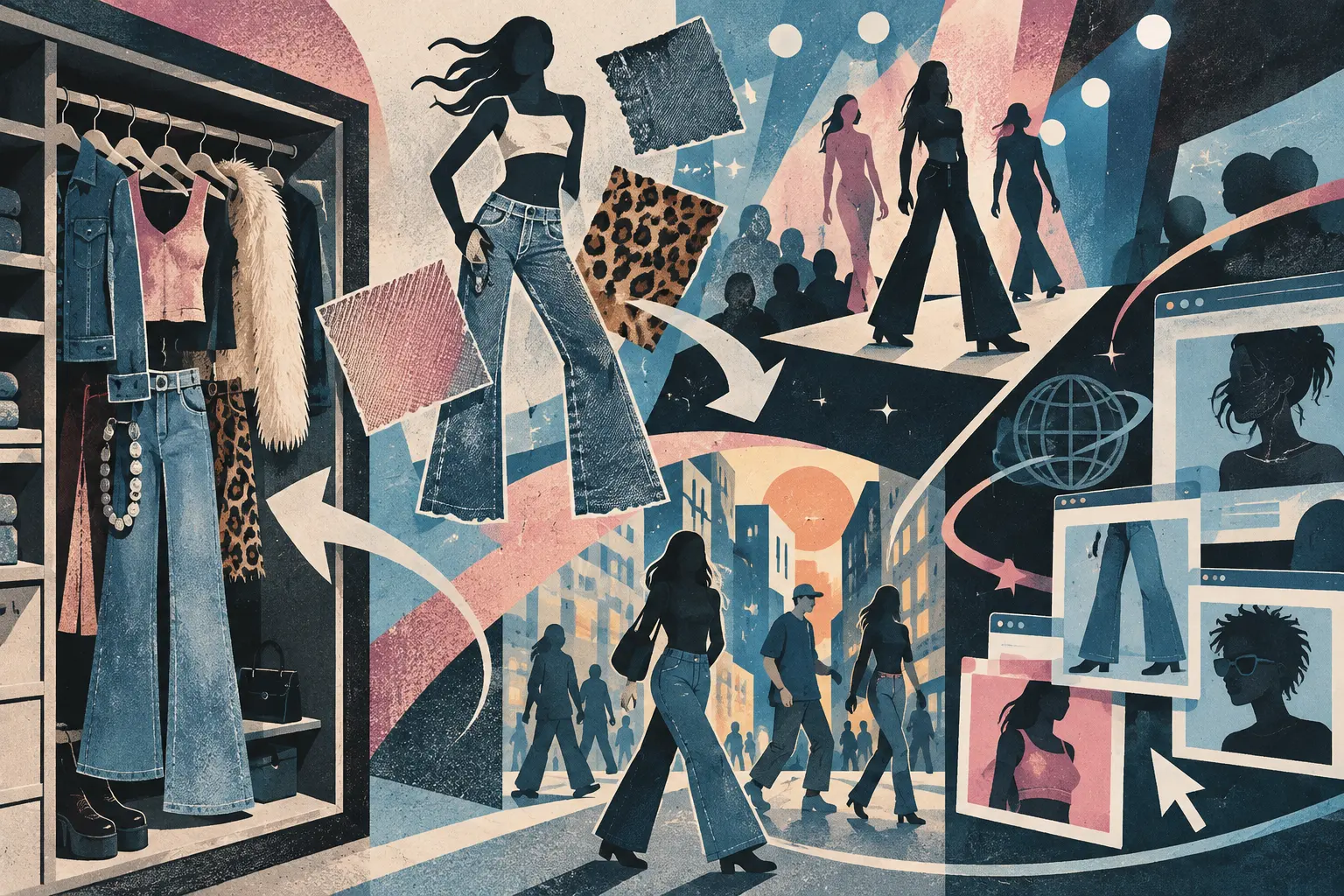
Fashion in the 2000s had no single silhouette. Runway proposals, everyday clothes, celebrity images and the codes of different music scenes coexisted. The internet brought these worlds closer and sped up the circulation of images, but it did not erase their differences: a garment proposed by a brand, photographed in a magazine and adopted on the street belonged to connected, not identical, circuits.
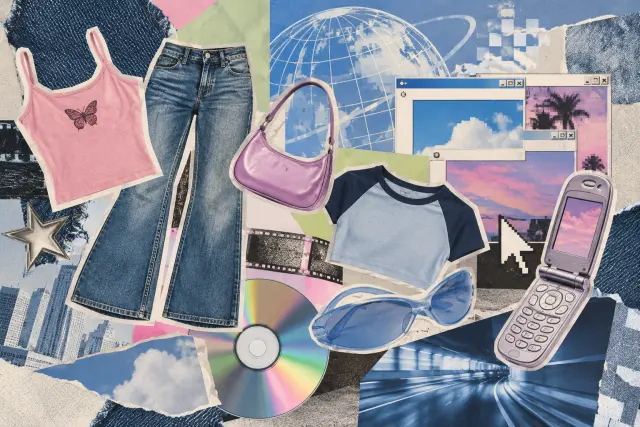
Denim offers a way to follow some of these shifts. Fashion History Timeline describes jeans as a continuing presence throughout the decade and traces changing cuts: low-rise flares early on, a stronger presence of bootcut styles midway through the period, and the spread of slim fits from 2005–06. It also notes that jeans became acceptable in an increasingly wide range of settings. This is a chronology of trends, not a record of how everyone dressed: availability, use and meaning varied among people and contexts.
From the runway to the public image
Red-carpet photographs, tabloids and magazines helped make certain garments recognisable and desirable. The internet expanded that circuit: an image could travel well beyond the event or publication where it first appeared and link a garment to a particular figure. A trend’s visibility, however, does not mean it was widely adopted.
Items highlighted by Fashion History Timeline include low-rise jeans, miniskirts, Ugg boots, velour tracksuits, trucker hats and Roland Mouret’s Galaxy dress, shown in 2005. They are better understood as pieces that gained prominence in particular circuits—celebrity, runway, press or retail—than as a uniform for the decade. Editorial photographs and collection archives document how clothes were designed and presented; street images help show how they were worn beyond advertising.
Menswear also changed through music scenes. Fashion History Timeline links the slim silhouette—skinny jeans, narrow ties and jackets—to indie bands and Hedi Slimane’s work at Dior Homme. This exchange between music and fashion makes it possible to trace how certain codes moved from the runway into cultural scenes and back again, without reducing musicians or audiences to a single aesthetic.
Collaborations, shops and online retail
In November 2004, H&M introduced a collaboration with Karl Lagerfeld. Fashion History Timeline reports that some stores sold out of the garments in under twenty minutes and that the project encouraged further initiatives between designers and mass-market retailers. The episode shows the visibility collaborations could achieve and how they connected luxury design with a wider audience. It does not sum up the industry, but it points to a commercial strategy that became increasingly recognisable.
Online retail tightened the connection between images, desire and purchase: a garment seen in a photograph could be identified and sought out online. At the same time, mass retailers’ rapid adaptations of designer styles sped up their translation into widely distributed products. Technology changed not only how fashion was communicated, but also how quickly certain proposals reached the market.
More than a list of trends
Magazines and runway archives show what was designed, promoted and photographed. Street images raise different questions: who wore those garments, how they combined them and in what settings. To reconstruct fashion as social practice, editorial imagery should be considered alongside photographs of use, advertisements, surviving garments and collection records. No single source represents an entire society.
This reveals a varied decade: jeans changed in cut and context; celebrities accelerated the circulation of images; music scenes contributed their own codes; and commercial collaborations and online shopping altered the relationship between design and consumption. The history of 2000s fashion is not just a succession of emblematic garments. It is also about how clothes became visible, circulated and acquired different meanings depending on who wore them and where.
- Decade
- 2000s
- Region
- Global
- Level
- Introduction
- Entities
- Internet
Sources and references
- 2000-2009 | Cronología de la historia de la modatranslate.google.com · 2026-10-27
- Historia de la moda - Wikipedia, la enciclopedia librees.wikipedia.org · 2026-10-27
- Biblioteca — Historia de la Modahistoriadelamoda.net · 2026-10-27
- ÁREA 09 - Museo del Trajemuseodeltrajevirtual.com · 2026-10-27
- Historia de Barcelonaes.wikipedia.org · 2026-10-27