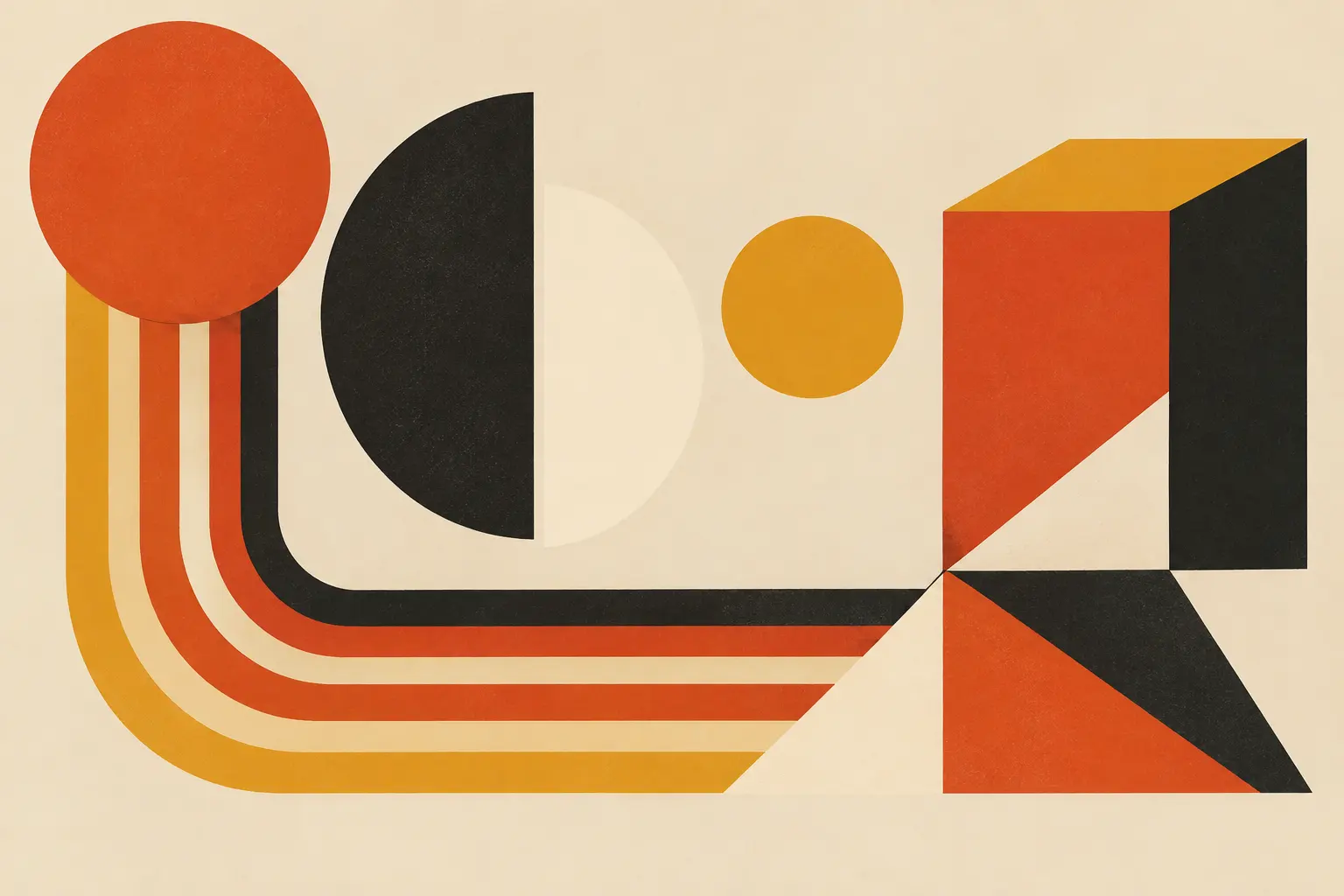
The 1970s represented a turning point in the history of visual communication. During this period, advertising stopped focusing exclusively on the technical specification of the product to embrace image and creativity as differentiating elements against the competition. This structural change was not merely aesthetic; it marked the beginning of an era in which graphic design ceased to be a simple ornamental accompaniment to become a fundamental tool for building perceptions and values associated with brands. This article examines how this transition redefined the relationship between the commercial object and the consumer, establishing a visual language that persists in current brand strategies.
From printing to applied discipline
To understand the magnitude of the change in the seventies, it is necessary to go back to the origins of graphic design. Although its roots date back to Antiquity and the Middle Ages, the discipline as an applied art was consolidated with the rise of movable type printing in Europe during the 15th century. However, it was during the Industrial Revolution, with the growth of consumer culture, that graphic design began to differentiate itself as a profession. In the 19th century, its association with advertising was key to its evolution, allowing its definitive consolidation in the 20th century. This historical trajectory demonstrates that graphic design has always been linked to the need to communicate specific messages to social groups with determined objectives.
Professionalization in Latin America
Historical evidence suggests that the professionalization of design was not an exclusive phenomenon of Europe or the United States, but had significant developments in Latin America. In Chile, for example, from the early 20th century, graphic practices linked to the world of fine arts, decorative and applied arts were carried out. These antecedents, which span from 1931 to 1970, show a gradual evolution towards a more sophisticated visual communication. Similarly, in Venezuela, a metamorphosis is documented that went from the dawn of the 20th century to the professional maturity reached in 1970. These cases illustrate how the region adopted and adapted the principles of graphic design, laying the foundations for a robust creative industry.
Design as a message encoder
One of the most precise definitions of graphic design describes it as the projection of visual communications intended to transmit specific messages. In this context, the role of the graphic designer is that of encoder or interpreter of the message. They work in the interpretation, planning, and presentation of visual messages, transforming a linguistic demand, whether oral or written, into a graphic manifestation. This process is not arbitrary; it is based on the principle that form follows a specific function. The aesthetics of typography, the compositional arrangement of text, ornamentation, and images are used to transmit ideas, feelings, and attitudes that go beyond what language alone can express.
Typography as a functional tool
In the transition of the seventies, typography and composition stopped being seen as decorative elements to become functional tools of persuasion. Graphic design, as an interdisciplinary branch of design and fine arts, revolves around the definition of problems and the determination of objectives. Decision-making is carried out through creativity, innovation, and lateral thinking, using manual or digital tools. This functionality allows the optimization and improvement of graphic communication. The choice of a font or the arrangement of an element does not respond to fashion, but to the need for the message to be correctly interpreted by the target audience.
Impact on brand identity
The shift towards more sophisticated visual communication had a direct impact on the construction of brand identity. By integrating creativity as a differentiating sign, companies were able to establish deeper emotional and cognitive connections with their consumers. Graphic design did not only inform about the characteristics of the product, but built a visual narrative that defined the personality of the brand. This strategy, which began to consolidate in the 1970s, laid the foundations for current branding practices, where visual coherence and graphic message are as important as the product itself. The relationship between the commercial object and the consumer was redefined, moving from a purely functional transaction to an experience mediated by design.
Limitations of historical evidence
Although historical analyses provide a clear view of the transition of graphic design in the 1970s, it is important to recognize the limitations of the available evidence. The sources consulted, such as the Chilean and Venezuelan antecedents, offer a regional perspective, but do not necessarily cover the totality of the global phenomenon. Furthermore, the definition of graphic design as an applied discipline has evolved over time, and what was considered functional in the seventies may have different implications in the current digital era. The interpretation of these changes must be made with caution, avoiding anachronisms and recognizing the complexity of historical processes.
Legacy and contemporary relevance
The legacy of the 1970s in graphic design is undeniable. The idea that form follows function, that design is a tool for effective communication, and that creativity is a commercial differentiator remains valid. Today, the demand for experienced designers is greater than ever, particularly due to the development of new technologies and the need to pay attention to human factors that escape the competence of engineers. Graphic design continues to be a profession, an academic discipline, and an applied art, whose activity consists of projecting visual communications to transmit specific messages. The transition initiated in the seventies was not an isolated event, but the beginning of a continuous evolution that defines visual communication in the modern world.
- Decade
- 1970s
- Region
- Global
- Level
- Enthusiast
- Entities
- No linked entities
Sources and references
- Análisis histórico de la publicidadwww.juangalera.com · 2026-10-21
- Historia del diseño gráficotranslate.google.com · 2026-10-21
- Antecedentes del diseño gráfico en Chile (1931-1970)www.memoriachilena.gob.cl · 2026-10-21
- la historia de la publicidadwww.lahistoriadelapublicidad.com · 2026-10-21
- Historia del diseño gráfico en Venezuela hasta 1970 - Simboldwww.simbold.com · 2026-10-21
- Diseño gráficoes.wikipedia.org · 2026-10-21