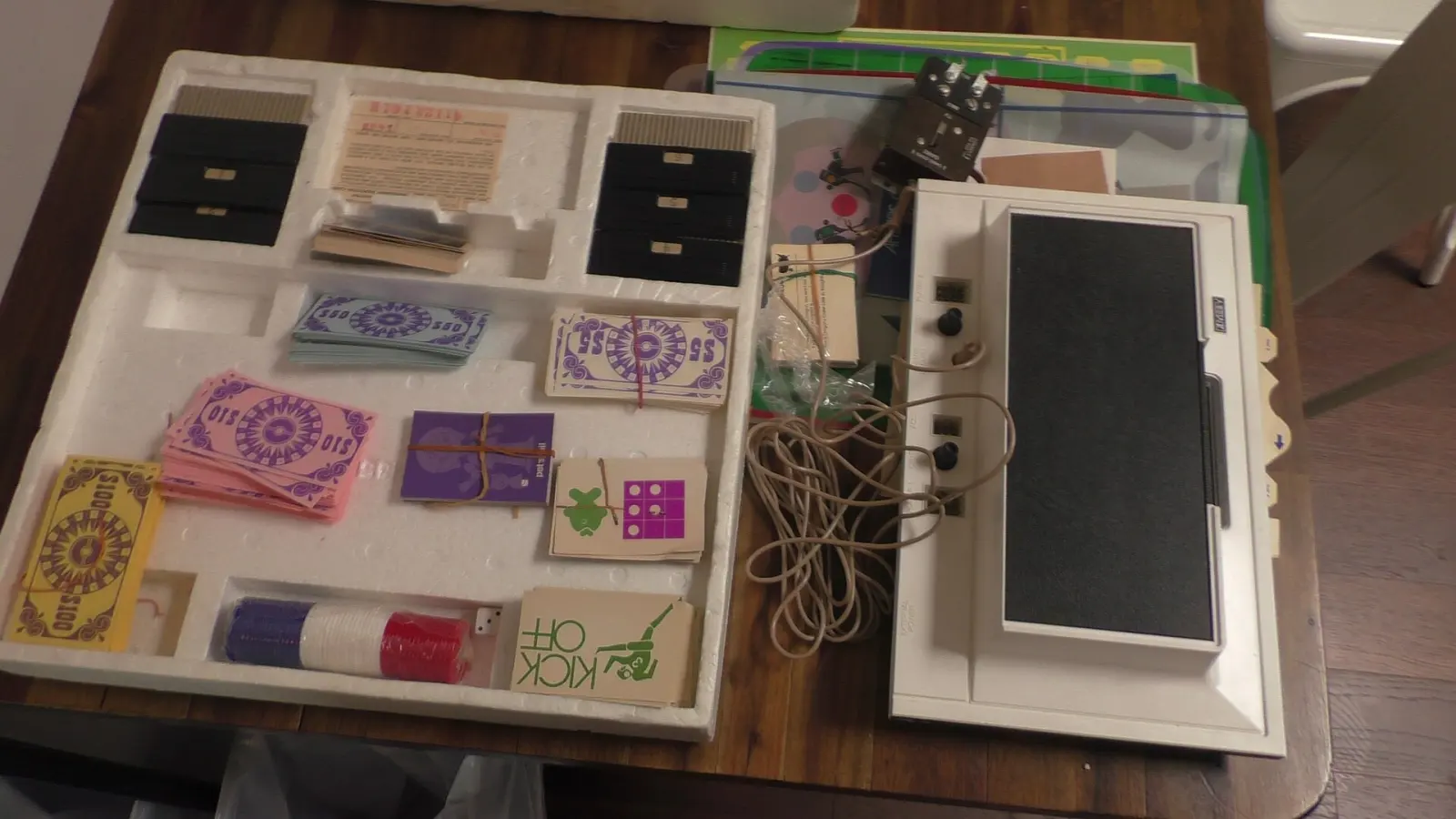
The arrival of the Magnavox Odyssey in 1972 was not merely the launch of a new electronic toy, but the consolidation of a consumption model that shifted playful interaction from the arcade to the living room. This device defined the relationship between dedicated hardware and the home television, creating a private entertainment space that did not depend on coins or public locations. Its historical relevance lies in demonstrating that the simplicity of connection could be as decisive as processing power for the success of a consumer product.
From arcade to dedicated device
Before 1972, the video game experience was confined to arcade machines like Galaxy Game or Computer Space, which required a monetary investment per game and were located in public spaces. The Odyssey broke this barrier by connecting directly to the user's television. This integration into the home transformed the perception of the medium, shifting from an ephemeral attraction to an element of daily life. The console's industrial design reflected this intention of accessibility, prioritizing ease of use over internal technical complexity.
The limitation of physical overlays
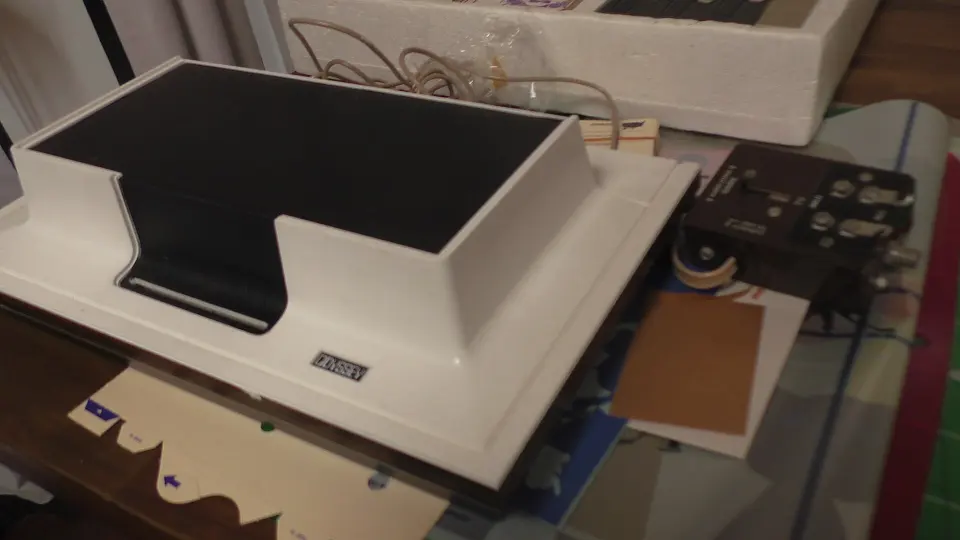
One of the most distinctive and restrictive features of the Odyssey was its method for defining games. Unlike later systems, it did not store game logic in user-accessible internal memory. Instead, the device generated basic geometric shapes on the screen, and the player had to place plastic overlays over the television to visualize game elements, such as boards or markers. This dependence on physical accessories drastically limited the complexity of titles and visual immersion, but it established the fundamental premise of the console: a device that transforms the screen into an interactive space.
The transition to the second generation
The Odyssey inaugurated an era that was quickly surpassed by the second generation of consoles, which began in 1976 with the launch of the Fairchild Channel F. This new system introduced interchangeable cartridges, a technology that allowed the entire game experience to be stored on an insertable physical medium. While the Odyssey used cartridge-style circuit boards with limited functionality, the Channel F and its successors adopted microprocessors that facilitated the execution of more complex software. This evolution marked the end of the dependence on physical overlays and the beginning of an era where game variety depended on the available cartridge library.
Impact on the consumer market
The legacy of the Odyssey does not lie in its technical capacity, but in the validation of the home console market. By demonstrating that consumers were willing to purchase dedicated hardware to play at home, the Odyssey laid the foundations for the industry that would follow. The product design was based on accessibility and the simplicity of connection, demonstrating that a powerful processor was not necessary to capture the attention of the general public. This market strategy was crucial for the industry's growth in the 1970s.
Historical context of the 1970s
The appearance of the Odyssey coincided with the birth of the home computing market in the 1970s. The evolution of electronic games was parallel to the development of personal computers, creating a digital entertainment ecosystem that was expanding rapidly. The Odyssey positioned itself as a mass product, accessible to a wide audience, unlike arcade machines which had a more niche profile. This historical context is fundamental to understanding how the home console became a global cultural phenomenon.
Limits of technical verification
It is important to note that the technical specifications of the Odyssey, such as exact resolution or processing power, are limited compared to current standards. Available evidence confirms that the system relied on physical overlays and that games had limited functionality. The technical capacity of the device should not be exaggerated, as its historical importance is conceptual and market-based, not technical. The transition to the second generation was necessary to overcome these limitations and offer a richer and more varied experience.
Conclusion on its cultural relevance
The Magnavox Odyssey was the catalyst that transformed video games from a public attraction to a home pastime. Its design, although limited by the technologies of the time, established the basic parameters of the modern console. The validation of the home market and the demonstration of the viability of a consumer product based on simplicity are its most enduring contributions. The Odyssey was not only the first console, but the starting point for an industry that would define popular culture in the following decades.
Documentary gallery
- Decade
- 1970s
- Region
- Global
- Level
- Introduction
- Entities
- Computer Space, Fairchild Channel F, Magnavox Odyssey, Televisión
Sources and references
- Historia de los videojuegos - Wikipedia, la enciclopedia librees.wikipedia.org · 2026-10-20
- La historia de Nintendo | Hardwarewww.nintendo.com · 2026-10-20
- Linea de tiempo de videoconsolas y plataformas de videojuegosvideojuegos.fandom.com · 2026-10-20
- 10.2: La evolución de los juegos electrónicosespanol.libretexts.org · 2026-10-20
- Videoconsolas de segunda generaciónes.wikipedia.org · 2026-10-20