Design also leaves records
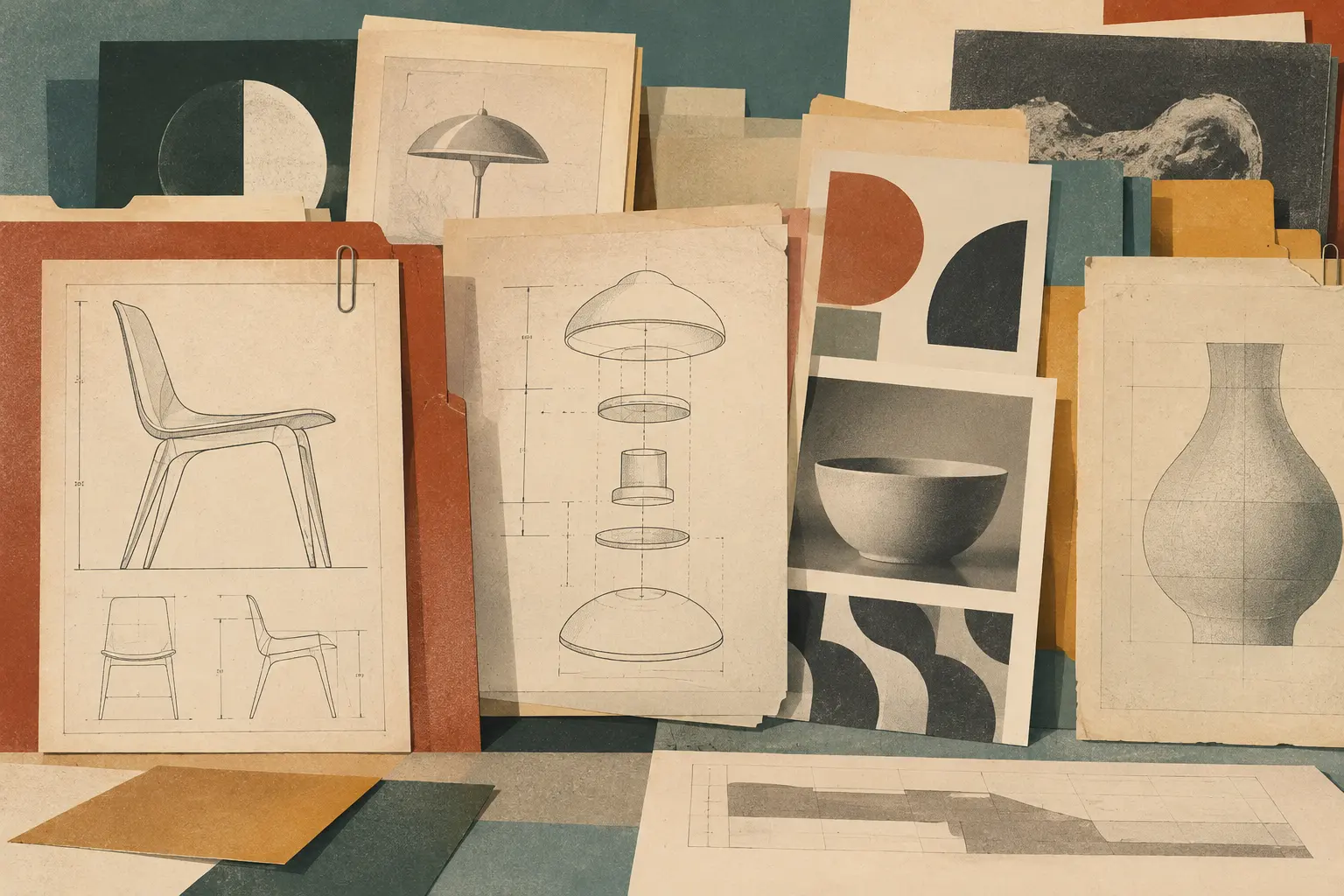
A finished object makes a solution visible: its form, materials and the way it invites use. But it rarely explains on its own how that solution came about, what alternatives were considered or how it circulated. Design archives broaden the view by bringing together documents and materials that place objects within processes, contexts and uses.
Ester Alba Pagán argues that design collections and archives do not always have a prominent place in heritage institutions, even though design is part of material and visual memory. The Arxiu Valencià del Disseny aims to recover, preserve, protect and disseminate the heritage of Valencian designers, including applied arts and product and graphic design. Digitisation, cataloguing, search tools and links between data are proposed as ways to support research and access to these collections.
This work involves more than storing objects. Cataloguing means identifying and describing them; documenting provenance and relationships makes it possible to consult them alongside other materials. Digital technology can expand the possibilities for searching and sharing records, while the physical collection remains a material foundation for research.
Advertising as part of the performance
The collection associated with ventriloquists Balder and Sanz shows how seemingly secondary documents can change how a cultural practice is understood. Raquel Racionero Núñez studies posters, advertising silhouettes and handbills as evidence of performances presented at fairs and popular entertainment venues. These materials did more than announce shows: they also offer insight into promotional methods and the performers’ public image.
Ventriloquism was a live experience, and few material traces of those performances have survived, among them puppets, accessories and promotional items. In this context, posters and programmes extend the record beyond the objects used on stage. They cannot replace the performance or reconstruct it completely, but they preserve clues about how it was publicised and presented to audiences.
Advertising, then, is not merely an ornamental addition to design history. Its compositions and visual devices were part of how the performance was communicated. Preserving such material makes it possible to study it both as graphic design and as evidence of an entertainment culture.
What preservation makes possible
Preservation gains public value when materials can be located, described and connected. A document separated from its context may be difficult to interpret; cataloguing and provenance information help situate it alongside other objects and records. In this way, an archive can support research into visual decisions as well as the production, circulation and uses surrounding an item.
This perspective broadens what can count as design heritage. If only celebrated or finished products are preserved, records that could explain their development and circulation are lost. Sketches, advertising prints and other documents can illuminate different aspects of the same history. A collection’s interest depends not only on the rarity of each item but also on the relationships its documentation allows researchers to establish.
The Valencian project proposes connecting and sharing its collections through information systems. Pagán links that direction to potential contributions to culture, innovation and the sustainable development of Valencian industry; these are project aims, not outcomes that should be treated as already achieved. The project also seeks to make the collections useful to future generations of researchers and designers.
The archive as a cultural decision
Together, the two cases show that archiving design involves choices about what is preserved, how it is described and how it can be consulted. Those choices influence which accounts remain available to researchers and the public. When an archive includes advertising, it also makes it possible to study how images sought to attract attention and present an experience.
Preservation does not impose a final interpretation or freeze design in the past. It keeps documents available for asking questions and reconstructing histories: of objects, images, performances and the circumstances in which they circulated.
- Decade
- Contemporary
- Region
- Spain
- Level
- Introduction
- Entities
- Raquel Racionero Núñez
Sources and references
- El diseño y la publicidad de los espectáculos de variedades: la conservación de la colección de ventriloquía de Balder y Sanzdoi.org · 2026-11-11
- Diseño y patrimonio cultural: cómo asegurar la conservación, estudio y difusión de los archivos profesionales o empresariales del diseño valencianoopenalex.org · 2026-11-11
- El diseño y la publicidad de los espectáculos de variedades: la conservación de la colección de ventriloquía de Balder y Sanzopenalex.org · 2026-11-11
- Diseño y patrimonio cultural: cómo asegurar la conservación ...turia.uv.es · 2026-11-11
- CONSERVACIÓN Archivesevemuseografia.com · 2026-11-11