Exterior cleaning
Begin with the least invasive intervention and document the initial condition.
Careful conservation, documented diagnosis and reversible modifications.
CRT televisions and power supplies can retain lethal voltages even when unplugged. Electrical work must be performed by trained personnel.
Begin with the least invasive intervention and document the initial condition.
Do not replace components without measuring, verifying and recording the reason.
Control humidity, sunlight, batteries and incompatible materials.
Always retain the original parts and avoid permanent damage.
Work from copies and preserve the original medium without writing to it.
Record tools, products, parts and every technical decision.
Spanish museums, archives and associations show that conserving video games also means caring for machines, software, documentation, images, publications and the means of access that make the whole intelligible.
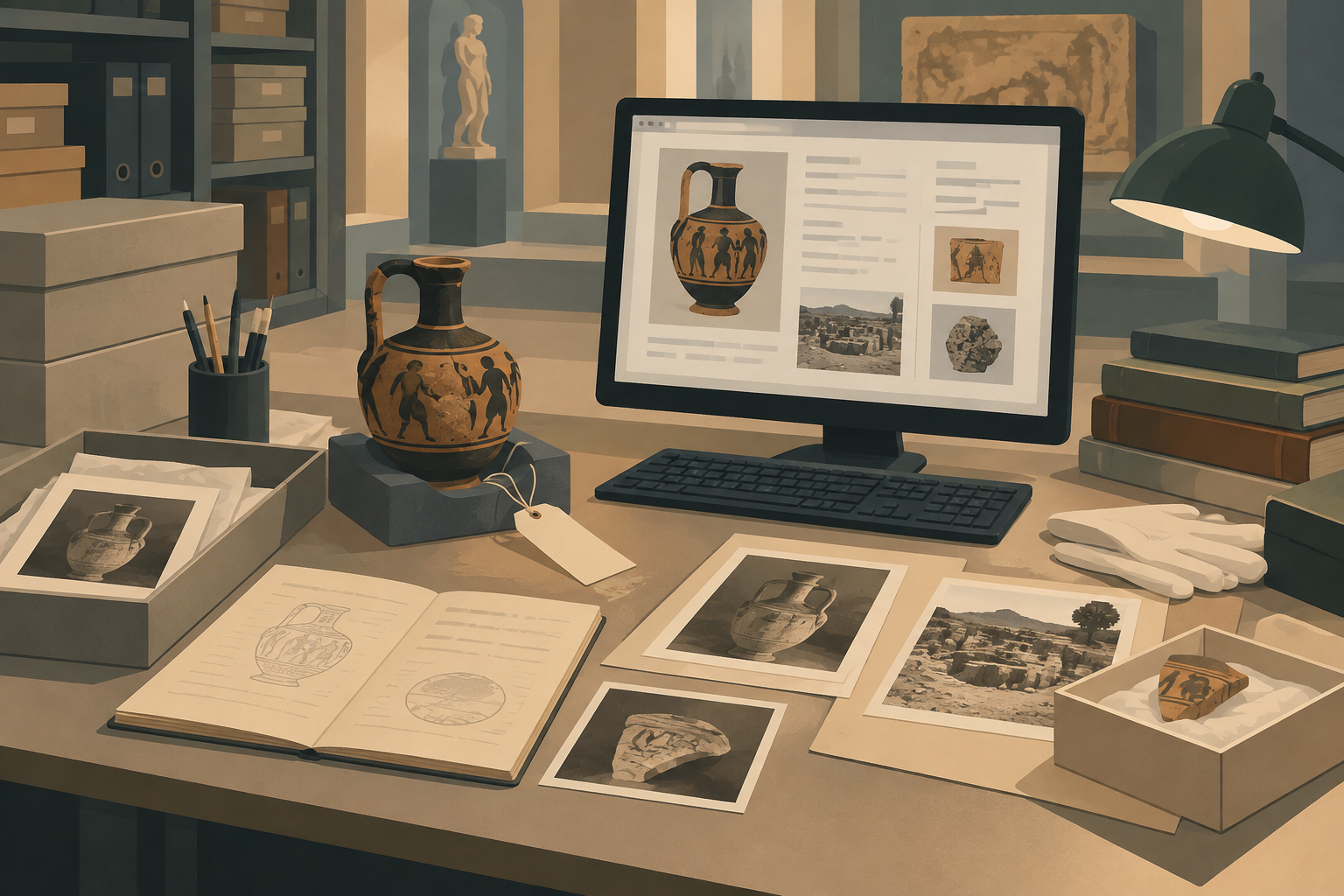
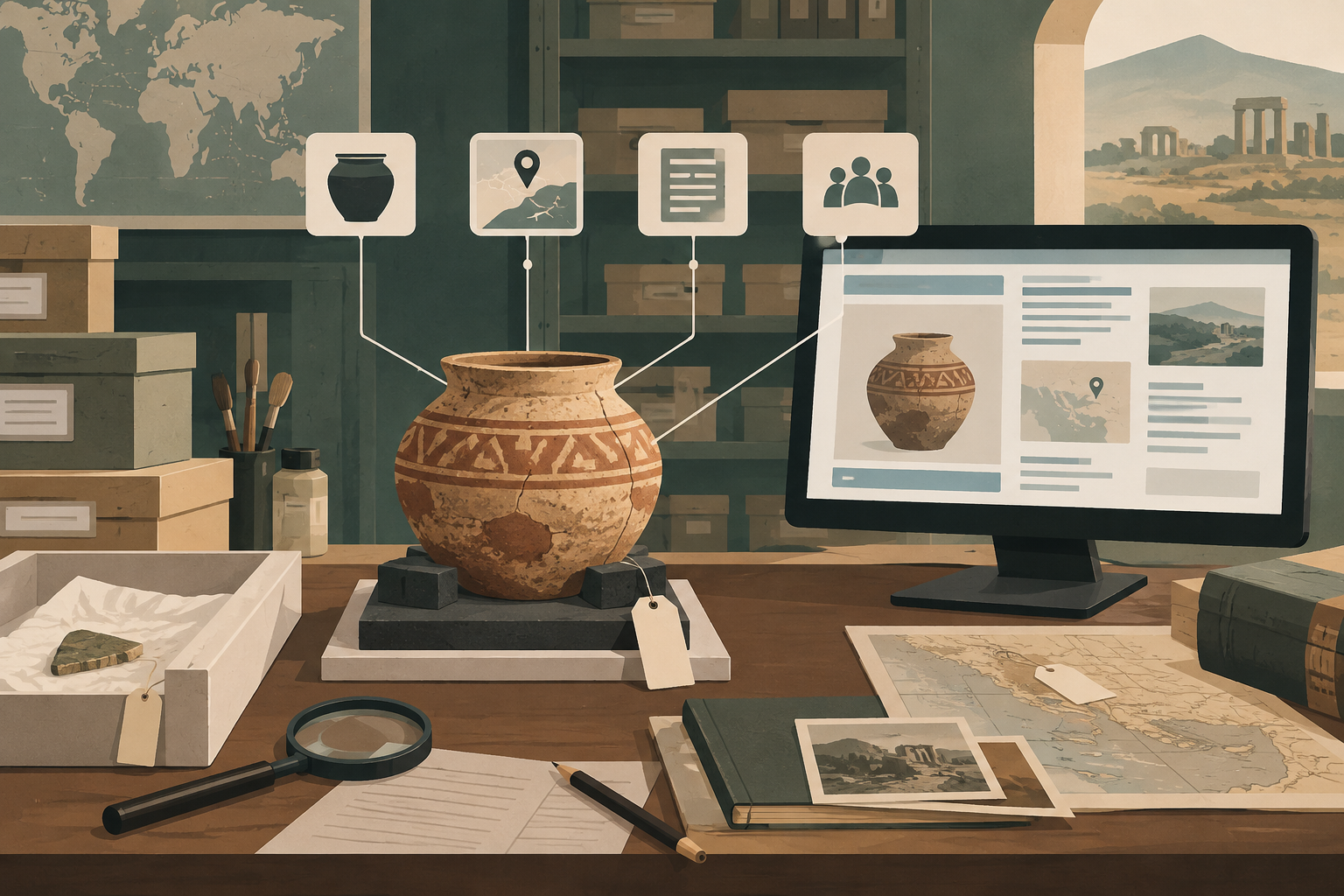
Open storyA reading of the computer as a museum-documentation tool: useful for structuring records, images, movements and conservation reports, yet dependent on the context attached to every object.
Open storyOn 6 December 2006, the creation of Mexico City’s Museo Archivo de la Fotografía was published. Drawing on the available institutional information, this article places that milestone within a broader history: photography as a record of urban administration, the challenge of describing large holdings, and the role of museums and photo libraries in preserving visual memory.
Open storyBetween 1944 and 2009, several sources document interventions at historic museums in Spain and Brazil affecting rooms, gardens, courtyards, circulation and public presentation. This timeline separates what the sources establish from interpretations about decoration, conservation and museum display.
Open storyA critical reading of the available evidence on the Museu del Còmic i la Il·lustració and the value of magazines, booklets, press material and original art as documentary heritage. The article separates what the sources support from what still requires cataloguing, provenance and institutional consultation.
Open storyFive verifiable points for understanding why a digital copy without identification, provenance and a relationship to the physical object may retain information while losing cultural meaning.
Open storyThe Historical Archive of the Puerto Cristal Museum in Chile holds records from the 1960s to the 1990s concerning a mining camp and the lives of its residents. It offers a way to explain why an archive is not a collection of isolated memories: it preserves provenance, activities, and links among the school, radio, port warehouses, laboratory, and mine, although the available evidence does not describe every record or its physical condition.
Open storyCollections in Turin, Berlin, Madrid and Argentina show that a historic vehicle is not merely a design object: it can be a technical document, a working tool, a public memory and a starting point for making spare parts. The available evidence supports comparing these approaches, but not turning them into a complete history of motoring.
Open storyThe case of Oscar de la Renta dresses in a National Museum of the American Latino display explains a core principle of textile conservation: removing a garment from light does not mean hiding it, but extending its ability to tell a story.
Open storyFounded in February 1963 from Gerhard Lamprecht’s collection, the Deutsche Kinemathek offers a precise starting point for considering film archives as practices of preservation, consultation, and public transmission. Personal, corporate, and institutional holdings show that cinema’s memory exceeds the isolated film.
Open storyThe 2006 opening of Modena’s Museo della Figurina offers a way to examine the sticker as a printed object, a domestic collection, and a cultural document. This guide proposes a careful approach to viewing, cataloguing, and preserving it, while separating established evidence from questions requiring further research.
Open storyA chronological reading of how documentation, preventive conservation and minimal intervention became central to institutional restoration, drawing on cases documented by the Prado, the MNCN and Spanish cultural bodies.
Open story