A physical medium mentioned in archival and cataloguing sources for storing electronic documents and local-access computer files.
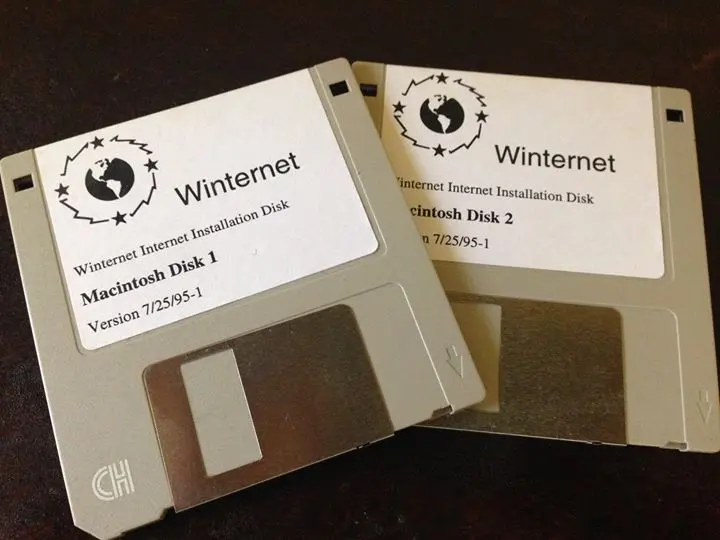
Selected excerpts from our archive offer more context on this subject. Each reading links to the original article and its sources.
A Floppy Disk Was Also a Document: Describing What It Held
At first glance, a floppy disk seems to have an obvious purpose: storing information and carrying it from place to place. But when preserved as a document, its exterior form is not enough to explain what it contains, who produced it, which program may have created it, or how it relates to other material. The archival sources available here provide a useful way into that question, although they do not describe a specific domestic experience on their own.
The editorial question, then, is not how every computer was used in every home—the supplied evidence cannot reconstruct that—but which documentary traces help us understand the relationship between machine, medium and content.
The article “Historical Databases” includes the floppy disk among electronic media, alongside the digital optical disc. This classification makes an important distinction visible: the medium is a physical object, while the information it holds is another dimension of the document. Naming the medium is not the same as fully describing the stored data.
Catalonia’s Archival Description Standard (NODAC) makes the principle more specific by stating that the physical storage unit should be recorded for electronic documents. Its examples include CD-ROM, DVD, DAT, floppy disk, hard drive and ZIP drive. The list supports the claim that identifying the medium is part of archival description; it does not prove that these media were used in the same way, or with equal frequency, in homes.
The Apple IIc and the Disk Drive Built into the Computer
The Apple IIc raises a specific question about the home computer: what changes when storage is not presented as a separate external unit but is part of the machine itself? The available description identifies a 5¼-inch disk drive built into the computer and integrated peripheral ports. It also says the model had no internal expansion slots. This is a useful basis for discussing design and documentation, but it does not establish how every household used the machine.
The source describes the Apple IIc as a compact version of the Apple II series, bringing a complete configuration into a small case apart from the display and power supply. It identifies the disk drive on one side. For this discussion, the important point is not a claim about performance but the physical arrangement: the storage device and the computer are presented together.
A diskette can be described as an information carrier, but cataloguing an electronic document also requires recording where it is stored. The Catalan archival standard listed among the sources names diskettes and other physical media when discussing that descriptive unit. The Spanish National Library’s cataloguing rules also cover local-access computer files held on physical devices, including diskettes. These standards do not describe the Apple IIc specifically, but they help explain why documentation should identify both a medium and the computer associated with it.
The model description identifies integrated peripheral ports at the rear and the absence of internal expansion slots. It supports the claim that the design included built-in peripheral connections and, according to that source, did not retain the internal expansion arrangement of earlier Apple II models. It does not identify which particular devices an owner connected, how often they were used, or in what order. A photograph or specification sheet alone would not establish those habits.
KEY FACTS
- Type
- Format
References
- LAS BASES DE DATOS HISTÓRICASagora.edu.es
- Norma de Descripción Archivística de Cataluña (NODAC) 2007cultura.gencat.cat
- Reglas de Catalogaciónbne.es