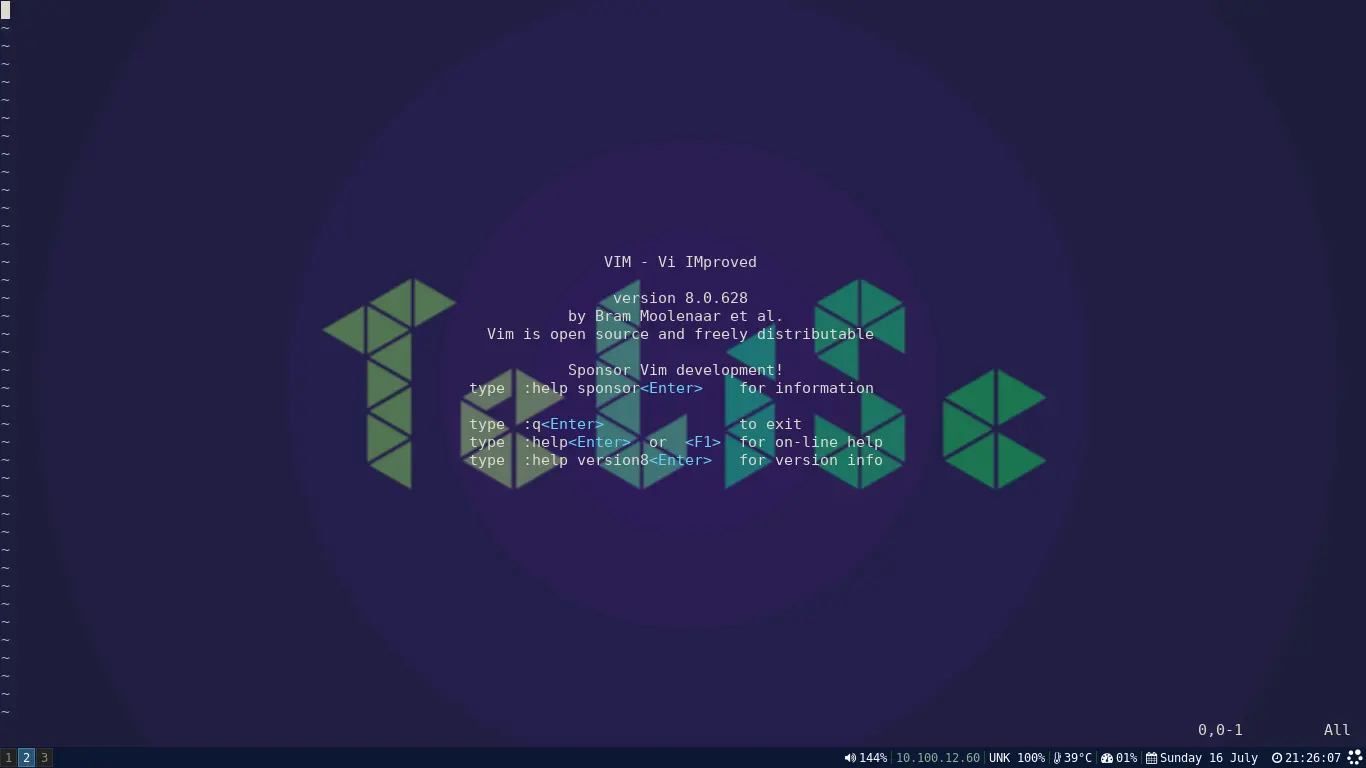
In the vast ecosystem of computing, few elements have withstood the test of time with the same tenacity as the text editor Vim. Often described as a niche tool for system administrators, Vim is actually a fundamental pillar of free software culture. Its history is not just a chronicle of technical improvements, but a reflection of how a work philosophy based on efficiency and total control has transcended generations of developers. This article explores the roots of Vim, its relationship with the Vi editor, and its lasting impact on how the digital world processes textual information.
Origins in the Berkeley Lab
The story of Vim begins with its predecessor, the Vi editor, created by Bill Joy in 1976 at the University of California, Berkeley. In an era when graphical interfaces were unimaginable, Vi emerged as an elegant solution for the Unix operating system. Unlike previous line editors, such as ed, which only allowed viewing one line at a time, Vi introduced full-screen text visualization. This innovation allowed users to manipulate text through different modes, establishing a paradigm that prioritized execution speed over visual complexity. The efficiency of Vi quickly made it the standard tool in Unix environments, where its presence was nearly universal.
The Birth of Vi IMproved
As computer power increased, the limitations of the original Vi became more evident. In 1991, Bram Moolenaar released Vim, an acronym for Vi IMproved, with the aim of overcoming these restrictions. Moolenaar did not just fix bugs but added features that transformed the editing experience. Among these improvements were more flexible insert modes, a wide range of commands for text manipulation, and greater compatibility with different terminals. Vim maintained the modal essence of Vi but enriched it with a depth that allowed users to perform complex tasks with minimal keyboard movement. This version became the turning point that separated the classic editor from its modern successor.
The Philosophy of Staying on the Keyboard
The most distinctive aspect of Vim is its modal editing model, which requires the user to switch between modes such as insert, command, and visual. This structure can be intimidating for new users, but it offers a significant advantage: the ability to edit text without moving hands from the home position on the keyboard. This "stay on the keyboard" philosophy has influenced the design of other tools and created a community of users who value fluidity and precision. The initial learning curve is steep, but the reward is an editing speed that few graphical editors can match. This feature has made Vim a preferred tool for those who work long hours in front of a screen, reducing physical and mental fatigue.
The Role of the Open Source Community
Unlike many proprietary programs, Vim has evolved thanks to a global community of contributors. Since its release, each new version has incorporated performance improvements, bug fixes, and new features proposed by users worldwide. This open development dynamic has allowed Vim to adapt to the changing needs of the tech industry. The community has created a vast library of plugins that extend the editor's capabilities, from integration with specific programming languages to the automation of repetitive tasks. This ecosystem of extensions has kept Vim relevant in an environment where development tools are constantly changing.
Presence in Servers and Embedded Systems
The influence of Vim extends beyond programmers' workstations. Its presence is ubiquitous in internet servers, supercomputers, and embedded systems. Since these environments often operate without graphical interfaces, the availability of a robust and lightweight text editor is crucial. Vim, being part of most Linux and Unix distributions, has become the default tool for system administration. System administrators rely on Vim to modify configuration files, debug scripts, and manage logs in real time. This ubiquity ensures that Vim remains an essential skill for any IT professional, regardless of their specialization.
Impact on Education and Technical Culture
Vim's modal editing model has transcended its practical use to become a topic of discussion in technical culture. In conferences and programming courses, Vim is often cited as an example of how interface design can influence productivity. The extensive documentation available for Vim, including interactive tutorials and detailed manuals, has facilitated its adoption by new generations of developers. Furthermore, the existence of Vim editing speed competitions has added an element of community and fun to what could be a monotonous technical task. This cultural aspect has helped maintain interest in the editor and attract new users seeking to master a complex tool.
Legacy and Relevance in the Modern Era
Despite the rise of integrated code editors (IDEs) with advanced graphical interfaces, Vim maintains its relevance. Its legacy lies in demonstrating that simplicity and efficiency can be as powerful as complexity and functionality. Many modern editors have incorporated features inspired by Vim, such as modal keyboard shortcuts, recognizing the value of its approach. In the current era, where development speed and the ability to work in remote environments are priorities, Vim offers a robust and reliable solution. Its history is a testament to the durability of free software and the ability of a community to keep a tool alive through decades of technological change.
- Decade
- 1980s
- Region
- Global
- Level
- Enthusiast
- Entities
- Internet, Vim
Sources and references
- Vim - Wikipedia, la enciclopedia librees.wikipedia.org · 2026-10-22
- Vim: el editor que no te sueltawww.libcom.de · 2026-10-22
- Manual / Tutorial de Vim [sromero.org] - Santiago Romerowww.sromero.org · 2026-10-22
- GNU/Linuxes.wikipedia.org · 2026-10-22
- Vies.wikipedia.org · 2026-10-22