A trace is not the service
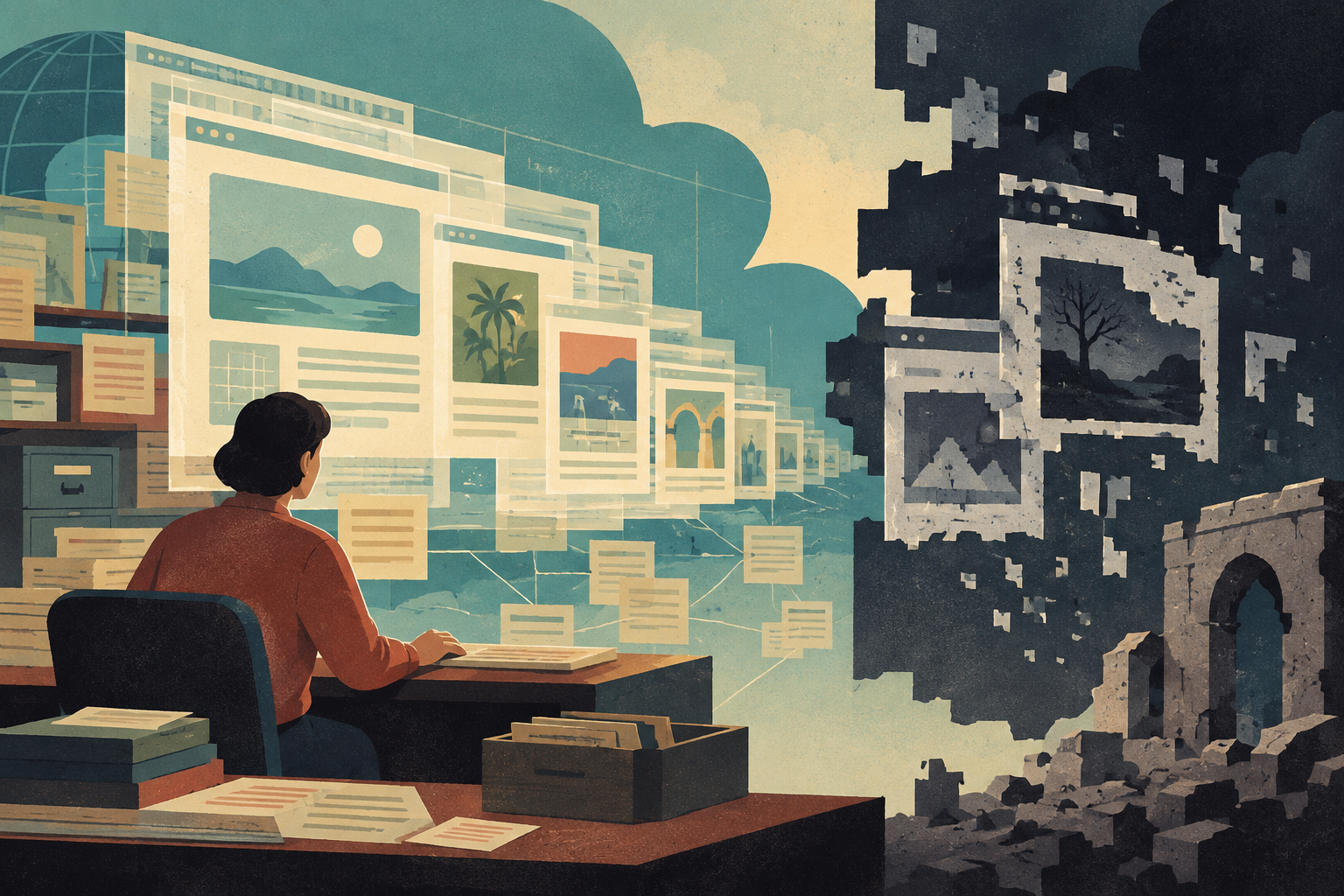
A saved page can help reconstruct how a service presented itself, but it cannot by itself recover the experience of the people who visited it. The National Library of Spain describes its Spanish Web Archive as a collection of websites gathered to preserve Spain’s documentary heritage on the Internet. In a communication marking fifteen years of preservation, the Library lists websites, blogs, forums, images and other material. These are indications of documentary scope; they do not prove that every page is preserved in full or that all its functions can be recovered.
That distinction matters. A capture is a recorded trace, not an untouched window onto the past. First describe what material exists; only then consider, cautiously, what it may suggest.
What a capture can show
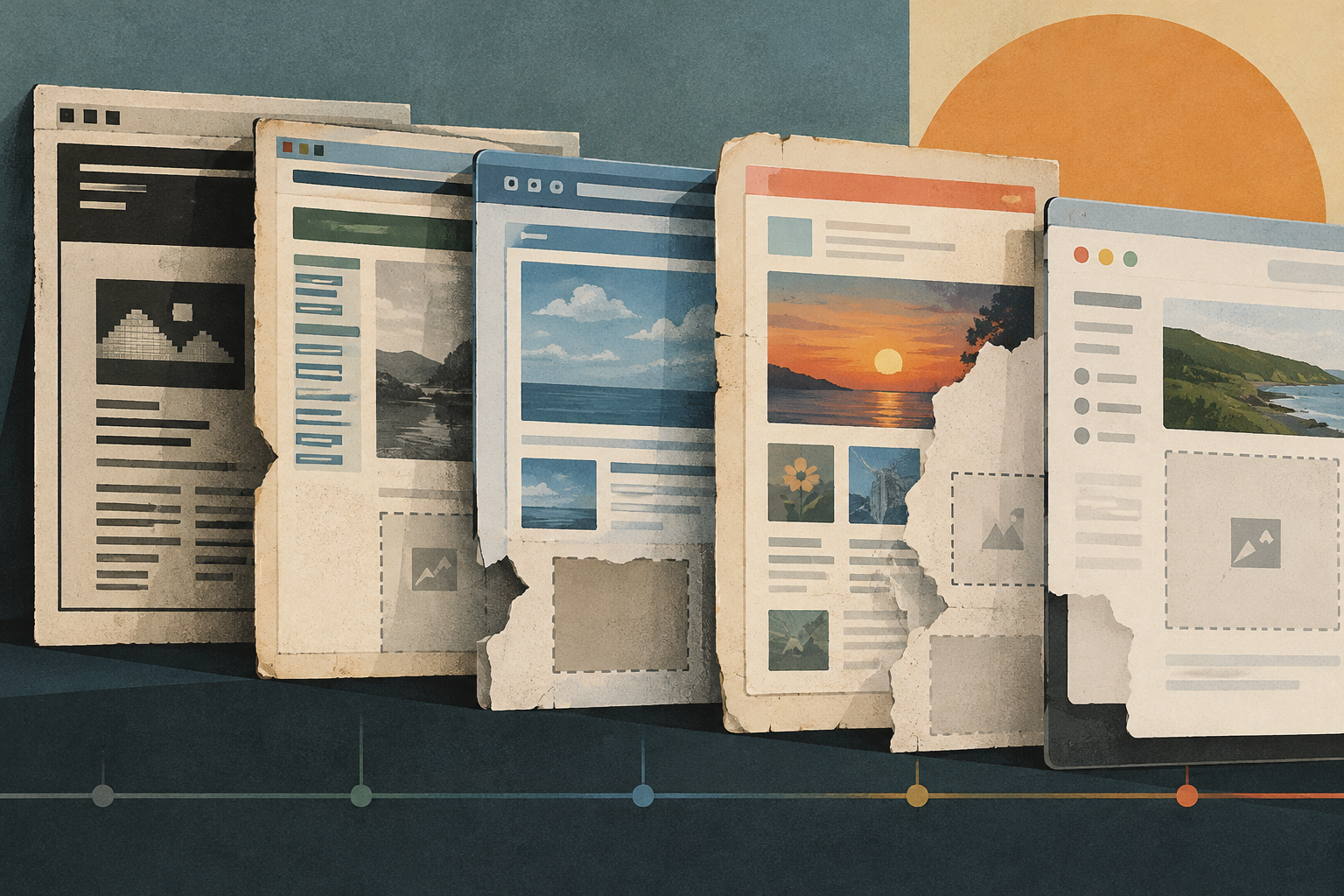
An archived page can provide evidence of content and presentation at the moment it documents. If several captures exist, comparing them could support research into visible changes. But the evidence supplied here identifies no particular captures, vanished services or sequences of versions. It would therefore be unsound to assign a particular site an appearance, function or date of use that these sources do not provide.
An archive is a starting point for research: it lets us ask what was preserved, how it was described and what is missing. It does not automatically make one page a representation of the whole service.
From pages to people
This section concerns the relationship between people and services. That relationship cannot be inferred merely from the fact that a page existed. A capture does not establish how many people visited it, how they found it, what they did next or what it meant to them. Answering those questions would require additional sources, such as contemporary documentation or attributable testimony; neither appears in the material available here.
Remembering an experience and documenting a service are therefore different activities. A memory can suggest a question, but it should not replace a date or documentary evidence. Nor should one person’s anecdote be presented as everyone’s experience.
An archive as a collection, not a total record
The National Library’s institutional description supports the statement that websites are collected to preserve documentary heritage. Its communication mentions a wider range of material types. As supplied here, neither source provides a complete inventory, a coverage statement or a guarantee that the archive contains everything published by a service.
The absence of a page from the material consulted does not prove that it never existed. It may simply mean that these sources do not show it. Responsible research distinguishes between “not located,” “not preserved” and “never existed.” These are different claims and require different evidence.
Context without false precision
The general Internet-history sources supplied here offer broad context: Telefónica presents an overview of the Internet’s origins and evolution, while the document hosted by the Technical University of Madrid describes a panorama of data networks and the Internet, including deployments. Those summaries do not, by themselves, identify a particular service or establish how its visitors used it.
Separating context from a specific history avoids false continuity. General histories help frame questions; dating and describing a service require documents directly connected to it. A broad historical date should not be transferred to a page or experience without documentary support.
Making the limits visible
Researching a vanished website means recording what kind of evidence is being consulted, exactly what it says and what remains unresolved. The Spanish Web Archive is a relevant institutional source for studying the preservation of Spanish websites; the sources supplied, however, do not allow a detailed reconstruction of an individual vanished service.
That limit does not make the archive useless. It helps produce a more honest history: one that distinguishes record from recollection, a page from the complete service, and what a collection lets us observe from what it cannot yet prove. Reconstruction begins by preserving traces—and by not asking them to say more than they contain.
- Decade
- 2000s
- Region
- Spain
- Level
- Enthusiast
- Entities
- Archivo de la Web Española, Internet
Sources and references
- Antes de la web-museo: las primeras colecciones culturales ...www.retropause.com · 2026-10-12
- Historia de Internet: ¿cómo nació y cuál ha sido su evolución? -www.telefonica.com · 2026-10-12
- ¡15 años preservando el patrimonio digital! Desde 2009 ...www.facebook.com · 2026-10-12
- Historia de Internet y de sus inicios en Españaoa.upm.es · 2026-10-12
- Archivo de la Web Española | Biblioteca Nacional de Españawww.bne.es · 2026-10-12