A poster, label or advertisement does not arrive in an archive speaking for itself. Understanding it requires information about its provenance, its support and the context in which it was preserved. It also matters where it appears, which other pieces it is compared with and what information accompanies its display. Arrangement is not a neutral detail: it can help pose questions or encourage an interpretation that the available documentation cannot confirm.
The useful question is not only what a piece looked like, but which communicative and functional decisions we can observe and which we are supplying ourselves. It helps to distinguish three levels: what the object shows, what the source documents and what we propose as interpretation. This caution makes it possible to discuss visual language without turning an impression into a historical fact.
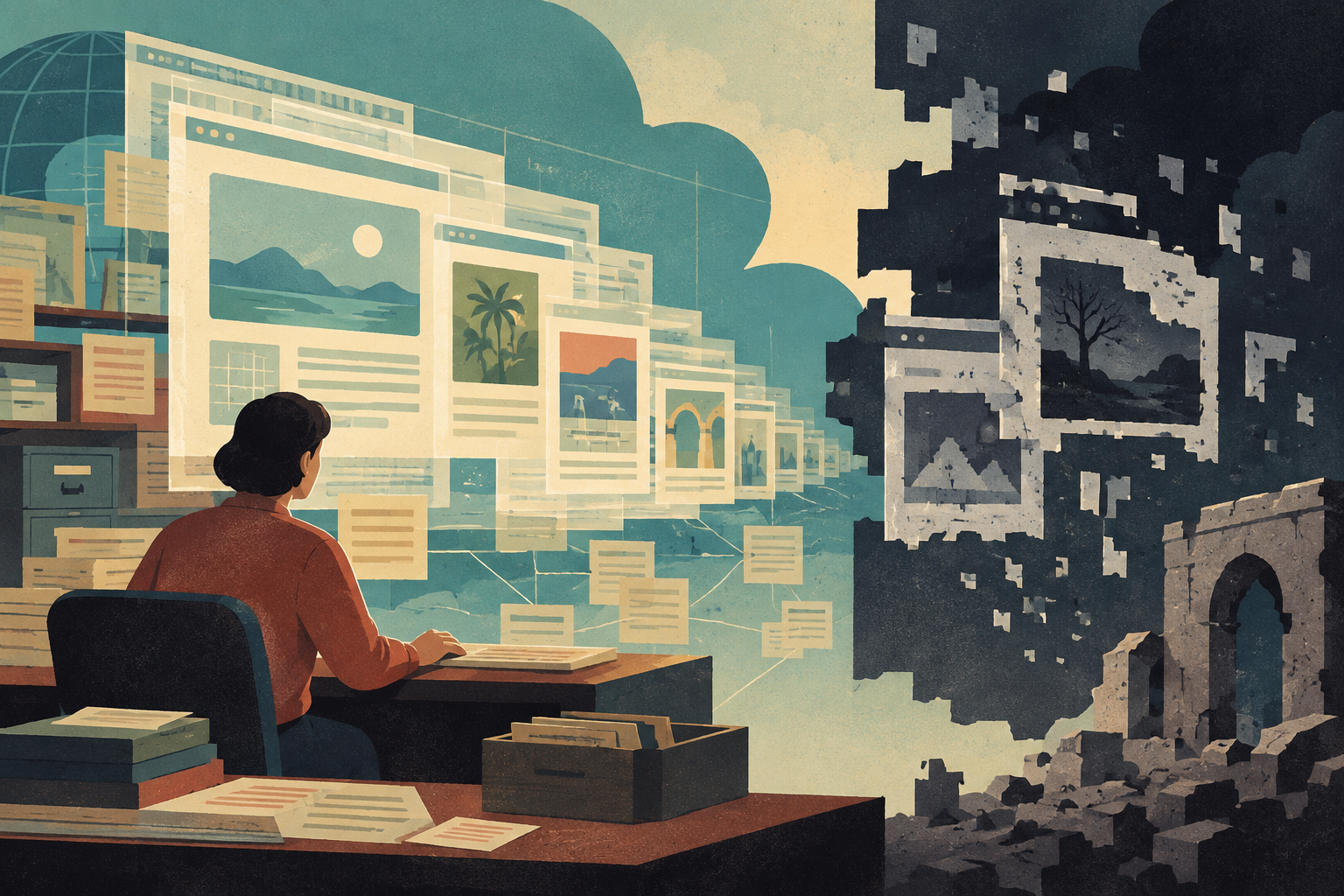
An archive is not a transparent window
An archive gathers and orders materials; selection and description are therefore part of the experience of consultation. The supplied page about the virtual museum MUVAP describes it as a project that documented the history of Spanish advertising and graphic design through exhibitions. This description supports the claim that exhibition was a way to document and present material, but it is not enough to reconstruct every selection criterion or the route taken by visitors.
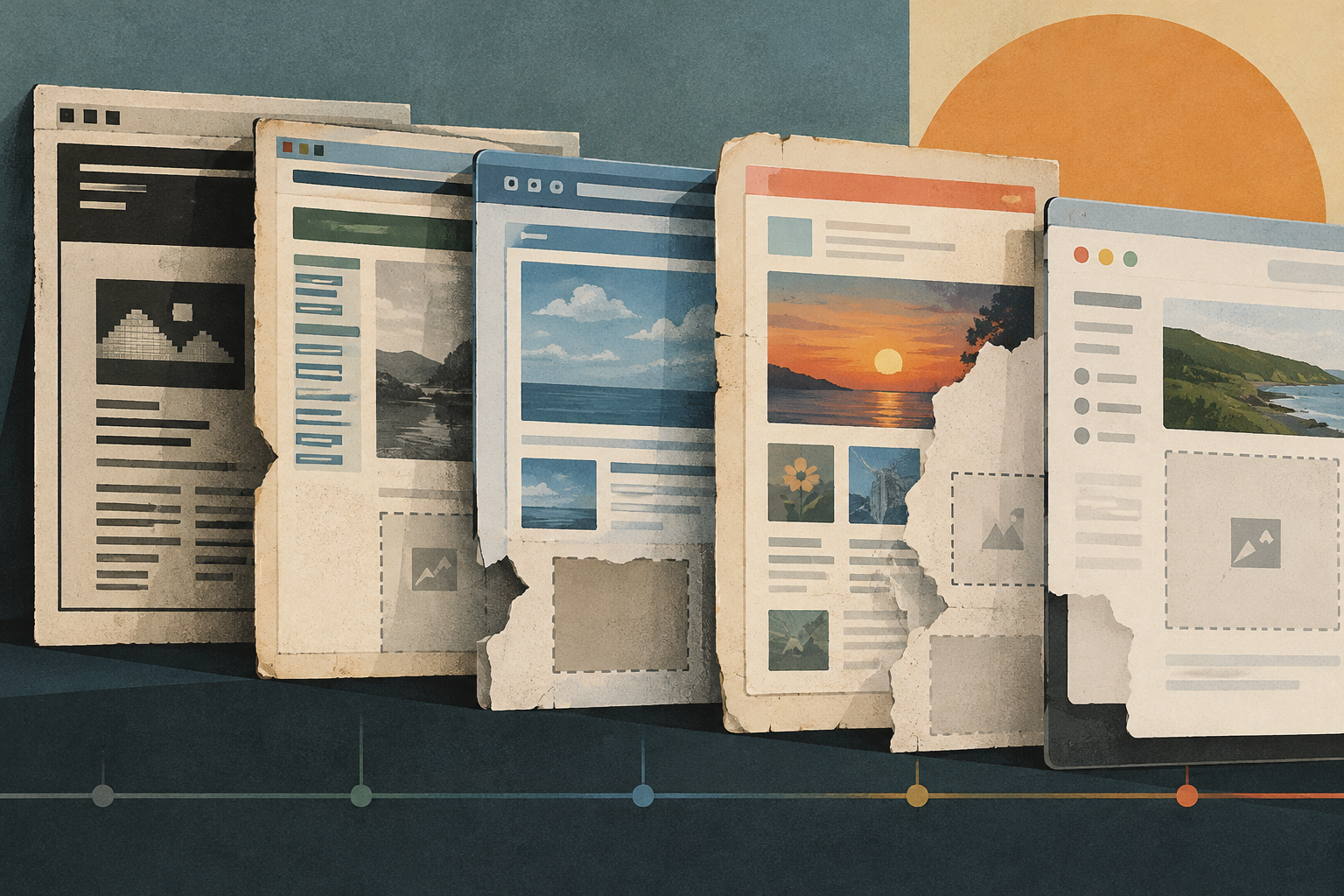
The distinction matters. An exhibition can make relationships between pieces visible, but a relationship suggested by proximity or sequence is a proposal for reading, not necessarily a proven historical connection. Further evidence is needed to establish a connection: production documentation, provenance records or sources that explain the link. If those are unavailable, the responsible approach is to present the comparison as an analytical tool.
Read the piece before labelling it
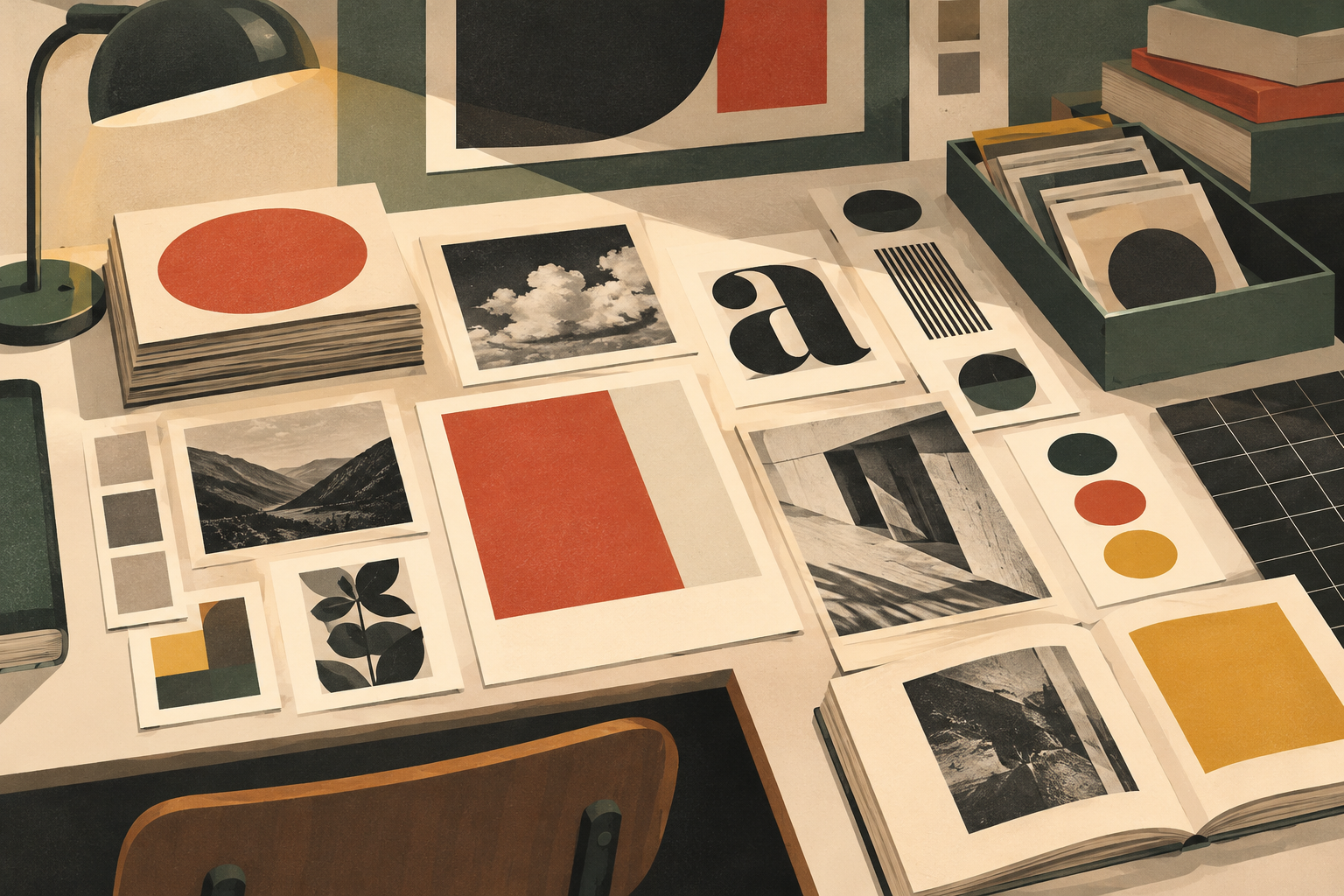
In graphic design, form can guide attention, establish hierarchies and organize information. Advertising can also seek to inform or persuade, according to the general definition in the supplied encyclopedia entry. But recognizing a general function does not establish the intention behind a particular advertisement, who encountered it or what effect it had.
A careful reading begins by describing observable features: text, image, contrast, composition, scale and support, where these are visible in the piece. It can then ask what that arrangement makes easier: locating information, distinguishing a name, directing the gaze or making a message recognizable. The next step is to mark the limit: without contextual documentation, describing a probable function is not the same as proving the original purpose.
The medium is part of the message
Outdoor advertising offers a clear example of how support and location condition reading. The supplied source lists posters, billboards, illuminated signs, banners and street furniture among its formats, and notes that a shop façade can be important to that business’s advertising. This suggests a design question: what information needed to be legible in that setting, and from what distance or situation of use?
The source provides no measurements, specific examples or audience data. It would therefore be unwise to attribute a particular technical solution to an object without seeing it and consulting documentation. The list is a reminder that “advertising” does not have one single appearance: material, location and scale can change the conditions of reading. Form is not merely an aesthetic label; it may be a response to a medium and a context.
Company collections and their limits
The description of the Alessi archive says it contains documents about the company’s history and Italian design. It is an example of how a company-linked archive can hold materials useful for studying more than one subject. However, that description does not establish which specific documents it preserves, which periods it covers or how any item relates to a design decision or campaign.
The idea that a brand archive offers a situated perspective is a methodological caution, not a specific fact about this collection. Conclusions require examination of the materials and knowledge of their production and preservation contexts. The presence of documents in a company collection does not by itself prove that a piece represents the entire history of a discipline or a country.
Compare without confusing resemblance and connection
Placing two pieces side by side can reveal differences in hierarchy, composition or support. Such comparison is useful even when there is no historical relationship between them, provided that this is made clear. Visual resemblance, by contrast, does not prove influence, shared authorship or continuity of a campaign. These are different claims and require different evidence.
The supplied sources on advertising agencies describe tasks such as creating, planning and managing advertising, while another source’s account of graphic design highlights the use of images, symbols, typography, colour and composition. These are general descriptions, not evidence about a particular commission. Moving from a general framework to a case requires identified objects and documentation connected to them.
A responsible reading
The value of an exhibition or archive lies not only in assembling attractive objects. It can also lie in showing how information is organized and what can—and cannot—be inferred from it. The RetroPause text included among the sources proposes attending to what the arrangement of pieces can explain and what should remain unasserted. Here that idea becomes a simple practice: describe, contextualize and then interpret, making the degree of certainty visible.
The available evidence lets us discuss documentation projects, types of advertising support and archives that gather materials related to companies and design. It does not let us reconstruct specific campaigns, measure their impact or assign intentions to unidentified pieces. Acknowledging that limit does not weaken the analysis. It helps distinguish an observable functional decision from an aesthetic label and turns looking into a verifiable question.
- Decade
- 2000s
- Region
- Spain
- Level
- Enthusiast
- Entities
- Museum, MUVAP
Sources and references
- Los Museos de Empresasevemuseografia.com · 2026-10-12
- MUVAP (2001- 2016): museo virtual que documenta la ...revistas.ucm.es · 2026-10-12
- Cuando el archivo ordena la mirada: diseño y publicidad en el ...www.retropause.com · 2026-10-12
- Historia del diseño gráfico: origen, etapas y evoluciónwww.jftcomunicacion.es · 2026-10-12
- Publicidades.wikipedia.org · 2026-10-12
- Publicidad exteriores.wikipedia.org · 2026-10-12
- Agencia de publicidades.wikipedia.org · 2026-10-12