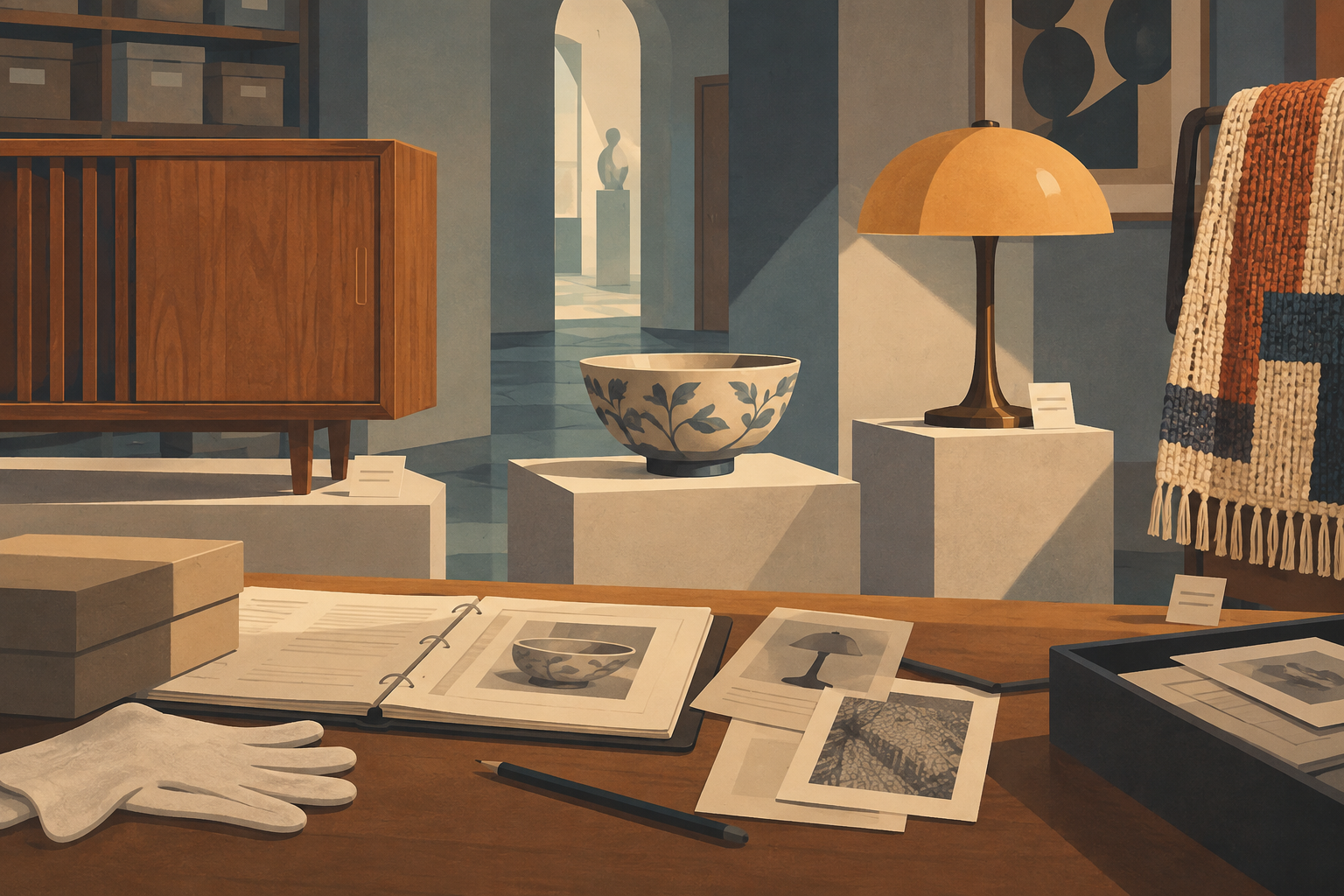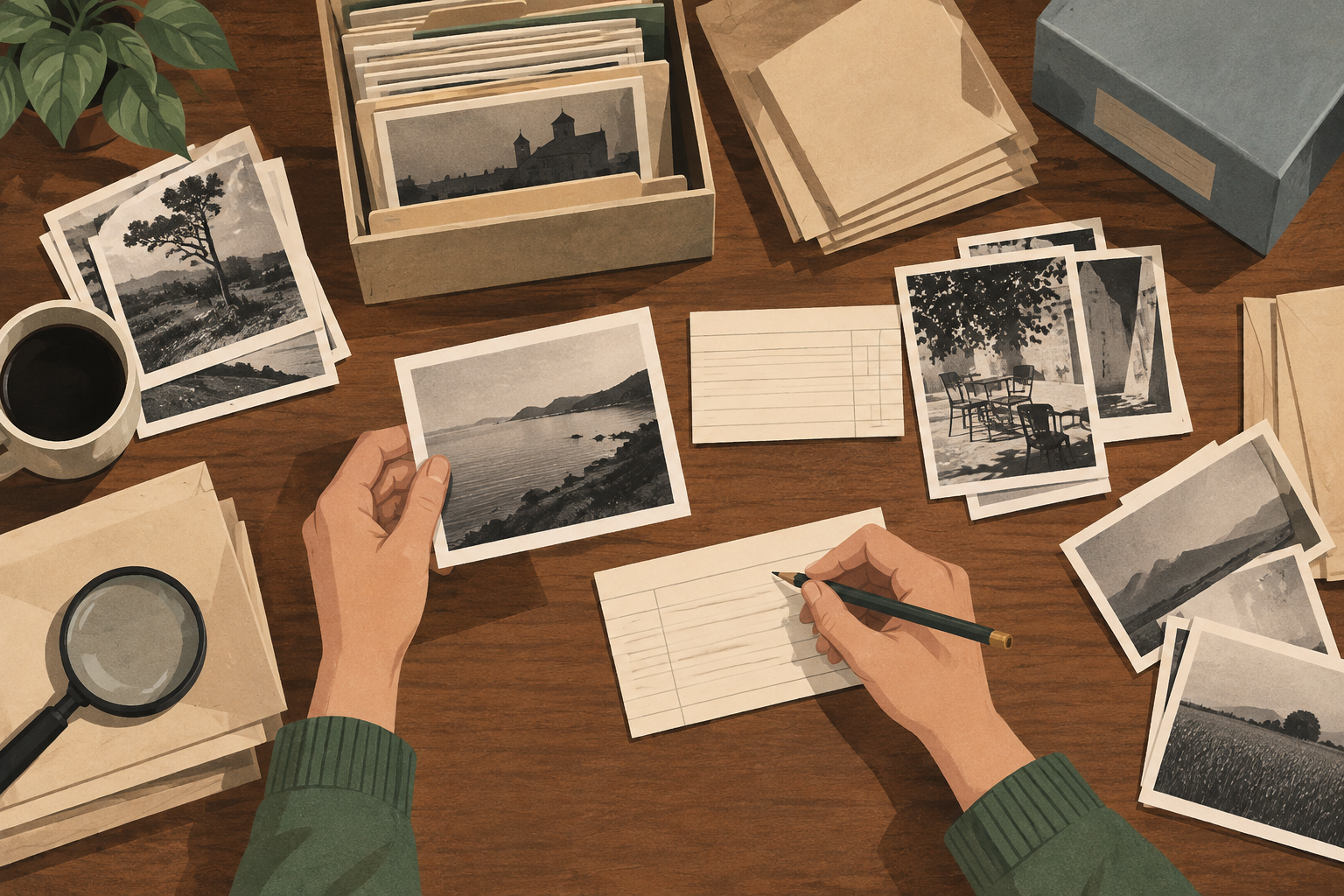
A photograph reaches the present not only as an image. It also comes through a collection, a description, an assigned date and the decisions that make it findable. The available resources on Spanish photographic archives show why it is worth examining these layers before treating an image as proof of a larger story. The supplied information identifies some collections and research references; it does not, however, reconstruct the detailed history of every photograph or establish that all catalogues describe their materials in the same way.
The collection matters as much as the image
The Photographic Archive of Spain’s Institute of Cultural Heritage (IPCE) states that it holds more than 700,000 photographic documents, with a chronology extending from the 1860s to the present. This institutional description conveys the collection’s scale and temporal range. It is not an individual account of every document: to establish who made it, what it depicts or how it entered the collection, one would need to consult its catalogue record and, where available, additional documentation.
The Historical Photography Archive of the Canary Islands offers another example of provenance information. Its institutional history dates the Cabildo of Gran Canaria’s acquisition of a collection from José Antonio Pérez Cruz to 1999. This is useful evidence of a particular addition to an institution. By itself, it does not establish when each photograph was taken, who made each exposure or how the images were originally used. The acquisition date of a collection and the date a photograph was made are different things.
Cataloguing also involves interpretation
Describing a photograph means choosing what information to preserve and how to express it. A title, date or identification can help locate an image, but its certainty depends on the evidence behind it. It is therefore useful to distinguish institutional information about a collection from claims about an individual photograph.
A portal that gathers photographic archives with open digital access can serve as a starting point for locating material. Online access, however, does not guarantee that every image has the same amount of context, or that the visible description contains all the information held by the institution. A catalogue guides research; it does not replace checking the conditions, notes and documents associated with a collection.
Photography and video do not organize time in the same way
One available academic reference explicitly addresses temporal factors and rhythm as distinguishing features between photography and video. Its title identifies the subject of the discussion, but is not enough to attribute specific conclusions to the article when they are not included in the supplied information. It does support a general caution: a still image and an audiovisual sequence organize time differently and should not be treated as equivalent sources without attention to their characteristics.
Another bibliographic reference concerns photography as a profession. Its presence is a reminder that the history of images can also be studied through work, not only through surviving objects. The supplied record does not present the chapter’s arguments or examples, so its conclusions cannot be described here. What can be verified is the subject indicated by the title, not an unconsulted discussion.
What a careful reading can establish
The IPCE Photographic Archive and the Canary Islands archive allow us to discuss institutions, collections and time spans where their descriptions provide that information. A study of the training of cinematographers in Spain, identified as a 2021 publication covering 2001–2016, also points to research on professional training. Because its period extends beyond 2009, it should not be presented as evidence of a transformation completed within the 1970–2009 frame.
This distinction between evidence and scope helps avoid two common errors: assigning undocumented provenance to an image and turning a catalogue fact into a complete narrative. An archive does not remove uncertainty; it helps locate it and sometimes makes it possible to ask better questions.
An open-ended conclusion
Reading historical photography requires attention to both the image and the information accompanying it. The cited resources provide verifiable leads on collections, access, acquisition dates and research topics. They do not justify filling gaps with assumed memories or a uniform story of technological change. The useful task is to describe what we know, identify the source that supports it and make clear what still requires investigation. An archive is therefore not only a storehouse of images; it is also the set of decisions and records that makes them available for research.
- Decade
- 2000s
- Region
- Spain
- Level
- Introduction
- Entities
- No linked entities
Sources and references
- Historia de un archivo – Página 23www.fotosantiguascanarias.info · 2026-09-29
- Fototeca - Instituto del Patrimonio Cultural de Españaipce.cultura.gob.es · 2026-09-29
- Archivosportalvirtualfotografico.es · 2026-09-29
- El factor temporal y el ritmo como distintivo entre fotografía y vídeodoi.org · 2026-09-29
- La fotografía como oficiodoi.org · 2026-09-29
- La formación de los directores de fotografía de cine en España (2001-2016)openalex.org · 2026-09-29