The image is not all the evidence
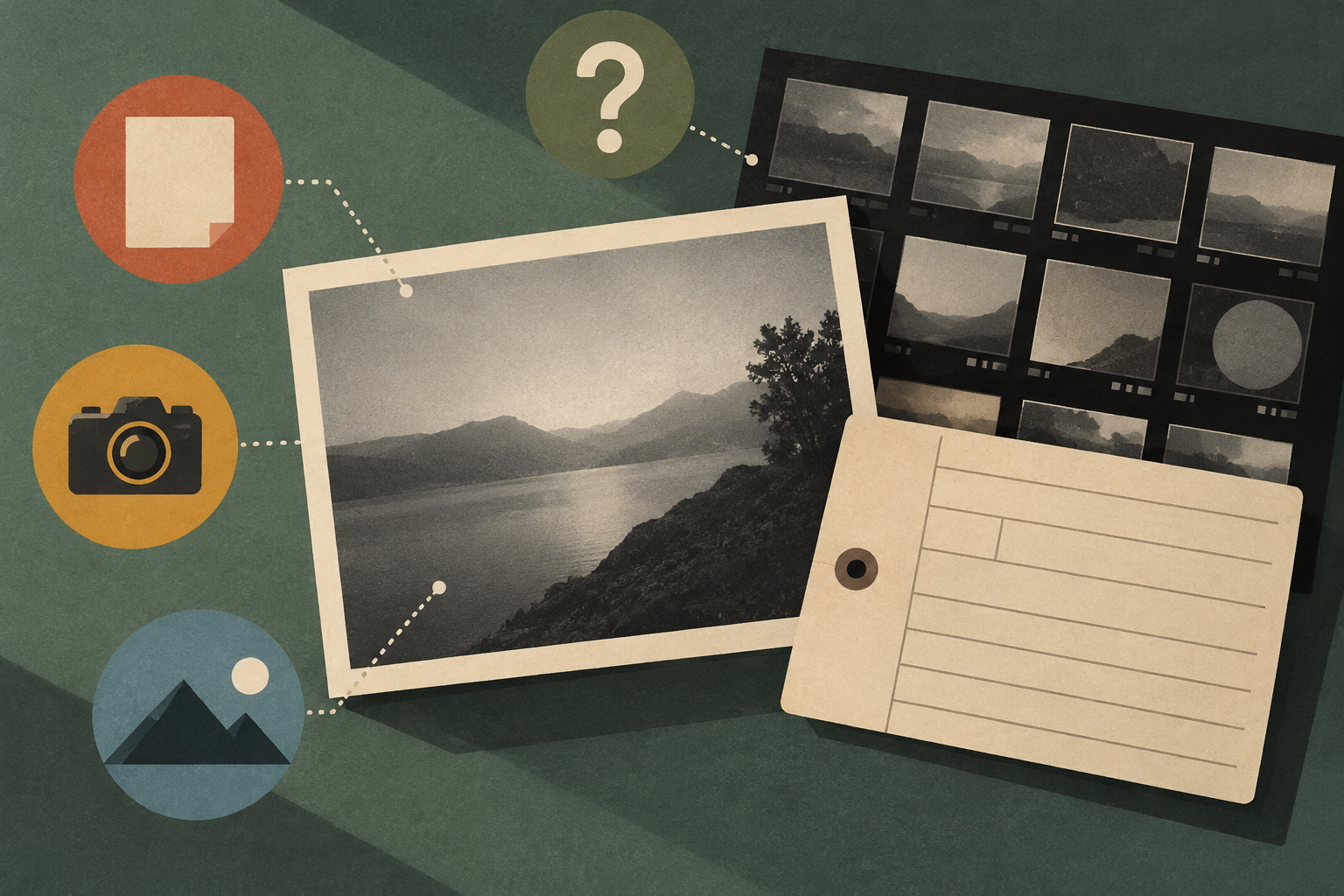
A photograph can preserve visual information while leaving essential questions about its production unanswered. The frame shows what ended up inside the image; it does not necessarily identify who made it, under what circumstances, on which support or by what process. To investigate it, separate what can be seen from what is documented and from what remains a hypothesis.
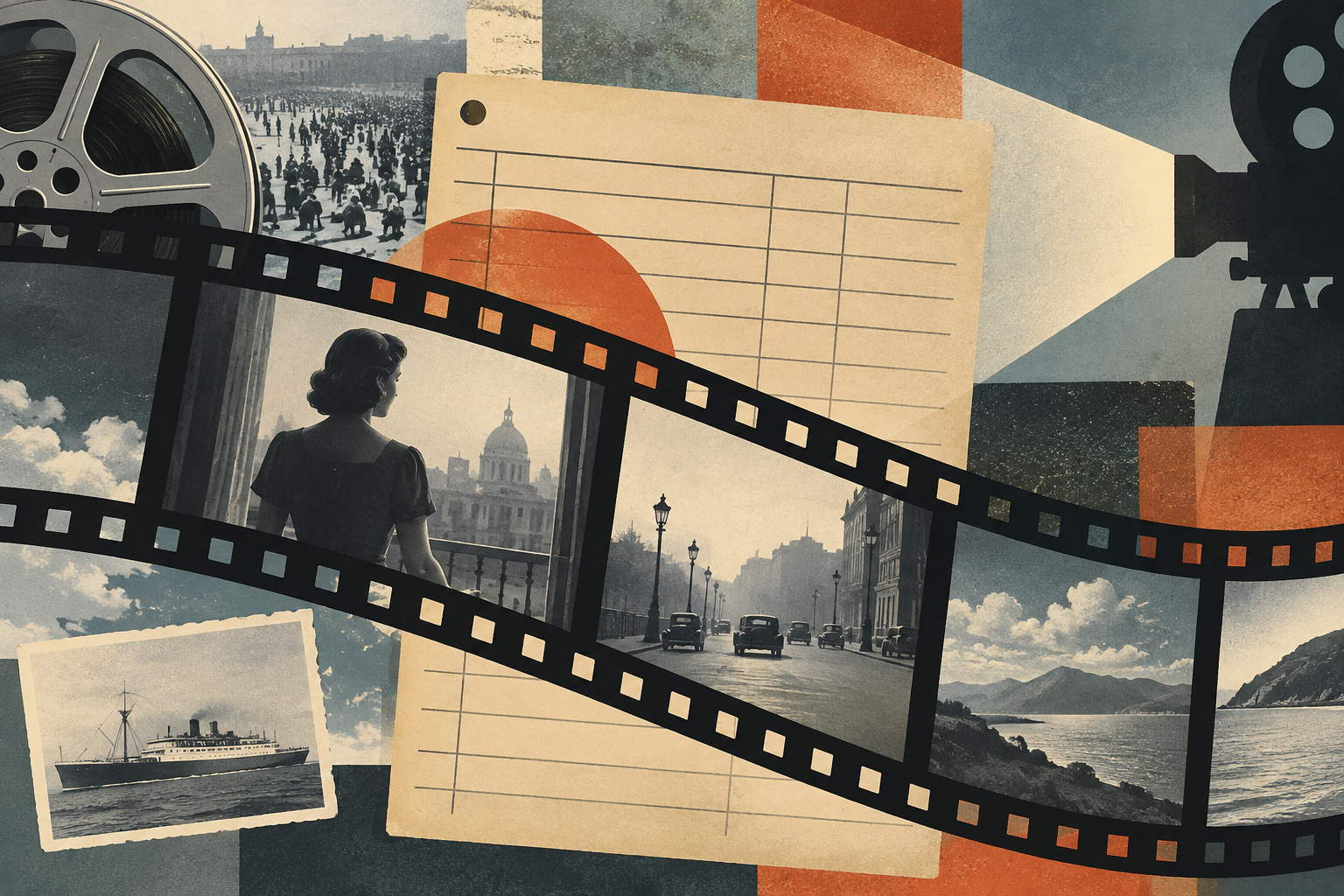
This caution is especially useful when a photograph comes with only a brief description. The record for the National Archaeological Museum’s photographic archive says that the collection spans a broad period and includes diverse photographic techniques. The available information, however, does not list those processes or allow one to be assigned to a particular image. A broad collection is not the same thing as an individual identification.
Archives have a history too
Photographic collections are not neutral windows onto the past. Their organization, description and preservation are part of the history of the images. A study on photography and archives registered in Fotocinema, and another on historic photographic holdings related to Aragonese art in institutional collections, offer research paths focused on these relationships. The supplied records identify the works but do not include their full arguments, so no specific conclusions can be attributed to them here.
For an individual image, provenance and catalogue description may offer clues about how it was gathered and consulted. They do not automatically establish the date it was taken, the identity of the people portrayed or the photographer’s original intention. The presence of a photograph in an institutional collection documents its presence there, not every earlier stage of its circulation.
Documenting objects is not the same as explaining images
The protocol for visual documentation of museum collections describes object photography as a record intended to identify collection items. That purpose matters: an image made to document an object should not automatically be treated as a photograph conceived as an independent artwork, family keepsake or news report. Function can guide interpretation, but establishing it in a specific case requires evidence about production and use.
The distinction also helps frame practical questions. Does the photograph show an object to make it easier to recognize? Is there an associated record? Is the collection it belongs to known? Does the description state a support or technique, or merely identify the subject? If the consulted documentation does not answer, the gap should remain a gap rather than be filled by visual inference.
Amateur photography as a field of study
A 2024 work titled Amateur Photography in Spain: Concepts, Historiography and Methods confirms, at least through its subject and bibliographic framing, that amateur photography can be approached through concepts, research history and methods. Its title alone is not enough to summarize the article’s definitions or findings. It does, however, support an editorial caution: “amateur” should not automatically mean technically inept, low quality or domestic use. Applying the category to an image requires knowledge of the study’s criteria and evidence from the particular case.
A second academic work, on underground photography through the fanzine Rockocó and the Miguel Trillo Archive at the Reina Sofía Museum, points to another relationship worth investigating: photographs, publications and archival collections can be read together. The available reference does not describe individual images or detail their photographic process. It identifies a subject of study; it does not justify assigning a shared aesthetic, support or function to all underground photographs.
What a catalogue record can establish
A catalogue record is a tool for access, not a substitute for the photograph or a guarantee that all its data have been resolved. The Ibermuseos protocol emphasizes the identification role of photographic records for collections. The supplied material does not allow us to reconstruct all its fields or technical instructions; it does allow us to distinguish this documentary task from a comprehensive explanation of an image.
In practice, keep at least three layers separate: visible features, explicit catalogue data and interpretation. The first can describe what appears; the second depends on the documentary source; the third needs supporting arguments and may remain provisional. A title or date in a record should be presented as information attributed to that record, not as independently verified fact unless additional evidence exists.
Limits are knowledge too
The evidence available for this article consists of bibliographic records, brief descriptions and institutional references. It does not include reproducible images, complete catalogue records or detailed analyses of negatives, prints or materials. Consequently, it cannot identify specific photographic processes, establish the composition of supports or date particular photographs. Nor can it establish that a given image has been restored or altered.
Naming these limits does not weaken research; it prevents a technical possibility from becoming false certainty. Archives and protocols help us know where to look and what questions to ask. Identifying process, support and context, however, requires evidence tied to the specific image. Until that evidence appears, the rigorous answer is to leave the question open.
- Decade
- Contemporary
- Region
- Spain
- Level
- Introduction
- Entities
- Museum, Museo Arqueológico Nacional, Museo Reina Sofía
Sources and references
- Fotografía y archivodoi.org · 2026-10-08
- Fondos de fotografía antigua sobre el arte aragonés en la Biblioteca Nacional y unas notas sobre el Museo del Prado y el Archivo Histórico Nacionaldoi.org · 2026-10-08
- Una mirada documental de la fotografía underground a través del fanzine Rockocó. Análisis del Archivo Miguel Trillo en el Museo Nacional Centro de Arte Reina Sofía (MNCARS)doi.org · 2026-10-08
- Fotografía amateur en España: conceptos, historiografía y métodosopenalex.org · 2026-10-08
- Archivo fotográfico del Museo Arqueológico Nacionalportalvirtualfotografico.es · 2026-10-08
- Congreso Internacional "Fotografía y Museowww.youtube.com · 2026-10-08
- protocolo-documentacion-visual.pdfwww.ibermuseos.org · 2026-10-08