An archival image within a work of fiction can look like immediate proof: the past appears before us, framed and seemingly intact. Yet the image does not explain its own provenance, how it was selected, or what role it plays in the story. To study it without mistaking appearance for evidence, we need to place the question at the intersection of film documentation, historiography and the analysis of image use. The available sources suggest such a method; they do not allow us to describe a particular film or reconstruct how an image was received in cinemas and on video.
Fiction does not make an image a transparent document
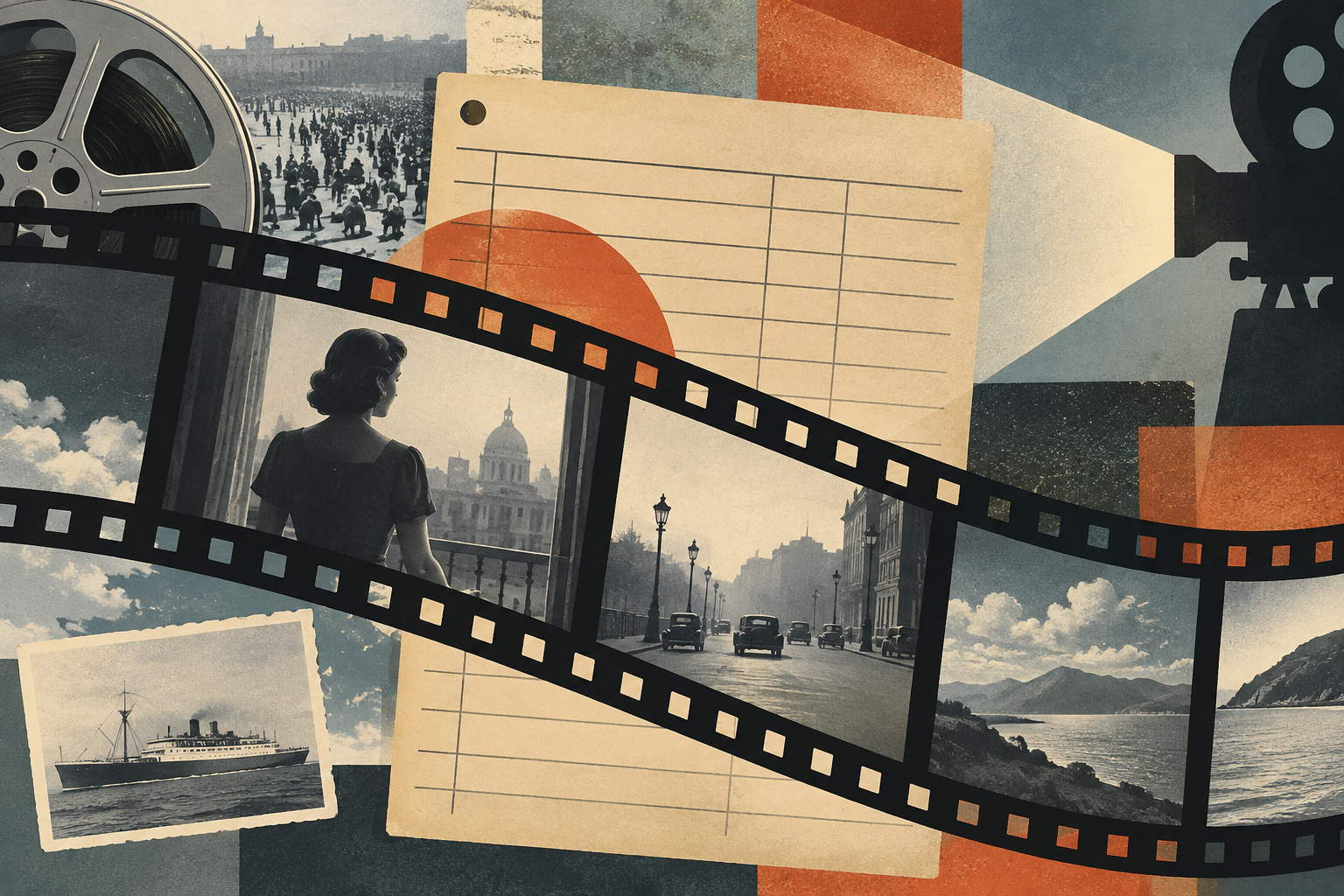
A 2021 academic article deals explicitly with archival images in fiction cinema and films based on a true story. Its title points to a useful question: what role does pre-existing material play when a narrative work invokes historical events? The bibliographic record alone, however, does not tell us its conclusions, examples or methods. The starting point here is therefore a reading question, not an answer attributed to that article: what does each image allow us to infer, and what remains outside the frame?
The distinction matters because an image can contribute to a story without independently verifying every claim the story makes. Its presence, context and relation to other images need investigation. This caution does not disqualify fiction as a source; it avoids assigning it a evidentiary power that we have not established.
What film documentation can provide
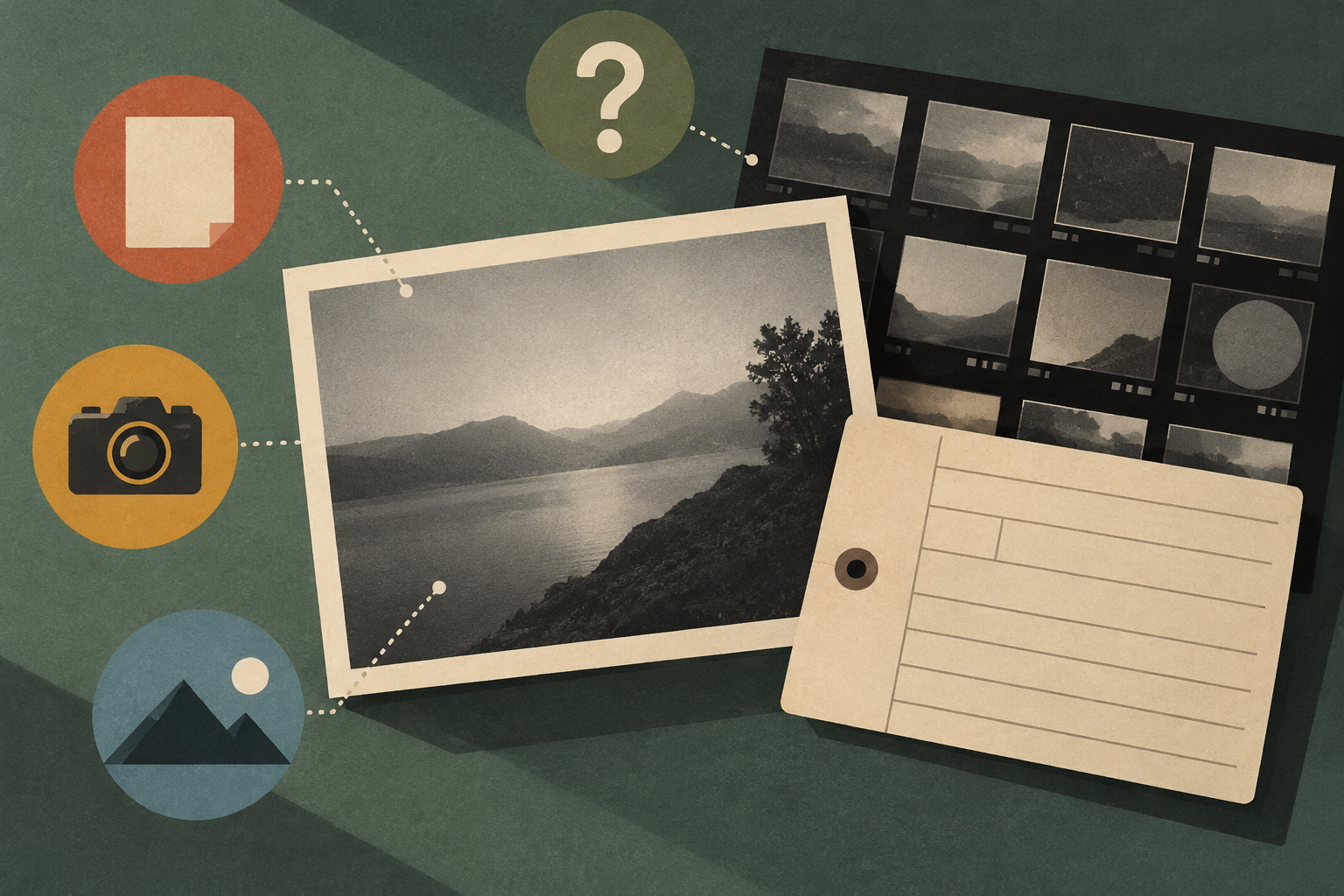
A 2016 article on film documentation frames the field in historical and contextual terms. Its summary mentions archival practices and descriptive information such as title, filmmakers, genre and shooting dates. A record can help identify and organize a work, but it cannot replace the film or explain the meaning of a sequence by itself. Here, documentation is the beginning of an investigation: it helps us ask more precise questions and check what has been recorded.
Records also have limits. The appearance of a detail in a catalogue does not mean it describes every version, use or circulation context of a film. Nor should a cataloguing category be confused with critical interpretation. The record supplies coordinates; analysis must explain what is observed, which sources support comparison, and where uncertainty remains.
Cinema and history are different operations
The volume Historia y cine. La construcción del pasado a través de… places cinema in relation to the construction of the past. Its framing invites us to distinguish historical events from their cinematic representation. A film organizes material through narrative and staging decisions; studying that representation is not the same as treating it as a neutral reproduction of events.
That is why an archival image needs context. Where possible, research should establish its provenance and the relationship between the original material and the sequence in which it appears. The supplied sources do not identify particular images, films, source archives or editing decisions. To claim otherwise would be to invent. They do support a careful editorial rule: first describe what can be verified, then distinguish interpretation of the image’s effect from that evidence.
Documentary value does not depend on genre alone
A study of the musealization of film heritage notes that documentary value is generally attributed above all to nonfiction cinema, and relates that association to the emergence of documentary as a genre. This observation opens a critical question: why assume that a nonfiction image documents while an image in fiction merely represents? The issue cannot be settled by classifying an entire work in advance.
The useful question is more specific: what claim is being supported by a sequence, and what external evidence corroborates it? Fiction may be relevant to the study of ways of representing the past; that does not automatically prove the historical accuracy of its images. Likewise, the nonfiction label does not remove the need to investigate origin, selection and context. Genre can guide questions, but it cannot replace verification.
Archiving also organizes how we read
A 2017 text titled El archivo en la época de su reproductibilidad técnica offers another way to approach the problem: archives and the reproduction of images. The supplied material indicates that it addresses historical context and searches by categories such as genre, director and year. It does not detail the text’s argument here. These elements should therefore be treated as leads for documentary research, not as conclusions that the source lets us verify.
Search categories shape what can be found and connected. If a catalogue allows searches by genre or year, those options help locate records; they do not by themselves establish how an image circulated or how it was received. Studying the transition from cinema to video would require circulation and reception sources that are absent here. Posters, editions and criticism would be relevant materials within RetroPause’s editorial remit, but they are not documented in this group of results.
A deliberately limited conclusion
The sources outline a research path, not a complete history of film reception. Together they allow us to connect film documentation, the construction of the past, heritage and the use of archival images in fiction. They do not identify a particular film, its images, its release, its video editions or audience responses.
That limitation is productive: it prevents nostalgia from standing in for the work, and evocative imagery from standing in for analysis. For each sequence, we can ask what is visible, what documentation identifies, what interpretation the film offers and what independent support exists. When those answers are unavailable, saying so is part of the history too. An archive offers traces to investigate, not an automatic explanation of what a film means or how it was received.
- Decade
- Contemporary
- Region
- Spain
- Level
- Enthusiast
- Entities
- No linked entities
Sources and references
- Imágenes de archivo en cine de ficción: cine basado en una historia realopenalex.org · 2026-10-08
- Historia y cine. La construcción del pasado a través de ...ifc.dpz.es · 2026-10-08
- La Documentación Fílmica: marco contextual históricorevistas.ucm.es · 2026-10-08
- musealización y puesta en valor del patrimonio cinematográficodigibug.ugr.es · 2026-10-08
- Museos y archivos del cineunesdoc.unesco.org · 2026-10-08
- El archivo en la época de su reproductibilidad técnicawww.vivomatografias.com · 2026-10-08