The image is not the whole document
A photograph can preserve a scene while leaving out information that matters to its interpretation: who made it, when and where, for what purpose, and what happened before or after the exposure. The image offers visual information, but does not automatically answer every question. Studying a photograph as a document therefore means distinguishing what we see from what we can demonstrate.
Research on photography as a historical document cautions against treating an image as a transparent reflection of reality. The framing, the photographer’s choices, and the conditions under which the image was preserved all affect what can be read today. This caution does not diminish photography’s value; it clarifies what kind of evidence it offers and where its limits begin.
The support carries information too
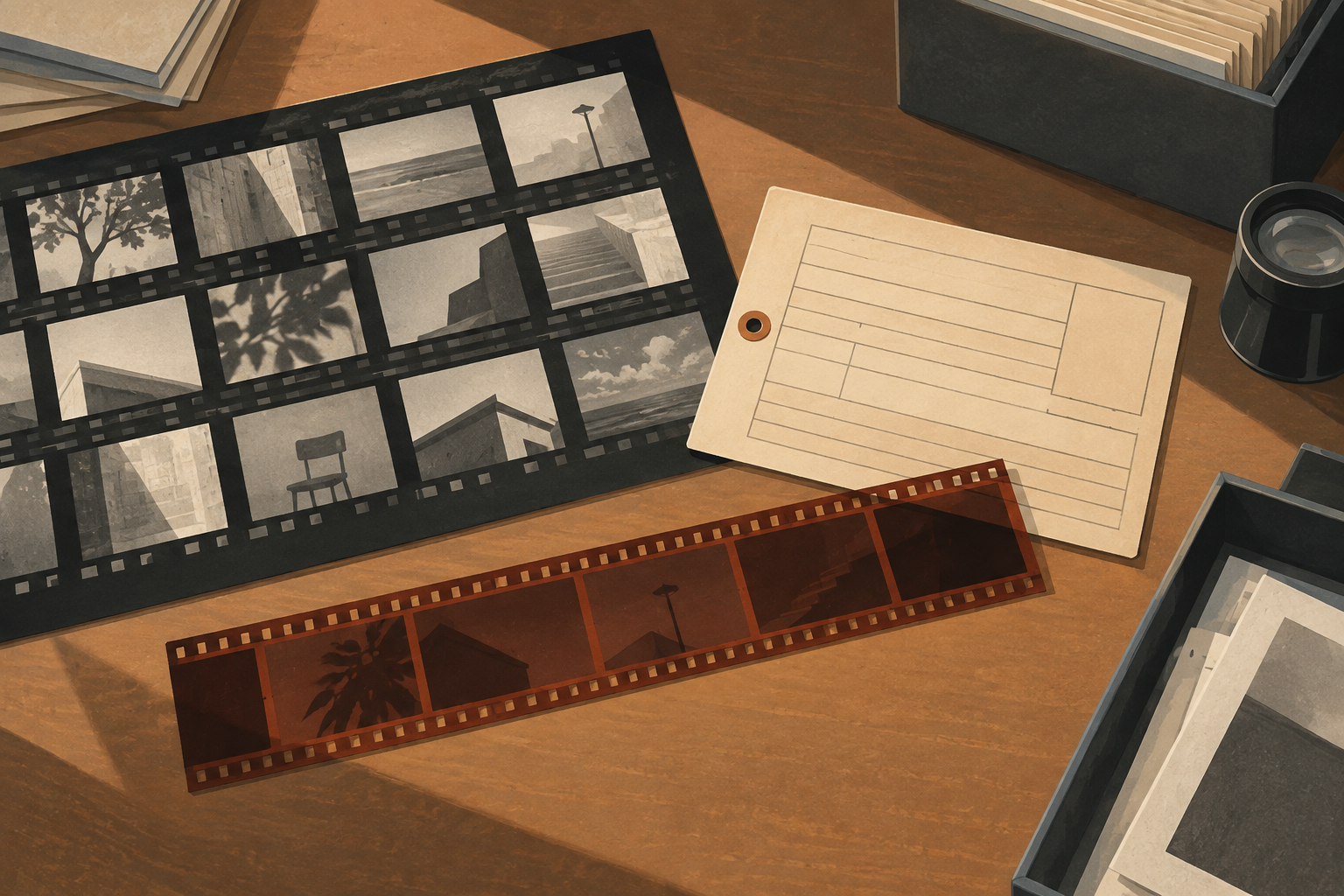
A photographic result does not exist apart from its support and process. A photograph may be fixed on a light-sensitive material or converted into electronic signals; in either case, the image belongs to a material and technical chain. Its surface, format, and accompanying elements may help establish how it reached us, though they cannot, by themselves, provide a complete history.
Sources on photographic archives describe collections studied through developing and printing processes, cameras and lenses, as well as the images themselves. This is useful because it shifts attention from the isolated image to the objects and practices connected with its production and care. It cannot identify the process used for a particular photograph without examining it, but it indicates the questions worth asking.
Developing does not explain everything
Developing is part of producing a chemical photograph, but a developed image does not necessarily come with an exact date or secure identification. An academic source notes that a date can sometimes be established because the photographer wrote it on the back of a paper print. The qualification “sometimes” matters: an inscription may be documentary evidence, not automatic proof of who wrote it or when.
It is therefore important to distinguish an observed mark from its interpretation. An inscription may suggest a name or date; its reading should be checked against other available evidence. When information is missing, the responsible approach is to preserve uncertainty rather than complete the story through conjecture. A photograph provides evidence, but not always the evidence an observer hopes to find.
Description and collection shape interpretation
An archive is not merely a place where images are deposited. Description, arrangement, and relationships between documents provide context, although they too should be examined as part of the history of preservation. Reports on photographic collections and studies of press archives show that documentary work can cover photographic processes, cameras, lenses, and related materials.
A record can help locate an image and bring together information about it; it should not be confused with the image or assumed to be infallible. If a photograph is kept with annotations, envelopes, or other materials, these may prompt new questions. Separating them, or losing their connection to the image, can reduce the information available. But their significance must not be asserted without supporting evidence.
From physical print to digital workflow
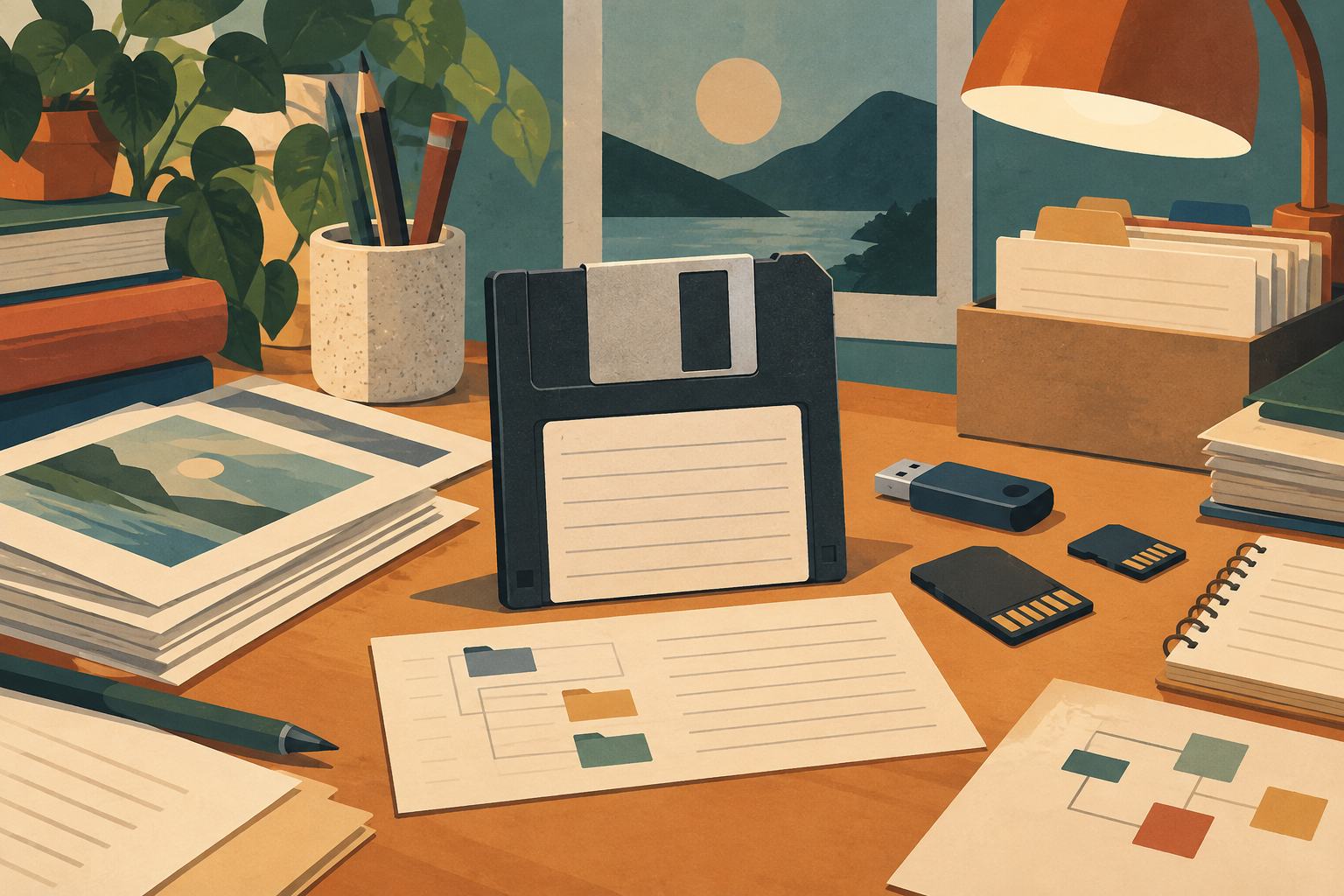
Digital preservation adds another layer of decisions. A publication from the Andalusian Institute of Historical Heritage mentions developing RAW images and a workflow involving development, treatment, and digital preservation. This wording distinguishes operations often grouped under one term: interpreting or processing a file, modifying it, and preserving it are related but not identical stages.
The existence of these stages does not establish what adjustments were made to a particular image or what information was lost or retained in a specific case. That requires access to the files, their metadata, and process documentation. The guidance is relevant as evidence that preserving a digital image involves a workflow, not merely saving a visible copy.
What can be stated, and what remains open
A photograph may serve as a historical, social, or family source, but its evidential reach depends on the image, its support, and the available documentation. The supplied studies on photography as a document and on family photography help frame these questions; material on archives and preservation shows why it matters to document objects and processes. None of this permits us to infer an undocumented identity, date, or circumstance.
The strongest reading combines observation with restraint: first describe what is visible; then identify material marks and archival information; finally distinguish verified data from interpretation. An image does not speak for itself, but neither is it silent. Its process, support, and documentary history expand what can be investigated, provided a clue is not mistaken for certainty.
- Decade
- 2000s
- Region
- Global
- Level
- Enthusiast
- Entities
- No linked entities
Sources and references
- El cuerpo revelado: Análisis de la fotografía familiar desde la Teoría de la Imagendoi.org · 2026-10-01
- LA FOTOGRAFÍA COMO DOCUMENTO HISTÓRICOrevistaselectronicas.ujaen.es · 2026-10-01
- La fotografía como documento históricowww.educ.ar · 2026-10-01
- ARCHIVOS FOTOGRÁFICOS DE PRENSArevistas.ucm.es · 2026-10-01
- censo-guia-de-archivos-informe-sobre-fondos-fotograficos. ...www.cultura.gob.es · 2026-10-01
- Memorias compartidas. Andalucía-Marruecos a través de la ...repositorio.iaph.es · 2026-10-01
- HERRAMIENTAS DE CONTROL DEL PATRIMONIO ...riunet.upv.es · 2026-10-01