A broadcast is not the whole story
Watching a recording makes it possible to examine a preserved programme, but it does not automatically reveal what came before or after it, how it was introduced, or what alternatives the schedule offered. Those questions require other traces: programme listings, catalogues and research on television and its audiences. These sources are not interchangeable. Each documents different aspects and leaves others unanswered.
The RTVE archive available through RTVE Play is one way to access older programmes. It makes preserved content available for viewing again, but access to a broadcast is not the same as a complete history of programming. The distinction matters: an audiovisual archive enables study of what has survived there; a schedule helps place broadcasts within an offer arranged over time.
The schedule as a document
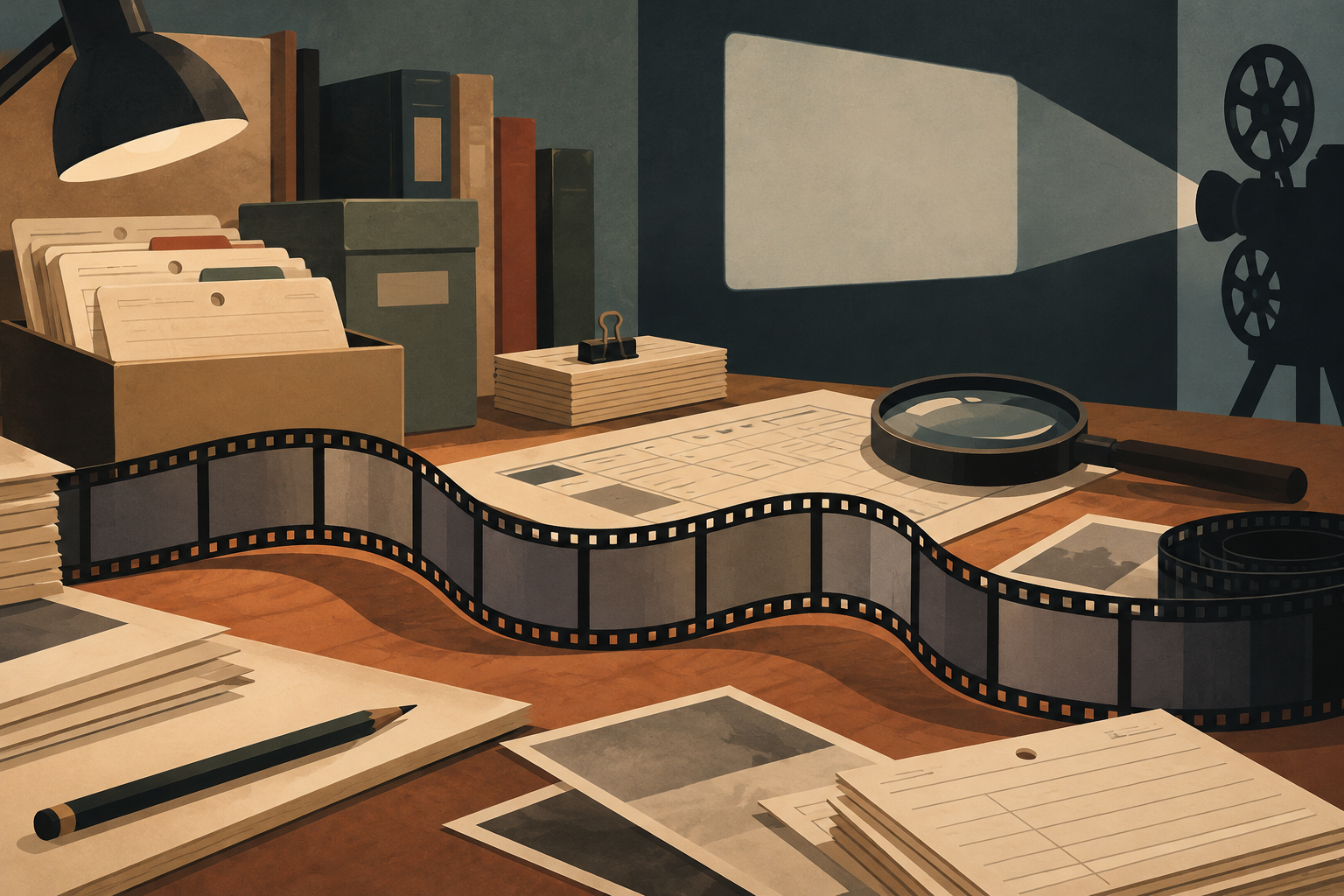
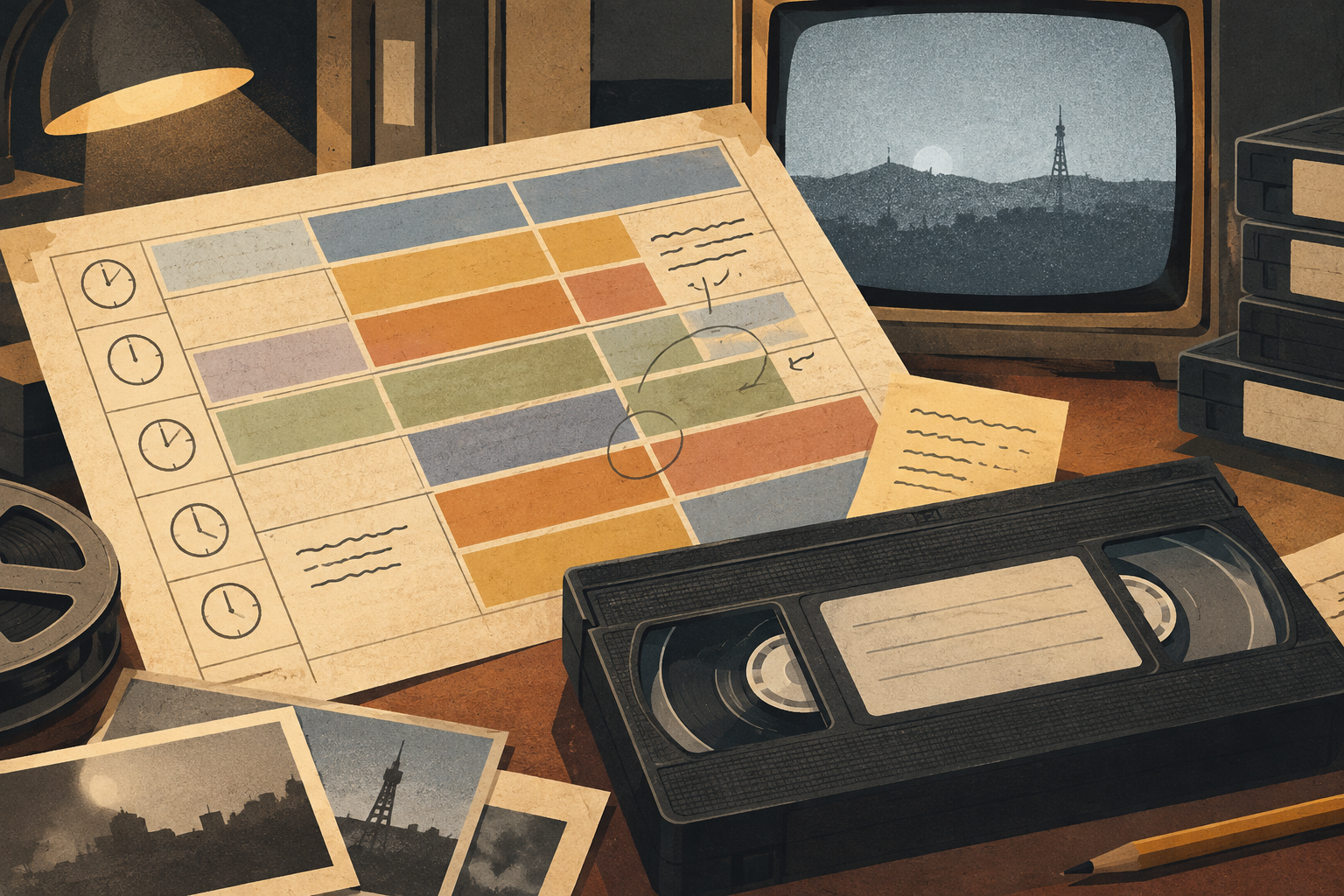
A schedule can help reconstruct the order and distribution of programming, provided it survives and its date, channel and provenance can be identified. The evidence supplied here includes no specific schedule from which to describe a day or compare time slots. This article therefore treats schedules as sources to locate and cross-check, not as evidence already examined.
The Association of Communication Historians’ call for contributions on “The Old Screen: 70 Years of Television in Spain” invites international and comparative approaches to the medium’s development. That perspective is relevant: programming cannot be understood in isolation from its context, and comparison requires compatible sources. The call itself, however, is not a study of schedules and does not establish how a particular channel organised its broadcasts.
Catalogues, research and preservation
Catalogues help locate material and describe what an archive holds; they do not guarantee that everything broadcast is represented. An academic work on the preservation of television’s audiovisual heritage places safeguarding at the centre of the issue. Its record also notes UNESCO’s recognition of audiovisual archives in 1980 and its recommendation that they be safeguarded. The information available here does not justify attributing more detailed conclusions to that work.
Another study, focused on Spain from 1963 to 1969, examines expansion and social consumption. Its period lies outside this article’s 1970–2009 emphasis, but it is a reminder that television history also concerns reception. It is not enough to identify which programme survived: one must distinguish what a broadcast documents from what research into consumption can investigate.
Recording changes the questions, not the need for sources
The ability to record programmes raises questions about viewing habits, but the supplied evidence does not document when that practice spread, what equipment people used, or how much household routines changed. Claiming a specific transformation would go beyond the sources. What can be said is that a home recording, if located and authenticated, would be a different kind of trace from a copy kept by a broadcaster: it might offer evidence about reception and use, though it could not by itself explain the audience for a broadcast.
Studying such a change would require dating recordings, identifying their provenance and comparing them with schedules and transmission records. It would also be necessary to distinguish the existence of a tape from what it contains: a copy may be incomplete or lack information about when and by whom it was recorded. These are methodological cautions, not claims about a specific case in the evidence assembled here.
What the archive allows us to say
RTVE presents its archive as a place to stream older programmes. A RetroPause article on traces in the TVE archive likewise argues that television history is reconstructed through preserved broadcasts, catalogues, studies and accounts. These references support a plural approach; they do not replace consulting specific documents or verify a particular schedule.
A journalistic overview of Spanish television from the 1970s to the 2000s might provide chronological orientation, but the excerpt supplied does not give enough detail to substantiate a sequence of milestones here. The careful conclusion is methodological: the archive preserves valuable routes of access, but it is not a complete mirror of broadcasting or reception. Reconstructing television means bringing together different kinds of sources, specifying the question each can answer and making the gaps visible.
- Decade
- 1980s
- Region
- Spain
- Level
- Enthusiast
- Entities
- Televisión, RTVE Play, Televisión Española
Sources and references
- Archivo de Televisión Española | Ver en RTVE Playwww.rtve.es · 2026-10-10
- Preservación del patrimonio audiovisual de televisión El ...eprints.ucm.es · 2026-10-10
- "La vieja pantalla: 70 años de televisión en España". CFP ...www.ashiscom.org · 2026-10-10
- La televisión en España: expansión y consumo social, ...raco.cat · 2026-10-10
- La televisión también se conserva: seguir las huellas del archivowww.retropause.com · 2026-10-10
- Historia y evolución de 40 años de televisión en Españalab.elmundo.es · 2026-10-10