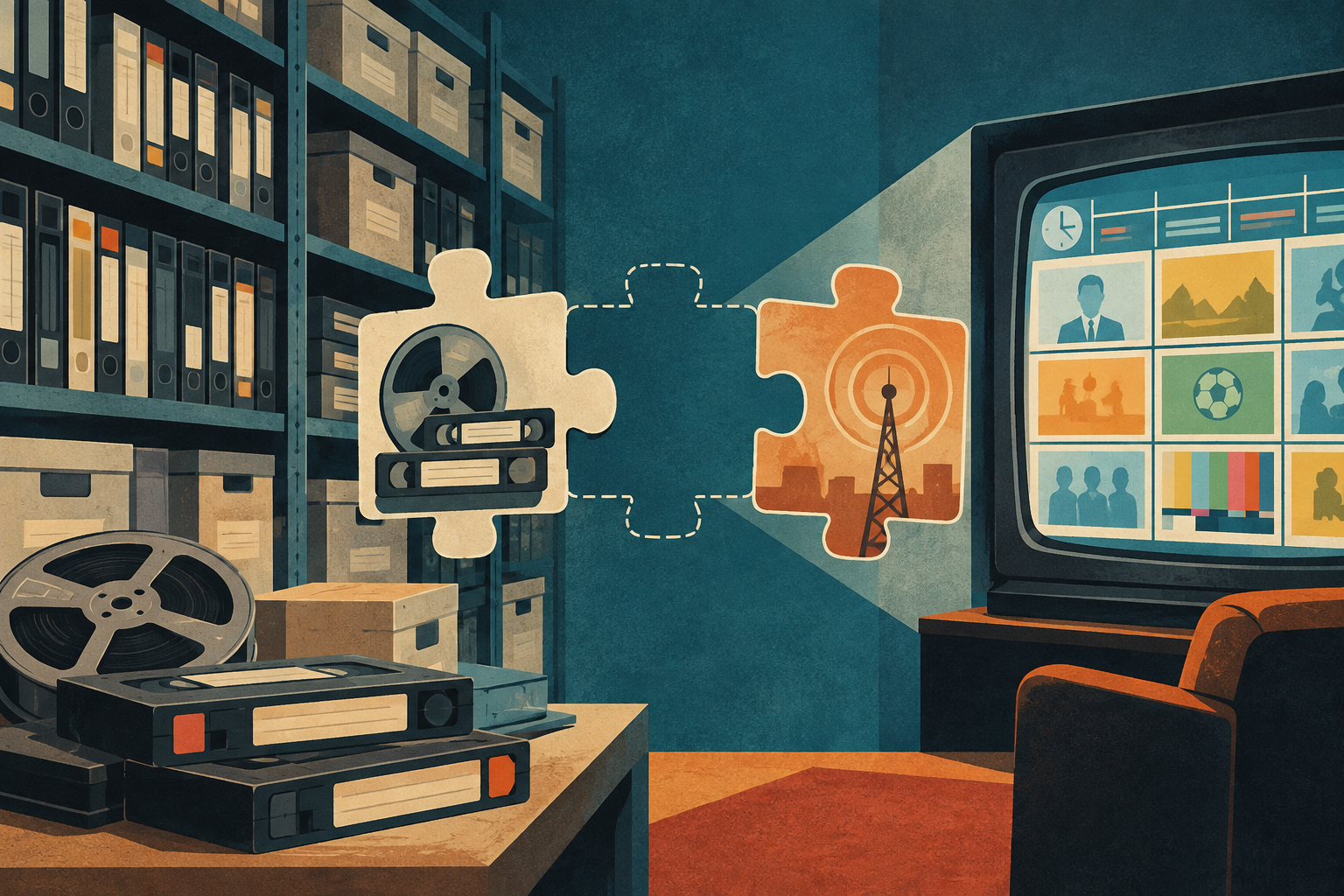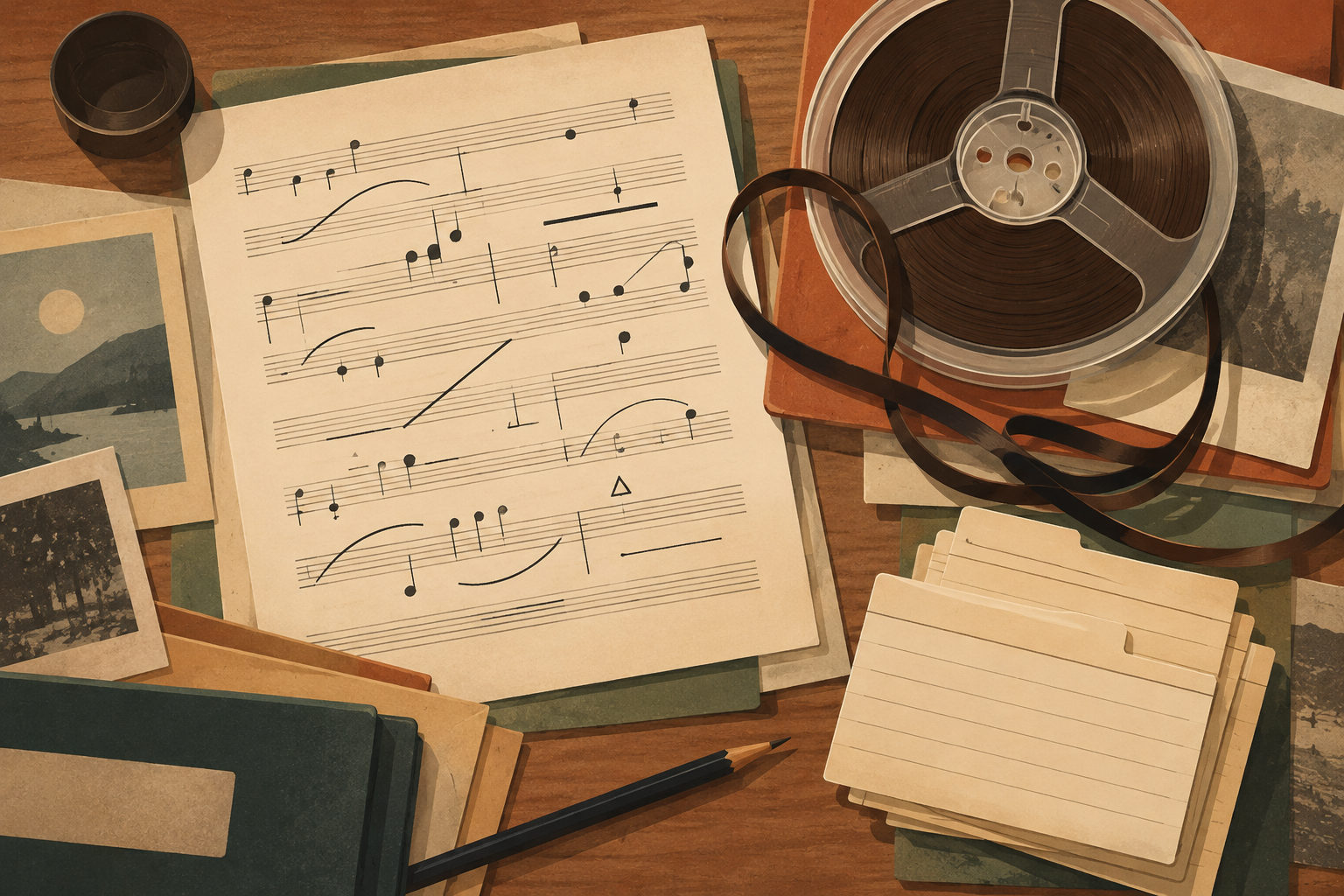
Music leaves traces of different kinds. A score records a form of notation; a recording fixes a performance on a medium; other documents may offer clues about circulation and custody. None is simply identical to the work, and none alone is enough to reconstruct how the music was heard. This seemingly simple distinction shapes how a music archive is organized and valued: preserving documents does not preserve the entire experience of music intact.
Research on music archives offers a starting point for considering that difference. One study examines how cultural valuation might contribute to collection management. Another, focused on Peru’s folkloric music archive from 1949 to 1952, places its formation at the intersection of intellectual agendas, institutional challenges and transnational connections. A third case, the Mariana Musical Museum Archive, links institutional preservation to repertories from the eighteenth and nineteenth centuries. These examples do not tell the same story, but they show that an archive is both a group of media and a structure of decisions about what to preserve and how to interpret it.
The work and its witnesses
To speak of a song as though it were identical to any one of its documents is to collapse distinct levels. A score may record notes and musical organization, but it is not a sounding performance. A recording provides access to a fixed rendition, though it does not necessarily represent every way the piece could have been played or heard. Associated documents may add information about a material’s trajectory, but only when they exist and can be connected to it.
This distinction does not diminish the value of each object. It helps make questions more precise. What aspect of musical practice is recorded? How does a document relate to a work or a particular performance? What information is missing from its context? The available evidence supports these general distinctions, not detailed descriptions of collections whose contents have not been inventoried in it.
Valuation and management
Cultural valuation appears in the research as a possible tool for managing music archives. Its significance is that collection administration is not purely material work: selecting, describing and preserving documents also shapes what can be studied and remembered. However, the available reference says only that exploring this contribution was one objective of a research project. It does not provide a method, specific criteria or findings that can be attributed to the study here.
Keeping that limit in view prevents a research question from becoming a universal prescription. Valuation may inform decisions, but the supplied evidence does not show how it was applied to a particular collection or what effects it produced. The verifiable point is narrower: cultural value is presented as a relevant dimension in thinking about music-archive management.
Mariana and institutional memory
The Mariana Musical Museum Archive covers the eighteenth and nineteenth centuries. Its available description says the museum was founded in 1965 by Oscar Fernández de Oliveira, identified as Mariana’s third archbishop and a patron of the arts. It is a concrete example of musical heritage maintained by an institution and of a collection associated with a defined historical span.
Those facts are not enough to specify which scores, instruments, records or practices the archive contains, or how each part of the collection was formed. Nor do they establish who heard this music or under what circumstances. The museum’s founding date and the period attributed to the archive are separate facts; keeping them distinct avoids confusing an institution’s history with that of each document.
An archive shaped by connections
The academic study of Peru’s folkloric music archive from 1949 to 1952 offers a different framework. Its description emphasizes the convergence of agendas related to folkloric music, ideas about the field, institutional challenges and transnational connections. The archive thus appears not only as a repository but as the outcome of interests and conditions that cross borders.
The available information does not specify all those agendas or identify the assembled documents in detail. It therefore cannot reconstruct their contents or assign particular intentions to the people involved. It does support the claim that the article interprets the archive’s formation within a broader intellectual and institutional network, extending beyond the national setting.
What traces cannot settle
Archives make it possible to study aspects of musical history, but their documents do not provide a complete window onto past listening. Notation does not reproduce sound; a recording preserves a performance on a medium, not every setting in which a piece circulated; records of custody or dissemination, where they exist, are not direct testimony from every listener. Claims about listening habits require specific evidence that is absent from the material available here.
For the same reason, the three cases should not be presented as parts of one collection or a shared institutional history. Research on management, the Mariana archive and the Peruvian study are distinct references. Comparing them is useful for considering the questions each approach raises, not for asserting relationships the sources do not document.
Preserve without conflating
The conclusion is practical: a music archive is better understood when the work is distinguished from its witnesses and the institutional and intellectual context of each collection is recognized. Scores, recordings and associated documents contribute different information; their value also depends on how they are described, preserved and related to one another.
The Mariana and Peruvian cases show different frameworks for preservation, while the research on cultural valuation raises a question of management. None allows a full reconstruction of the sonic experience or justifies details missing from the available inventories. That limit does not make an archive useless. It defines, rigorously, what can be said and where new evidence is needed.
- Decade
- 1950s
- Region
- Latin America
- Level
- Enthusiast
- Entities
- Museum
Sources and references
- La valoración de colecciones como herramienta para la ...revistas.javeriana.edu.co · 2026-10-15
- Conservación y Restauración del Patrimonio Cultural en soporte Papel - Museo Jesuítico Nacional de Jesús Maríadoi.org · 2026-10-15
- Archivo del Museo de Música de Mariana, siglos XVIII-XIXwww.unesco.org · 2026-10-15
- La accidentada gestión de sonidos auténticos: Agendas ...www.cambridge.org · 2026-10-15
- Escuchar un paíswww.museoreinasofia.es · 2026-10-15