The history of television cannot be contained in a tape or a catalogue. A preserved broadcast can be studied for its images and sound; reconstructing what was offered, when, and how it was introduced requires other traces. The evidence available here points to a central research question: the archive is indispensable, but it is not the schedule or the experience of its viewers.
A heritage that changes scale
A university study on preserving Spain’s television audiovisual heritage places the beginning of TVE’s history at its first broadcast, on 28 October 1956, and addresses the preservation of its archive. This provides a chronological starting point, not a complete history of programmes, schedules or audiences.
Research on RTVE’s audiovisual archives describes a significant shift: operator archives begin as business assets and may come to be regarded as cultural heritage. This change in perspective matters. Materials originally kept for production or management can acquire value for collective memory and historical research.
What a preserved broadcast can show
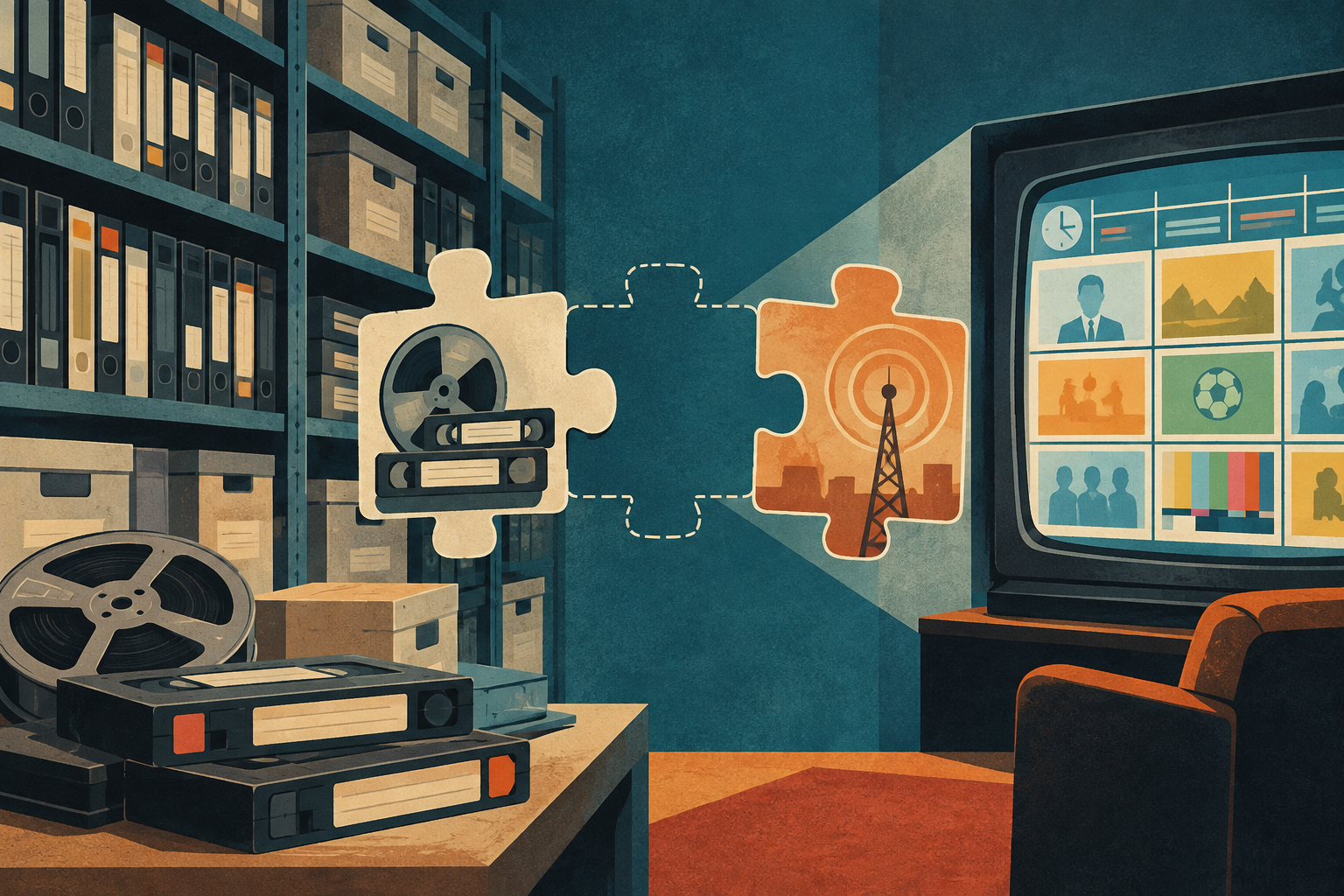
The Televisión Española archive is now presented as an online resource offering old programmes for streaming. This makes specific materials easier to consult and creates opportunities for comparison. But an audiovisual item viewed outside its original context does not automatically reveal its place in the schedule, its continuity with what came before or after, or the circumstances in which it was watched.
Preservation and access are also different processes. A collection may exist without all its materials being accessible in the same way; the availability of digitised content does not prove that the archive is complete. The institutional source confirms that the archive is available through RTVE Play, but the supplied evidence does not provide a comprehensive inventory or information about gaps.
Schedules require other evidence
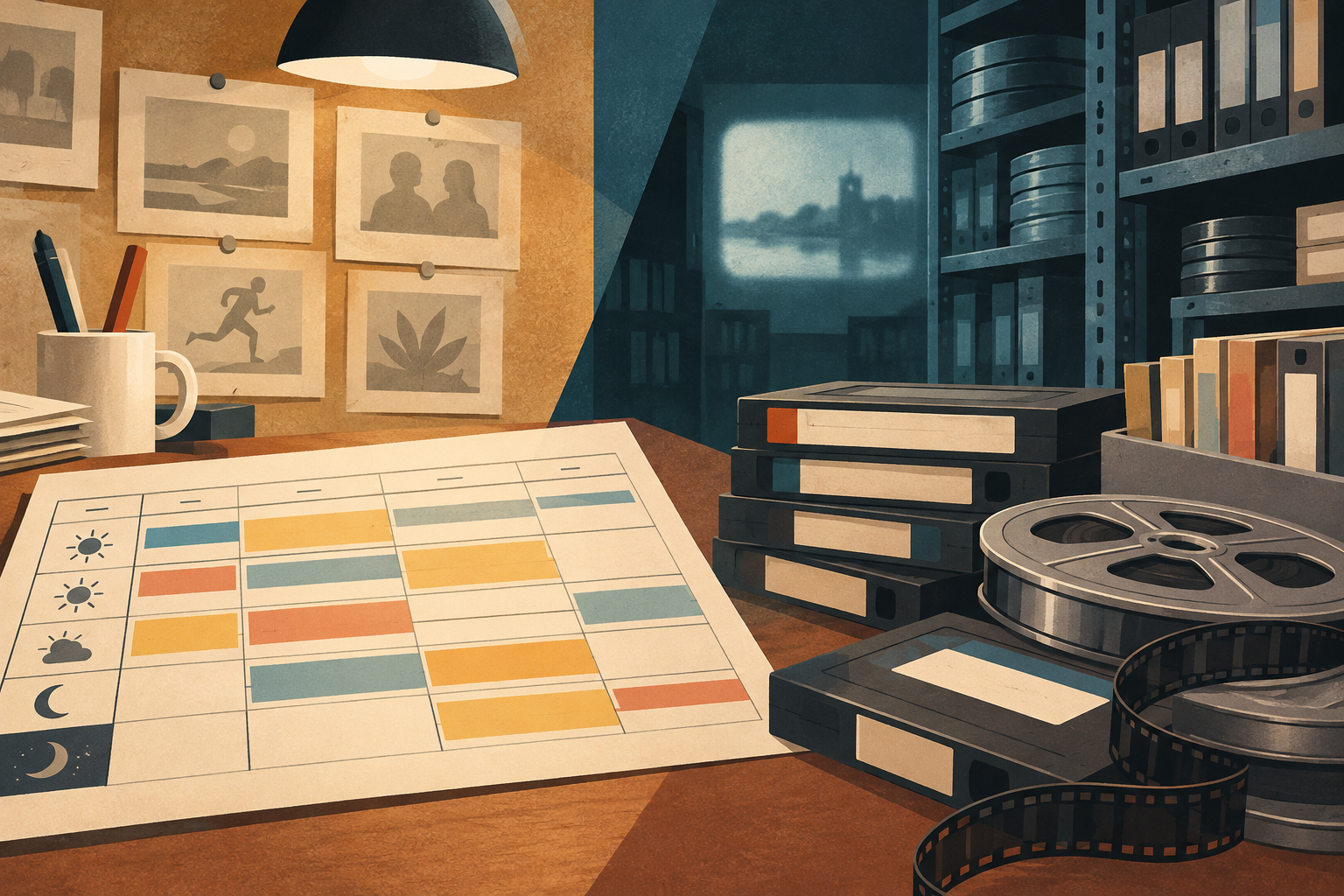
Reconstructing a broadcast schedule would require documents recording times and content, such as programme listings, newspapers, broadcast records or other materials that can be cross-checked. The sources assembled for this proposal provide no examples of such schedules and do not allow us to verify their preservation for a particular day or channel. The existence of an audiovisual archive therefore cannot be turned into a claim that a complete schedule survives.
A future article could compare a broadcast with independent documentary traces. The method would distinguish what the recording shows from what each document establishes: title, time, announced duration, last-minute changes or presentation. This is not a finding here, but a research path suggested—not resolved—by the available sources.
Digitisation does not remove the limits
A publication about RTVE’s digitisation of news programmes describes the transfer of film-format materials into digitisation processes. This is specific evidence of technical work that can make some documents accessible, not a complete account of the formats preserved or the criteria applied. It would be unwise to generalise from one digitisation example to the entire television archive.
Academic writing also indicates, through its subject and framing, that the relationship between television archives and heritage raises questions about access and use. The supplied source is not enough to summarise all its conclusions. It does, however, support the distinction between preservation, description, access and heritage status: related questions, but not identical ones.
Recordings and viewing habits remain open questions
The question of how television changed when viewers could record programmes is not answered by these materials. They identify no domestic technologies, adoption dates or behavioural changes. A sound answer would need specific evidence about recording and reception practices, alongside testimony or studies not included in the supplied material.
That limitation does not make the question less important. It shows instead that television history must connect broadcast materials with the devices and practices of the people who received them. A television archive documents one part of circulation; on its own, it cannot reconstruct domestic life around the screen.
Reading the archive responsibly
The sources support the claims that television preservation has been studied, that RTVE offers online access to its archive, and that digitisation of news materials has been described. They do not reconstruct a particular schedule or measure how domestic recording changed reception. Keeping these levels separate prevents a source from being asked to prove more than it can.
The archive is therefore a meeting point for broadcast, preservation and access, not a self-sufficient account. Reconstructing television as both a schedule and a shared conversation requires cross-checking it against programme documents and evidence of reception. Research begins by recognising which questions remain open.
- Decade
- 1950s
- Region
- Spain
- Level
- Enthusiast
- Entities
- Televisión, RTVE Play, Televisión Española
Sources and references
- La televisiónopenalex.org · 2026-10-09
- Preservación del patrimonio audiovisual de televisión El ...eprints.ucm.es · 2026-10-09
- Archivo de Televisión Española | Ver en RTVE Playwww.rtve.es · 2026-10-09
- Archivos audiovisuales de RTVE entre el patrimonio ...www.nuevarevista.net · 2026-10-09
- Los archivos televisivos españoles, ¿ Patrimonio o tienda ...hal.science · 2026-10-09