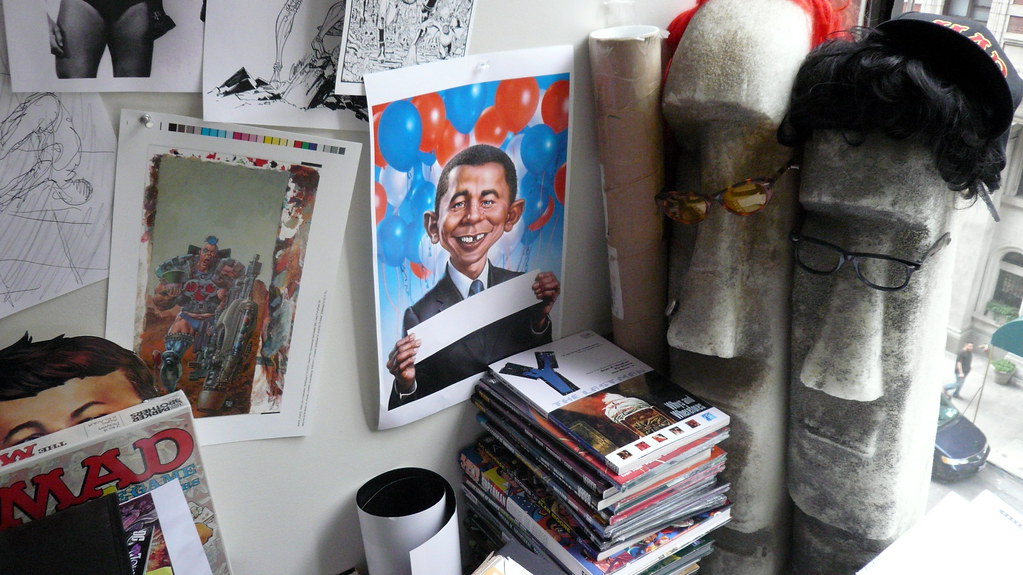
In October 1952, William M. Gaines created Mad, an American humor magazine that chose popular culture and consumer goods as its targets. That decision placed it in a different register from comic books associated with superheroes. The distinction, however, was not only thematic: the magazine brought text, panels, and other visual elements together within a recognizable editorial identity. Its history raises a broader cultural question: how format can guide reading and make graphic humor a form of social commentary.
A magazine in a different register
The available source describes Mad as a monthly humor publication focused especially on satirizing media products and other consumer goods in American society. Against the prominence of superheroes in much of the comics market, that focus offered an editorial alternative. This does not mean Mad stood outside the industry, or that every other publication followed a single model. It supports a narrower claim: its targets and tone distinguished it.
The magazine’s subject matter also helps explain its cultural relevance. Popular culture was not merely a backdrop for its stories; it became material to examine and distort for comic effect. By taking familiar products and conventions as its subject, satire could encourage readers to look more critically at what they consumed as a matter of habit.
The page as part of the joke
The description of Mad emphasizes its visual scope and the integration of panels, text, and graphic elements. This suggests that the page was not simply a neutral container, but part of the comic experience. Visual arrangement can guide the eye, place ideas side by side, and make an effect depend as much on presentation as on wording.
The evidence provided, however, includes no specific pages or analysis of particular techniques. It therefore cannot establish that the magazine used a given device or invented a form of design. What can be said is that format and satirical content were presented together as central aspects of its editorial approach.
An identity that changed over time
Mad published 550 regular issues from 1952 to 2018, alongside specials, collections, and other print projects. Its numbering returned to No. 1 in June 2018, when the magazine moved its headquarters to the US West Coast. In late 2019 it sharply reduced the production of new material and stopped distribution to newsstands; in 2020 it shifted to a format made up almost exclusively of reprints.
These changes make it difficult to describe its history as an unbroken, uniform line. The publication adapted its style and subject matter to audience tastes, according to the available material, and at times turned satire on itself in response to lawsuits. That willingness to revisit its own position matters: satire could address both the surrounding culture and the magazine’s own circumstances.
The reach and limits of its influence
Mad’s run offers a clear case of graphic humor sustained over decades and of a magazine that made satire of mass culture its central purpose. Its presence was also appreciated by readers in other languages, despite its US focus. This supports the idea that its reception extended beyond its national context, though the supplied information gives no countries, circulation figures, or specific forms of that reception.
Nor is the available evidence enough to prove that Mad alone transformed the way comics were read or determined the work of later publications. Calling it a reference point for graphic humor may be a cautious interpretation of its history, but it is not a documented causal link here. General market records and broad references to comics cannot establish that influence on their own.
A legacy of looking askance
The most verifiable contribution of Mad in this account is its sustained editorial proposition: using graphic humor to turn back toward the products, media, and habits of popular culture. Its long print run, changing approach, and eventual reliance on reprints show that a magazine’s legacy need not rest on a single period or on a formal innovation the sources do not document.
Mad offers a way to see how a publication can make its format part of its satirical voice. It does not, by itself, prove that comics changed course. It does provide a durable example of the humorous page as a space for critical observation. That conclusion is more limited than a story of revolution, but it is also the one best supported by the evidence.
Documentary gallery


- Decade
- 1950s
- Region
- North America
- Level
- Enthusiast
- Entities
- MAD
Sources and references
- El cómic, una cuestión de formatos (2): revistas de cómics, fanzines, mini-cómics, álbumes y novelas gráficasdoi.org · 2026-10-15
- Las 10 principales empresas del mercado del cómictranslate.google.com · 2026-10-15
- Tamaño del mercado de cómics, participación y análisis ...www.fortunebusinessinsights.com · 2026-10-15
- Superhéroees.wikipedia.org · 2026-10-15
- Mad (revista)es.wikipedia.org · 2026-10-15