A work that does not fit in a display case
A video game can be presented as a cultural object in a library, museum, or exhibition. But showing it is not necessarily the same as showing how it is played. The description of the event titled “The video game: a cultural product to preserve” brings together video games, libraries, museums, and preservation. Its framing links two tasks that are sometimes separated: recognizing a work and keeping available the conditions needed to understand it.
The question is not simply what object to place in a room. It also matters what visitors can understand about a game’s rules, presentation, and proposed experience. If a game is reduced to a still image or a name, some of what distinguishes it is left out of the exhibition. Inviting visitors to play may bring them closer to the work, but a play session cannot, by itself, replace context or documentation.
Preservation and communication are connected
The 2023 academic article “Museums and video games. The renewal of…” describes initiatives in which museums use video games to communicate their collections. This suggests that the medium can take part in museum communication, rather than appearing only as an object in a collection. The supplied material, however, does not detail specific cases or allow particular results or methods to be attributed to the article.
That distinction matters. A game made to provide access to heritage and a historical game presented for study may share a format without necessarily serving the same purpose. The information provided does not allow that difference to be reconstructed through detailed examples. It does support a broader observation: “video games in museums” can refer both to interpretive tools and to practices of preservation and study. The two should not be conflated.
The museum as a place for experimentation
The Thyssen Museum presents education in museums through video games as a subject of ongoing academic debate. That caution is useful: recognizing the medium’s educational potential does not automatically prove that any game teaches, or that an interactive experience communicates a collection’s content on its own. Intention, design, and outcome need to be distinguished, and the sources available here provide no evidence for claims about the effects of a particular experience.
Some projects also begin with institutional heritage. ICOM reports that two video games were produced from the heritage of the Carmen Funes Archive-Museum in Neuquén, Argentina. This supports the observation that an institution can have a direct relationship with game creation, but it does not justify adding details about gameplay, reception, or impact. Caution does not make the example less interesting; it prevents an initiative from becoming an unsupported success story.
Archives, collections, and the limits of the evidence
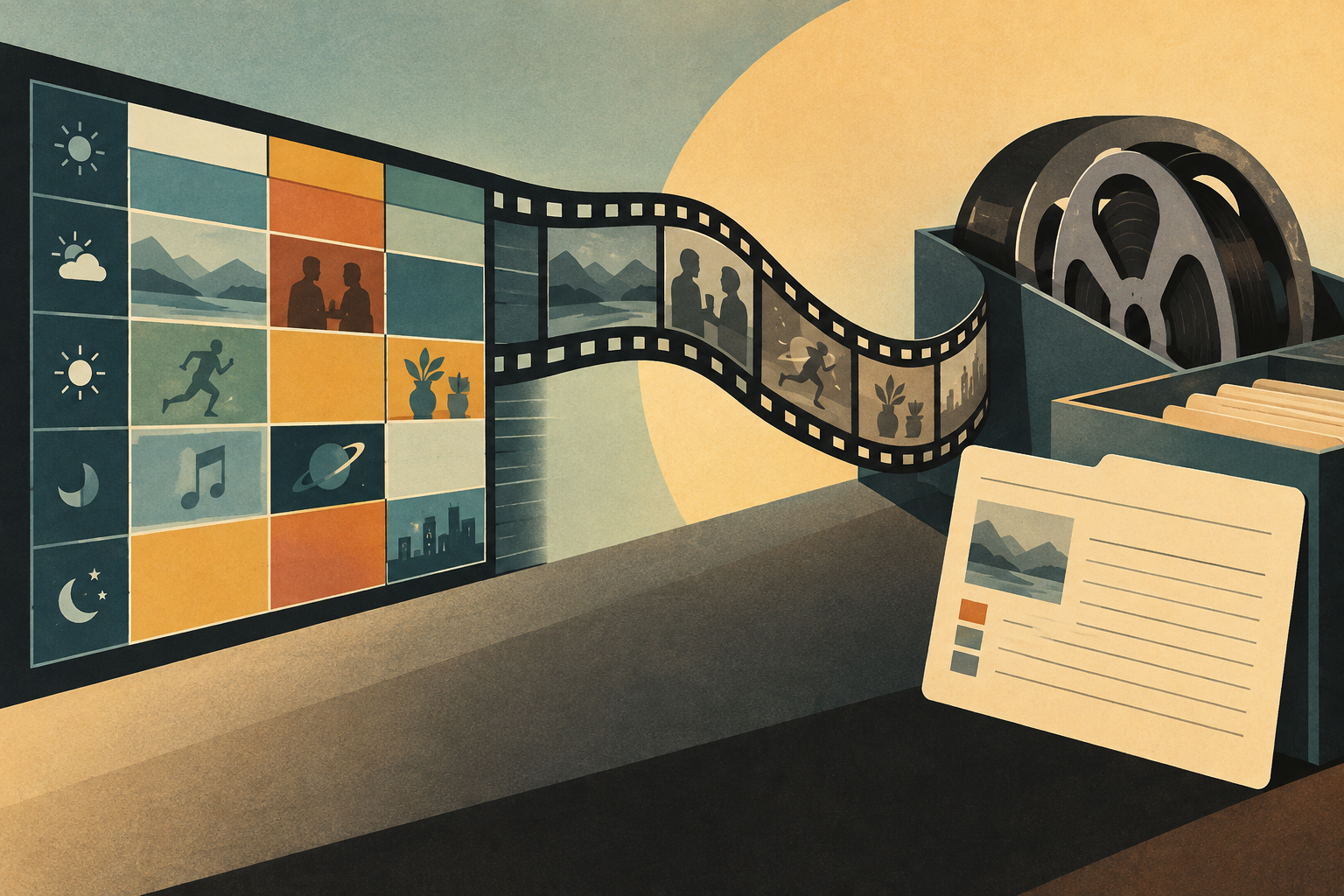
MUVIC is described as a cultural and museum project devoted to preserving, studying, and sharing the history of video games through temporary and travelling exhibitions. The Digital Archive of the Video Game Museum, meanwhile, brings together documentation, publications, and audiovisual materials related to that history. Together, these descriptions point to a useful idea: the history of the medium rests on more than machines or screens. Documents surrounding the works can also help study and explain them.
A Microsiervos report describes the Embracer Games Archive initiative as dedicated to preserving the cultural legacy of video games. The supplied excerpt does not make it possible to assess its scope, holdings, or procedures. Likewise, the results provided do not document how games are technically maintained, which versions are exhibited, or how access is managed. Those questions require additional sources, not conjecture.
Showing the game without erasing its context
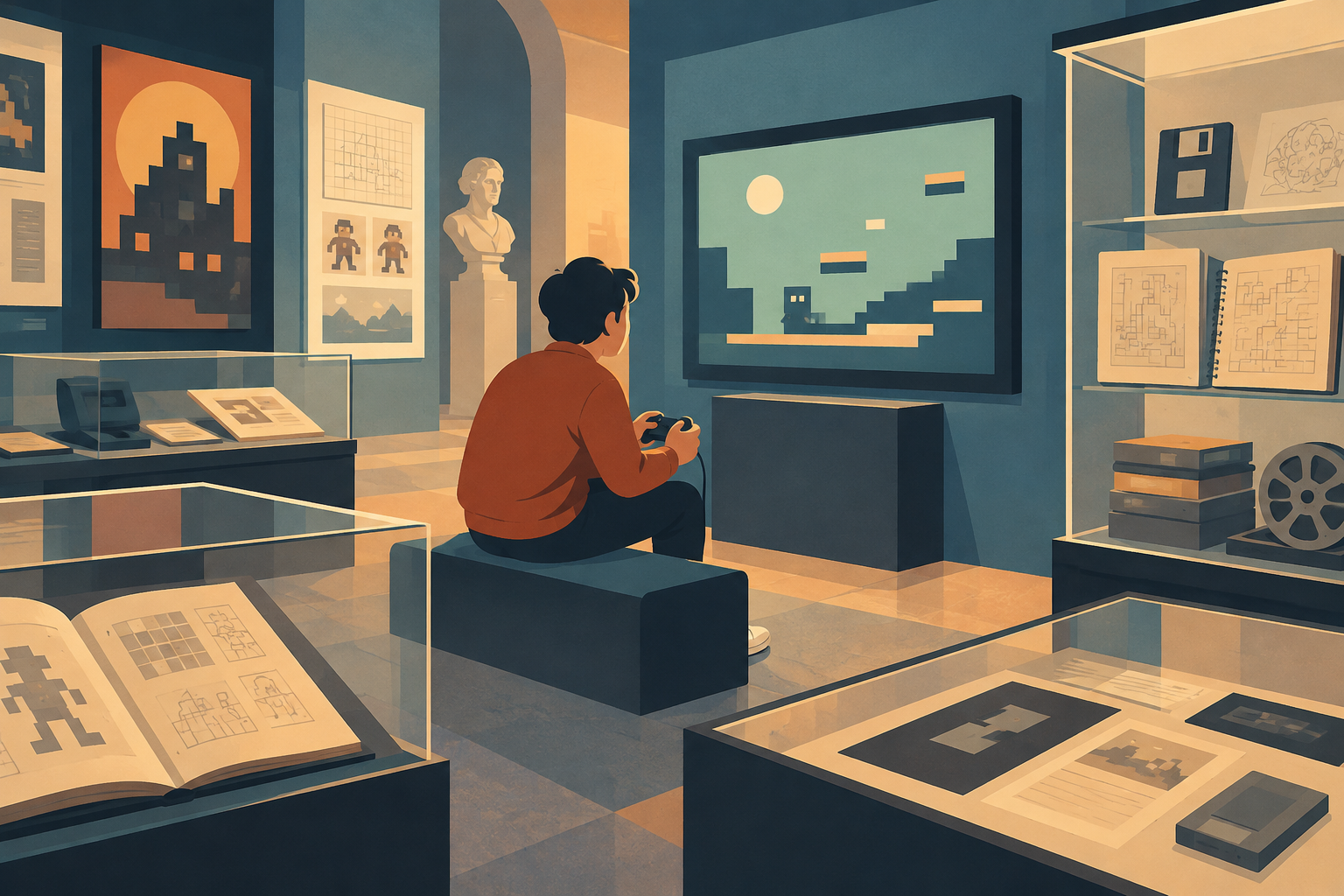
An exhibition can bring experience and explanation together: playing, observing, reading, and consulting documents are complementary ways of approaching a work. None guarantees complete understanding on its own. Playing reminds visitors that rules are being enacted; archival materials can provide context; museum interpretation can help connect the two. This is an editorial proposal, not a single method demonstrated by the sources.
The most productive question, then, is not whether video games “belong” in museums. The initiatives cited show that they are already being studied, used to communicate heritage, and included in museum projects. The question is how to make visible what each work offers and what remains unresolved. A museum attentive to that distinction does not turn a game into a nostalgic image or an automatic educational tool. It presents it as a cultural work whose experience and documentation deserve to be examined together.
- Decade
- Contemporary
- Region
- Global
- Level
- Introduction
- Entities
- Museum, Museo del Videojuego
Sources and references
- Museos & videojuegos: dos proyectos desarrollados en ...icom.museum · 2026-10-05
- Jornada "El videojuego un producto cultural a conservar"www.youtube.com · 2026-10-05
- Vista de Museos y videojuegos. La renovación de los ...revistas.uma.es · 2026-10-05
- MUVIC – Museu del Videojoc de Catalunya | Castellanomuvic.cat · 2026-10-05
- La conservación de la historia de los videojuegos en el ...www.microsiervos.com · 2026-10-05
- Educación en museos a través del videojuego (I)www.educathyssen.org · 2026-10-05
- Descargas - Museo del Videojuegowww.museodelvideojuego.com · 2026-10-05