An object is not a habit
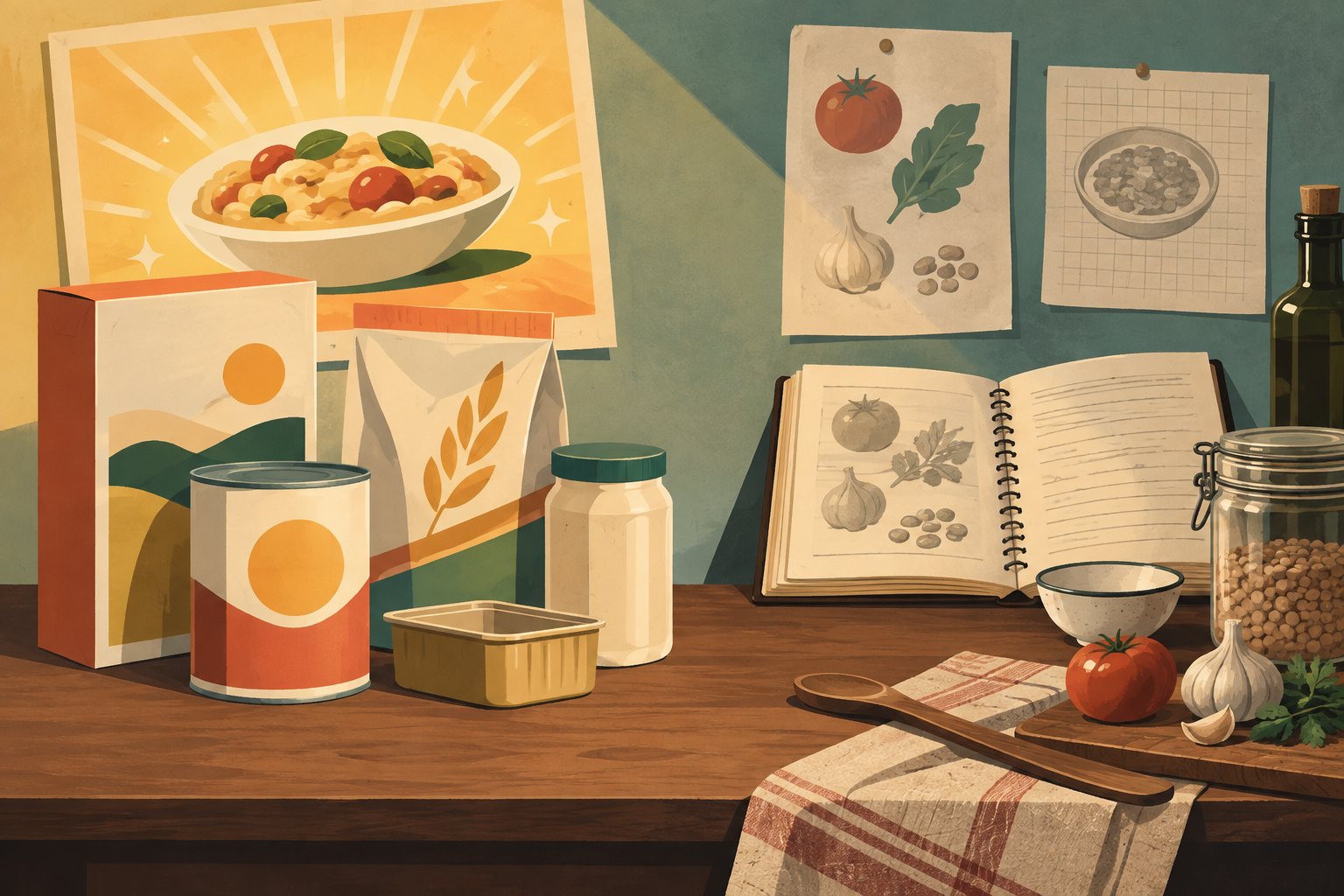
A label preserves choices about presentation; a cookbook preserves instructions. Neither, on its own, describes what a household regularly bought, prepared or ate. That distinction is the starting point for studying food without confusing a company’s message with the experience of the people who encountered its product. RetroPause’s supplied page about food in museums proposes studying food through cookbooks, tins, labels and archival documents as both tangible and intangible heritage. It is a research programme, not proof that any one object represents an entire period.
Promotion speaks from an interest
Packaging is designed to identify and present a product. It can therefore document graphic and commercial choices, but it does not automatically show that customers believed a claim, preferred the food or ate it often. Promotional material is useful when read as evidence of what someone wanted to communicate. Claims about habits require other kinds of documentation and comparison. The historical-press search in the supplied evidence offers a starting point for finding material about trade, but its result identifies no particular advertisement and establishes no pattern of consumption. It should not be treated as if it had settled those questions.
A cookbook is not a diary
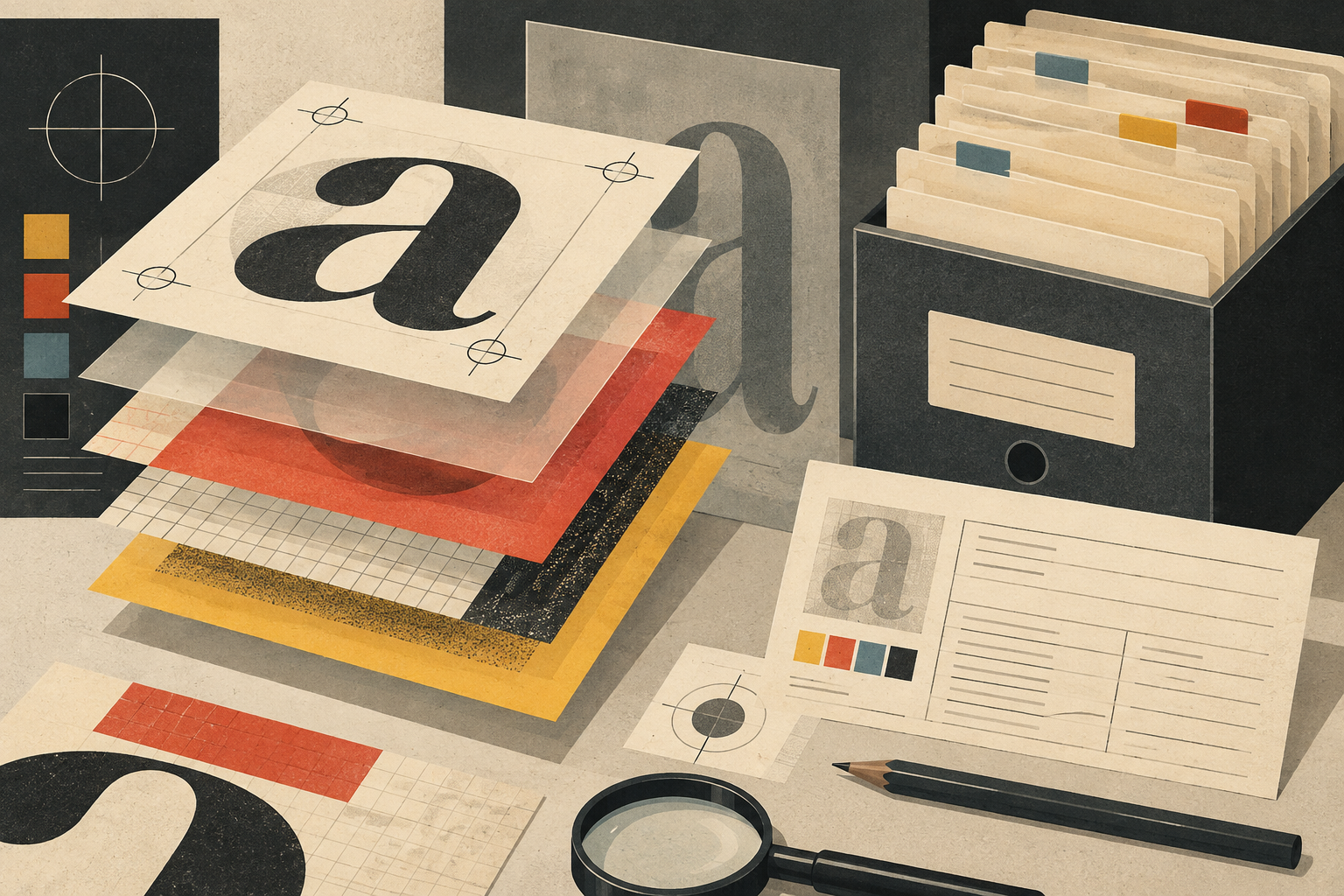
Recipes record instructions; their appearance in a publication does not prove that they were cooked, how often, or in which homes. FoodCultura describes its archive as a bibliographic collection devoted to food culture, containing books, cookbooks, magazines, fanzines, compact discs and memorabilia. That variety opens different research paths, but the brief record supplied here names no individual item and supports no specific claim about everyday practice. Moving from prescribed text to lived experience requires context and evidence of another kind.
The table as process and representation
The Museo Reina Sofía exhibition “Sobre la mesa” describes food through cycles that include germination and fermentation. This places food in a sequence of time rather than reducing it to a finished product. It is a useful perspective on the relationship between production, preparation and consumption, although the supplied description lists no particular artworks, objects or testimonies. The interpretation must stay within that limit: the exhibition’s stated approach is known, but an inventory not provided by the source is not.
Sweets, memory and evidential limits
The curatorial text for “Patrimonio Comestible: Una historia de dulces y de sus reposteras” is described as beginning from observations about sweets and the people who made them. Alongside the Universitat Politècnica de València study of intangible heritage in museums and food heritage, it helps frame the challenge of telling a story that includes practices, knowledge and objects. It does not, by itself, establish recipes, dates or biographies for particular people. Caution does not weaken the story: it makes clear what each source can support and where uncertainty begins.
A method for distinguishing advertising from habit
A sound reading first sorts documents by function: promotion, culinary instruction, institutional record or archival material. It then asks what each source states and what it leaves undocumented. Finally, it compares independent sources before describing a practice as widespread. The supplied pages support the existence of archives, scholarship and museum approaches devoted to food culture; they do not provide a dated series of packages or advertisements from which to reconstruct a particular market. The result here is therefore not a proven history of consumption but a way to read evidence: design shows how food was presented; domestic sources may bring us closer to what people did, if they survive and are contextualised. Where the two lines converge, an interpretation grows stronger. Where they do not, the gap is part of the history too.
- Decade
- Contemporary
- Region
- Spain
- Level
- Enthusiast
- Entities
- Museum, Archivo de FoodCultura, Sobre la mesa, Museo Reina Sofía
Sources and references
- Cuando la comida entra en el museo: recetas, envases y ...www.retropause.com · 2026-10-05
- Patrimonio Comestible: Una historia de dulces y de sus ...www.cultura.gob.es · 2026-10-05
- https://prensahistorica.mcu.es/consulta/resultados...prensahistorica.mcu.es · 2026-10-05
- Lo inmaterial en el museo. Museos y patrimonio alimentarioriunet.upv.es · 2026-10-05
- Archivowww.foodcultura.org · 2026-10-05
- Sobre la mesawww.museoreinasofia.es · 2026-10-05