The object is more than its storage medium
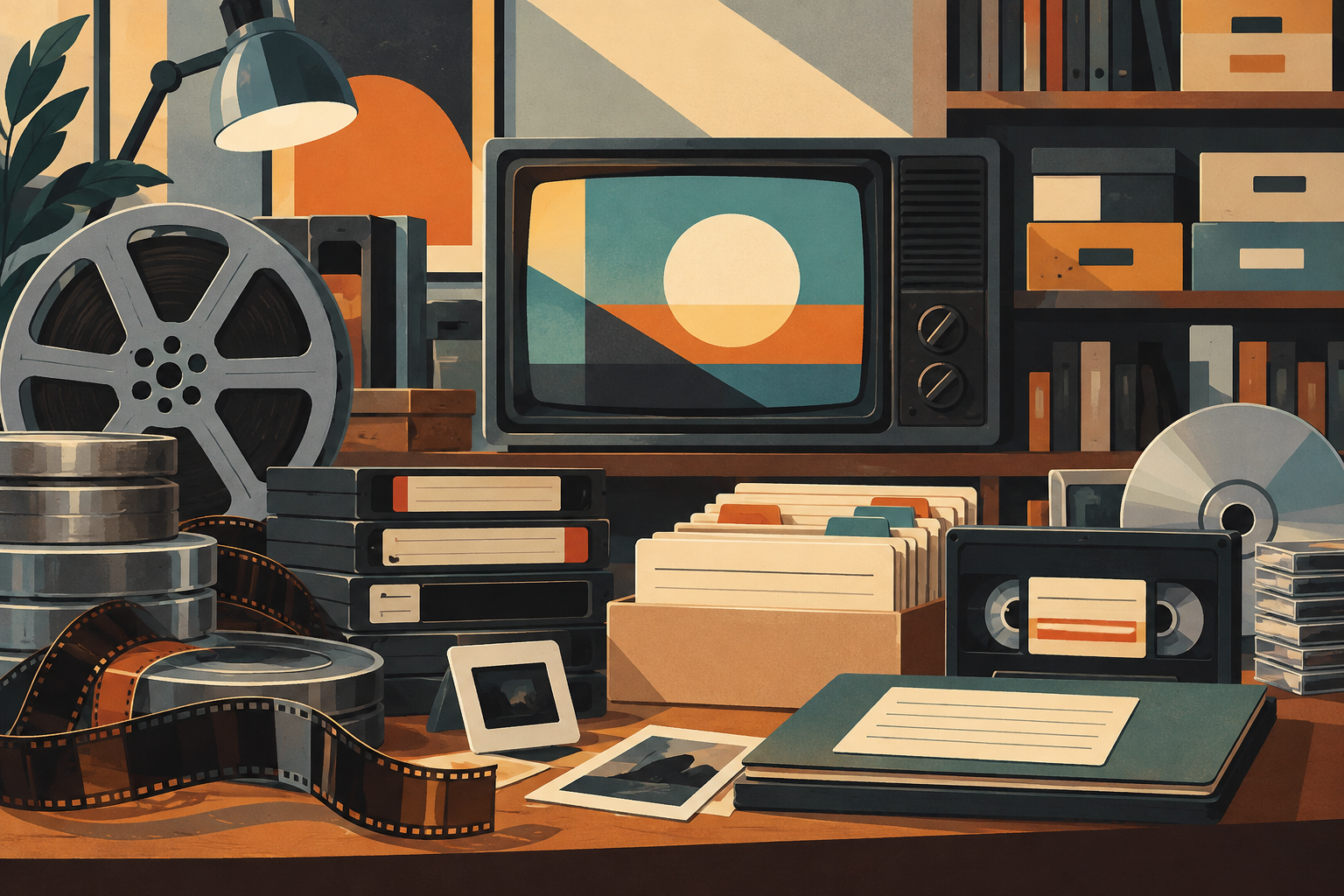
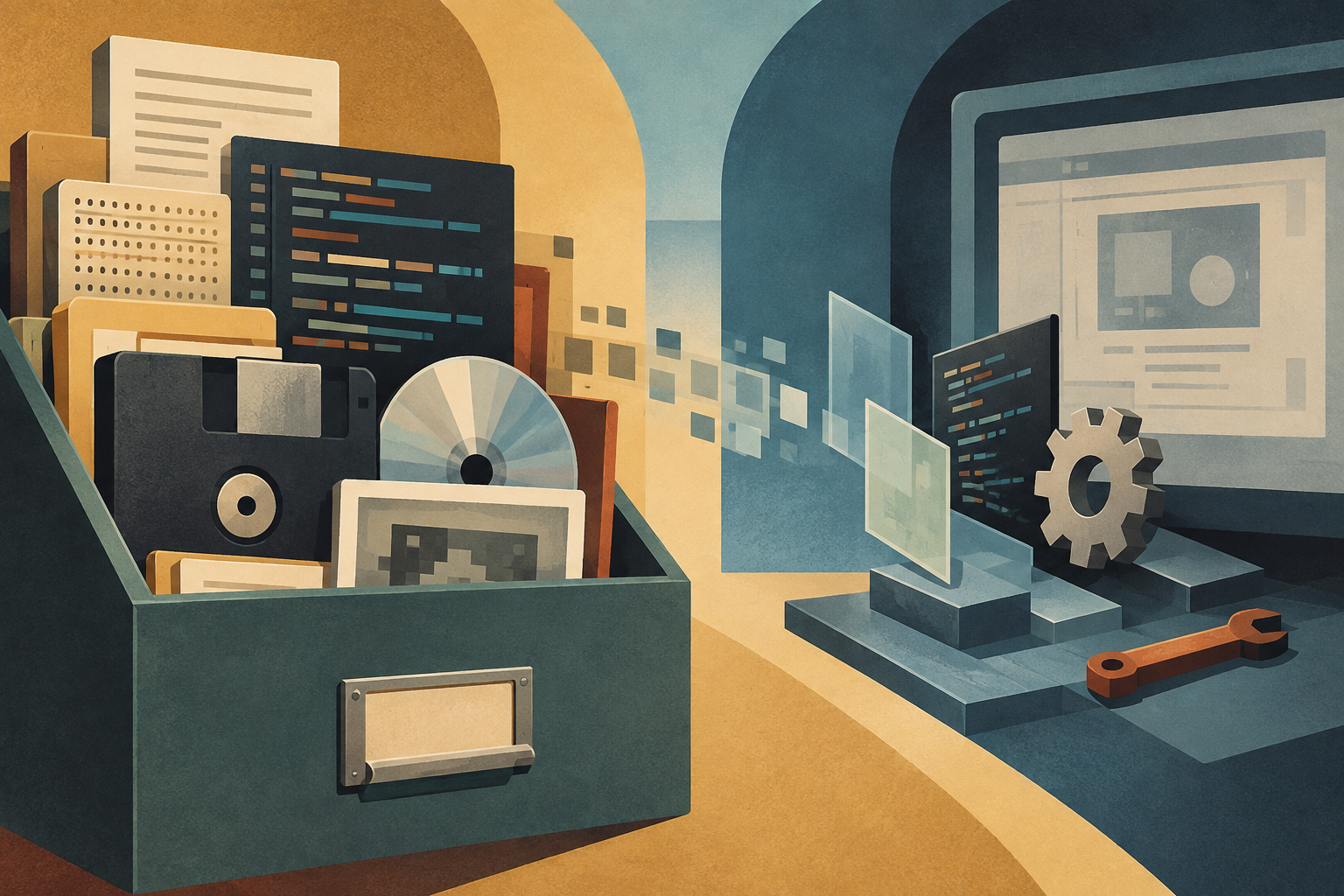
A box of disks, a cartridge or a computer medium can look like a complete piece of history. Software presents a different problem: possessing the physical object does not guarantee that its information can be read, or that the program can run again. A previous RetroPause article makes this distinction directly: a program may be copied even when its original medium is not kept, and preserving the medium is not the same as preserving the ability to execute it. That is a starting point, not a universal technical solution.
The digital-preservation entry describes its purpose in broad terms: maintaining the integrity, authenticity, reliability, legibility and functionality of digital information despite technological change. Applied to old software, that means thinking in layers. There is the physical medium, the information stored on it, and the possibility of understanding what it contains and how it related to the system that could use it. The sources consulted do not give a specific procedure for every program, so these principles should not be turned into a one-size-fits-all recipe.
Archiving also means describing
Museum archives offer a useful comparison, although they are not equivalent to software archives. Spain’s Ministry of Culture says that state museum archives hold documentation related to objects from the time they are deposited. The Prado Museum, in turn, describes its archive as the custodian of documentary collections produced and received by the institution. In both cases, preservation is not simply a matter of keeping an isolated thing: documentation is also kept to place it within an institutional history.
Description and access matter because an object without context can be difficult to identify, study or interpret. A text on museum-archive practice lists tasks such as appraisal, acquisition, arrangement, description, preservation and making records available. It does not establish how an old program should be catalogued, but it helps pose a specific question: what records would help someone understand it? The answer may depend on the case, and the available sources do not justify treating manuals, licences, versions or usage records as universal requirements.
From preservation to use
Digital preservation contains a tension worth keeping in view. Storing information and making it accessible are not necessarily the same operation. The encyclopedic source includes both legibility and functionality among its aims; the RetroPause article also cautions that preserving a medium and being able to run a program are separate matters. Read together, these sources support a cautious conclusion: a collection may preserve evidence without guaranteeing that everything still works in its original environment.
That distinction also affects how software history is told. A preserved item can document that a program existed, but it is not enough on its own to reconstruct the conditions of use. Conversely, a readable copy is not automatically the original object. It is better to describe what has been retained, in what form and what has been verified than to use the word “preserved” as if it settled every question.
Institutional context, and its limits
The Prado and state-museum archive pages show the importance of documentation associated with collections. The research on museum archives among the supplied sources also considers documents as spaces of communication. These are references for thinking about arrangement, description and access, not specialist studies of software. That difference limits how much can be transferred from a museum institution to a digital program.
It would therefore be excessive to claim, on the basis of these sources alone, which formats last longest, which emulators or systems should be used, how to verify a copy’s authenticity, or what legal obligations a collection faces. Nor can we infer that keeping institutional documentation solves the technical problems of execution. What can be verified here is more modest: archives document and provide access to records; digital preservation aims to keep information usable; and software adds a separation between its medium, its data and its operation.
An honest record is better than a promise
A responsible account of old software can begin by distinguishing those layers and stating its limits. Is a physical medium preserved, a copy of the information, related documentation, or evidence that the program works? What has been described, and what remains unchecked? The sources do not provide a standard record for answering these questions, but they do support the need to avoid confusing material preservation, information preservation and execution.
The central point is not that software cannot be preserved, but that the word “preserved” needs precision. A visible box may be only one part of the story. An archive can keep documents about its objects and make them available; digital preservation also raises the challenge of keeping information legible and functional through technological change. To tell software’s past without overstating what we know, we need to say what has survived, what can be consulted and what remains out of reach.
- Decade
- Contemporary
- Region
- Global
- Level
- Enthusiast
- Entities
- Museum
Sources and references
- Archivo histórico - | Ministerio de Culturawww.man.es · 2026-09-29
- Archivos de Museo: Funcionamientoevemuseografia.com · 2026-09-29
- Archivo - Museo Nacional del Pradowww.museodelprado.es · 2026-09-29
- ARCHIVOS DE LOS MUSEOS ESTATALESwww.cultura.gob.es · 2026-09-29
- Archivos de museos. Una oportunidad para liderar el ...edicionsedic.es · 2026-09-29
- Museos de software antiguo: conservar no es lo mismo que ...www.retropause.com · 2026-09-29
- Preservación digitales.wikipedia.org · 2026-09-29