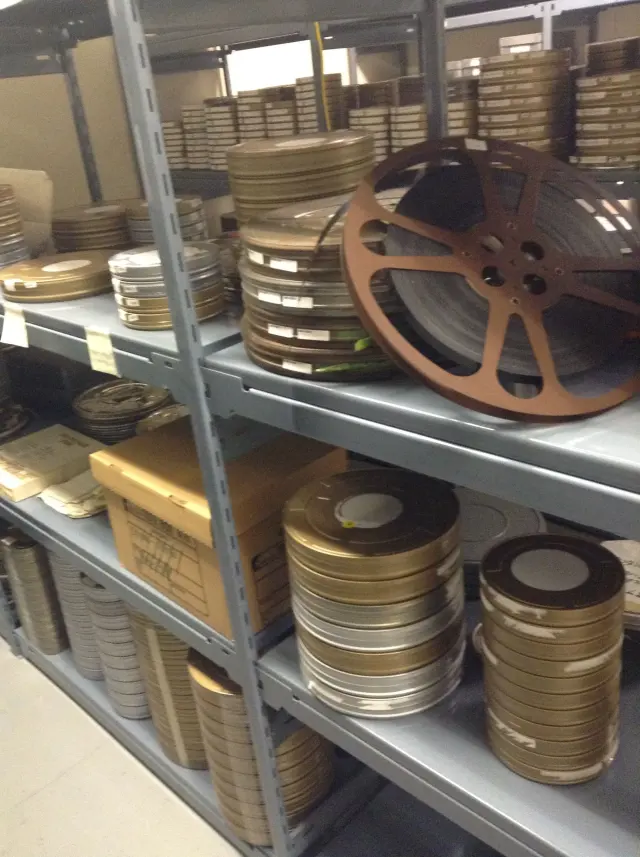
Finding a film does not necessarily mean finding a copy that can be viewed. A catalogue may describe a work, an incomplete reel, production stills or a director’s personal papers. Film research is easier when three questions are kept separate: Who holds the material? How can I consult it? What may I do with a reproduction? Each can have a different answer.
A film archive, university library and national archive may complement one another. A film copy may be held by one institution, while an annotated script, production correspondence or photographs are held elsewhere. No single search tool covers every collection, and there is no common access policy.
Start with a specific research question
Before searching catalogues, note known titles, country, approximate dates, people involved and production company. Write down what you want to establish: a scene, a cut of the film, a production decision, a publicity photograph or the film’s reception.
Be precise about the material. A production still is not necessarily a frame from the film; a working script is not the same as the released version. Posters, programmes, censorship files, scores, contracts and letters can provide different kinds of evidence. If you are looking for manuscripts, search for the person or collection as well as terms such as correspondence, drafts, notebooks or production records.
Where to search: official catalogues and directories
| Institution or directory | What it can help you find and how to proceed |
|---|---|
| FIAF Directory and collection catalogues | The directory helps identify affiliated institutions and contact details by name, city or country. The catalogue list links to film and audiovisual collection databases, including some non-film holdings. These are starting points, not a universal inventory of copies. |
| Filmoteca Española: consulting collections and catalogue | Its guide distinguishes audiovisual, documentary, library, sound and museum collections, including photographs, posters and paper records. Check the access rules before arranging a visit or requesting material. |
| BFI Collections Search and search guide | Search Screencraft materials such as scripts, documents, photographs, posters and designs. The guide explains search fields and how to navigate a collection’s hierarchy. |
| Garance and collection access information | A French collaborative portal bringing together records for films, objects, archives, photographs and other materials held by partner institutions. It helps discover collections; each institution sets its own access and reproduction conditions. |
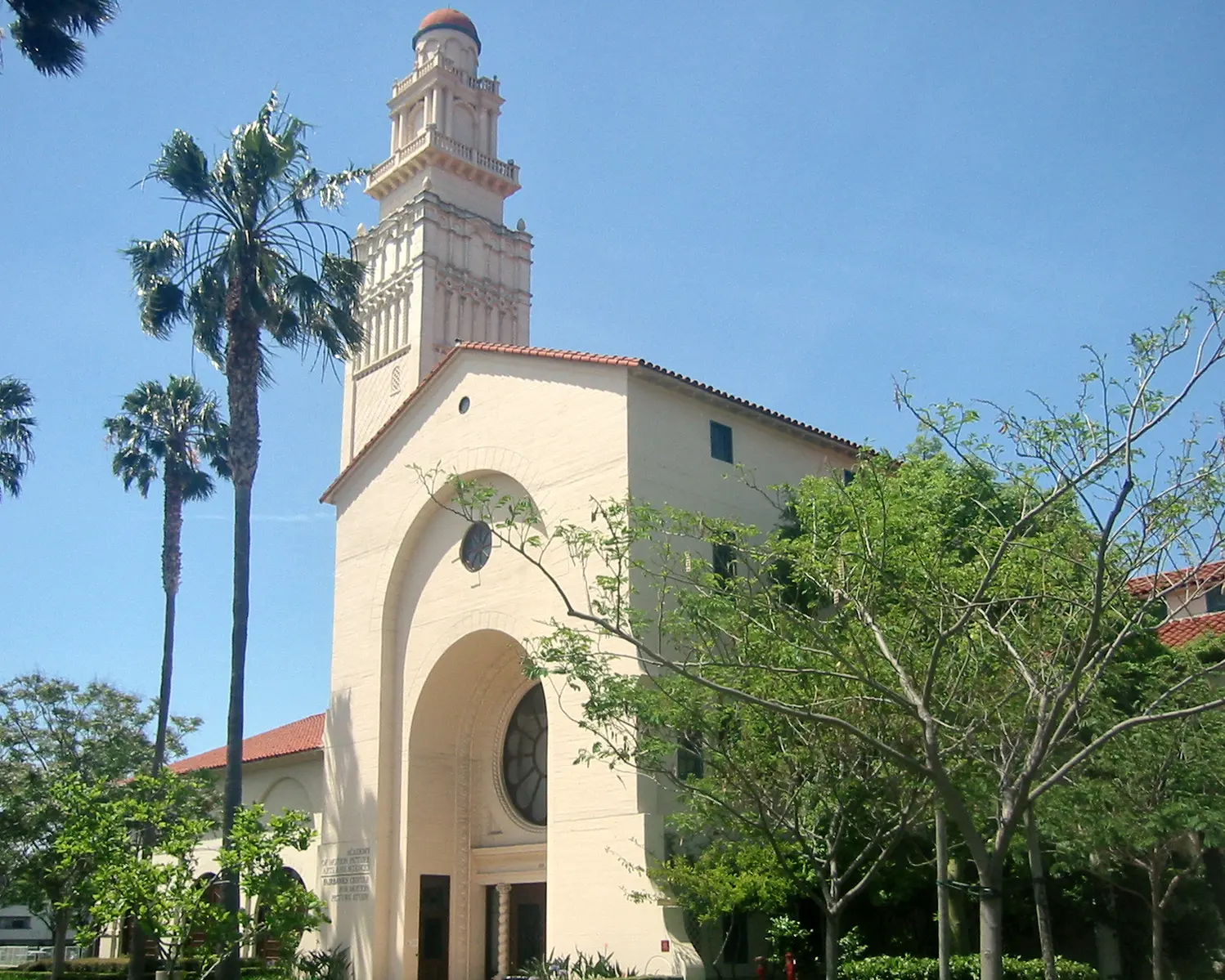
| UCLA: Archive Research and Study Center FAQ | Explains how to search UC Library Search and interpret the access designations in catalogue records. Holdings are available for on-site viewing only and are not loaned or ordinarily supplied as copies, even when a film is in the public domain. |
| Harvard Film Archive: collection guide | Distinguishes HOLLIS, the library catalogue for film, video and audio item records, from HOLLIS Archival Discovery, which searches archival finding aids. |
| Academy Collection and Margaret Herrick Library resources | The search brings together records from the Academy Film Archive and part of the library’s holdings, including graphic arts, photographs and special collections. General records for works, people or collections may link to specific holdings; a person record alone does not establish that documents are available to consult. |
| U.S. National Archives: audiovisual research and catalogue | Help locate film, sound and video records and explain how to use the online catalogue and research-room finding aids. Some holdings require additional card catalogues or indexes. |
FIAF’s list includes catalogues from affiliated institutions and other organisations, but each resource has its own scope. Some portals depend on JavaScript; if a search does not open, return to the institution’s official guide. A missing thumbnail or an empty search does not prove that an item does not exist.
Search by title, person, organisation and date
Begin with the original title, then try distribution titles, spelling variations and documented working titles. Add a year to distinguish films with similar titles or later versions, but do not narrow the search too quickly: a copy or production document may have a date different from the release.
Search systems do not share a universal syntax. For example, the BFI guide suggests trying a title without an initial “The” and, if needed, without apostrophes. In its advanced search, PKR* can be used to explore records in the Alan Parker collection and combined with a term such as memo in the content description. The asterisk and this search method belong to that catalogue; do not assume they will work elsewhere.
Academy Collection offers free-text and advanced searches. Free text finds all the words entered, even if they appear in a different order; quotation marks search for a phrase. Advanced search lets you select fields such as title, name, collection, department or year, and include or exclude values. Results may include umbrella records for a work or person as well as records for physical holdings. Follow links to associated holdings before concluding what the institution has.
Search people by surname, full name, known pseudonyms and different roles: director, performer, screenwriter, cinematographer or producer. In a personal archive, the person who assembled the papers may be the main entry point even when a document concerns someone else. Try earlier company names and related organisations where the relationship is documented; business archives may be arranged by correspondence or production series, without an individual record for each film.
Treat dates as contextual data. A release year, a letter’s date, the manufacture of a copy and the date an item entered an archive are not interchangeable. Preserve approximate dates as described, and widen the range if an exact search produces no results.
From a search result to the item you need
A catalogue may describe a work, an entire collection, a series, a folder or an individual item. This hierarchy explains why an exact search may return a broad record or many related results.
In BFI Collections Search, the hierarchy browser lets you move from a record to other parts of a collection. At Harvard, search both HOLLIS and the archival finding aids. A finding aid usually explains a collection’s context and the arrangement of its series, boxes and folders; scope-and-content notes may point to letters or scripts that have no separate item-level record. Searching a finding aid is not the same as searching the full text of every document.
At NARA, record the National Archives Identifier separately from the Local Identifier. The former identifies a catalogue record; the latter is the reference staff use to locate and identify material. An order may also require the record group, series, title and reel number. The online catalogue does not describe every audiovisual holding and may not reach the level of individual reels.
What to record from each catalogue entry
| Detail | Why it matters |
|---|---|
| Title, names and roles | Identify the work or document and distinguish namesakes or versions. |
| Date and level of precision | Establish whether a date refers to the work, document or copy; retain wording such as “circa.” |
| Description level and provenance | See whether a record describes a collection, series or item, and who assembled the collection. |
| Format, duration, language and version | Compare copies and check whether completeness, sound or subtitles are described. |
| Reference, box, folder and identifiers | Help staff locate the specific unit and prevent ambiguous requests. |
| Scope, content and related materials | Find complementary records and read a brief title in context. |
| Access and reproduction conditions | Find out whether an appointment, permission, preparation or separate request is needed. |
| Stable link and date consulted | Return to the entry and document which description you used. |
Not every record includes all these details. A short entry does not establish that a copy is complete, has sound or is available without restrictions.
Consulting an item is not the same as obtaining a copy
Before travelling, ask whether the item is available, whether the archive serves an original or a research copy, and what credentials or request forms are required. Preservation needs, off-site storage, privacy and donor conditions may affect access. Some institutions need time to retrieve or prepare material.
Filmoteca Española distinguishes, among other holdings, archival records, library collections and museum materials. Its access rules say that special materials—including scripts, sound holdings and papers from personal and institutional archives—must be requested in advance. Archival documents require an appointment, and some collections may need specific permission for data-protection reasons. Film viewing depends on the format and condition of the material, so the archive recommends confirming availability before visiting.
UCLA offers on-site access only; its holdings do not circulate. In the catalogue, Study Copies and Research and Study Copies can usually be requested with one working day’s notice; Research Copies may take four to six weeks, and Archival Copies are normally unavailable for viewing unless an archivist approves an exception. These are access designations, not guarantees: condition, preparation and available resources can affect a request. UCLA does not provide ordinary copies, even when a film is in the public domain.
At the Margaret Herrick Library, core collections can be consulted without an appointment, while special collections—including manuscripts, photographs and graphic arts—require an appointment and advance request. Materials are for on-site reference use and do not circulate. The library offers fee-based remote research and reproduction services.
Notice current in November 2026: the BFI says research access to its Screencraft collections is temporarily closed until May 2027. This does not mean all BFI services are closed: the Reuben Library continues to provide access to its materials, some of which can be consulted without an appointment or requested in advance depending on type and location. Confirm availability with the relevant service before travelling.
How to request a consultation or reproduction
A specific request helps an archive determine what it can serve. Include catalogue references and priorities, not just a film title. You can adapt this template:
I am researching [topic and purpose]. I have located [institution, collection or fonds, series, references or identifiers, and titles]. I need to establish [specific question]. My priorities are [essential items]. Can these be consulted [in person or through a research copy]? What request, identification and preparation are required? I would also like to know any applicable costs and the conditions for reproduction and use. My proposed date is [date or range]. My intended use for any images is [study, teaching, exhibition or publication].
Provide only the personal details required by the official process. Ask for costs and permission before commissioning scans or transfers. A request does not guarantee that material is available or that it will be delivered by a particular date.
NARA describes a specific reproduction process: first identify the material and obtain the archive’s approval; then arrange the work, payment and delivery with an approved vendor. Audiovisual requests may need item- and reel-level references. This process is not a loan of the original and does not grant exploitation rights.
Reproduction, access and rights are different things
Being allowed to view a document or paying for a digital copy does not automatically grant permission to publish it. The holding institution may not own the rights. Depending on the item and use, copyright and related rights, image rights, privacy, contracts or donor restrictions may apply.
NARA notes that although many works produced by the U.S. federal government are treated as public domain in the United States, not all material in its holdings is. The archive does not grant licences or guarantee the legal status of every item. Where rights status is undetermined, users are responsible for investigating what permissions may be needed. A credit line identifies the source; it does not replace permission.
Garance also distinguishes finding a record from accessing and using it. The portal is not a viewing platform or automatic copy service. The partner institution assesses requests according to the item’s condition, purpose and legal circumstances; the availability of a work does not authorise its distribution or exploitation.
If you plan to publish, exhibit or use material in an audiovisual production, state the intended use at the outset and check the conditions set by the institution and relevant rights holders. Seek specialist advice where necessary.
Keep research verifiable
Record what you searched, which variations you tried and when. Keep catalogue references, stable links and correspondence with archives, along with any permissions received. A citation should include the institution, collection or fonds, series and unit—such as a box or folder—plus available identifiers and the date given in the catalogue.
Separate what the catalogue description says from what you observed when consulting the item and from your interpretation. That makes it possible to explain not only what a document shows, but where it came from, which version or format you consulted and what conditions govern its reuse.
- Decade
- Contemporary
- Region
- Global
- Level
- Introduction
- Entities
- Museum, Cuatro
Sources and references 18
- FIAF — Online FIAF Directorywww.fiafnet.org · 2026-11-13
- FIAF — Collection Catalogues and Databaseswww.fiafnet.org · 2026-11-13
- Filmoteca Española — Consulta de fondoswww.cultura.gob.es · 2026-11-13
- Filmoteca Española — Normas de accesowww.cultura.gob.es · 2026-11-13
- BFI — A guide to using Collections Searchwww.bfi.org.uk · 2026-11-13
- BFI — Access Screencraft materialswww.bfi.org.uk · 2026-11-13
- BFI — Visiting the Reuben Librarywww.bfi.org.uk · 2026-11-13
- UCLA Film & Television Archive — Archive Research and Study Center FAQwww.cinema.ucla.edu · 2026-11-13
- Harvard Film Archive — About the Collection and catalogue search tipsharvardfilmarchive.org · 2026-11-13
- Margaret Herrick Library — About and Using the Librarywww.oscars.org · 2026-11-13
- Academy Film Archive — Film Archive Collectionswww.oscars.org · 2026-11-13
- National Archives — Visit the Moving Image and Sound Research Roomwww.archives.gov · 2026-11-13
- National Archives — Order Copies of Moving Image and Sound Holdingswww.archives.gov · 2026-11-13
- National Archives — Permissions and Rights for Use of Special Media Recordswww.archives.gov · 2026-11-13
- Academy — Library Resources and Catalogueswww.oscars.org · 2026-11-13
- Academy Collection — How to Search Academy Collectionwww.academycollection.org · 2026-11-13
- CNC — Lancement de Garance, portail du patrimoine cinématographiquewww.cnc.fr · 2026-11-13
- Garance — Accès aux collectionswww.garance-patrimoine.fr · 2026-11-13