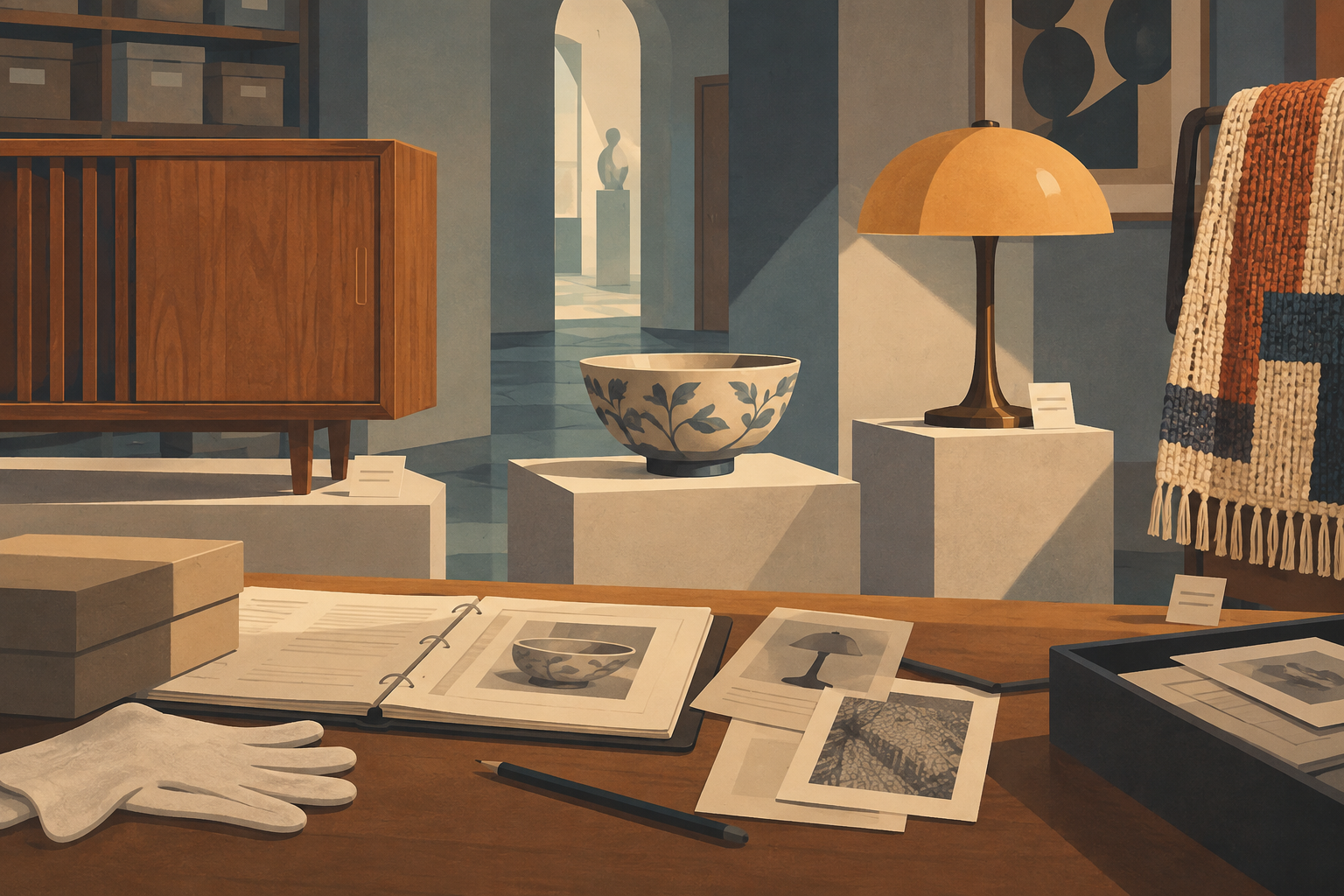
A piece of furniture, a lamp, tableware or a decorative textile is immediately available to the eye: it has a shape, material and presence. Yet that first impression is not enough to reconstruct its history. Without records that help situate an object, it is easy to mistake what we see for what we know. Museum conservation, then, is not limited to keeping an object in good condition. It also involves preserving the traces that help explain how it entered a collection, what information accompanies it and what limits that information has.
An object is not an explanation
An object’s appearance may suggest questions, but it cannot by itself tell us who used it, where it was kept or what it meant. Such questions require evidence; they cannot be settled by assigning a date or provenance on the basis of visual impression alone. A description should distinguish what can be observed from what is documented. This caution does not make an object less interesting: it prevents an appealing interpretation from being presented as established fact.
This matters especially in decoration, where everyday familiarity can create a false sense of transparency. Recognizing a lamp as a lamp is not the same as knowing its history. Its visible form is part of the evidence, not the complete account.
The archive adds context
Institutional archives provide a way to study a museum’s activities and the records it creates or receives. The Historical Archive of the National Archaeological Museum describes itself as a research resource for both its own departments and external researchers. The Prado Museum Archive states that it holds seven documentary fonds, including records produced and received by the museum itself. These examples show that an institution’s history also leaves records that can be consulted.
We should not assume that every decorative object has a complete file, or that the archives mentioned contain information about a particular piece. The most cautious conclusion is methodological: where related documents exist, they should be read alongside the object, not treated as a substitute for examining it materially.
Documentation is part of conservation
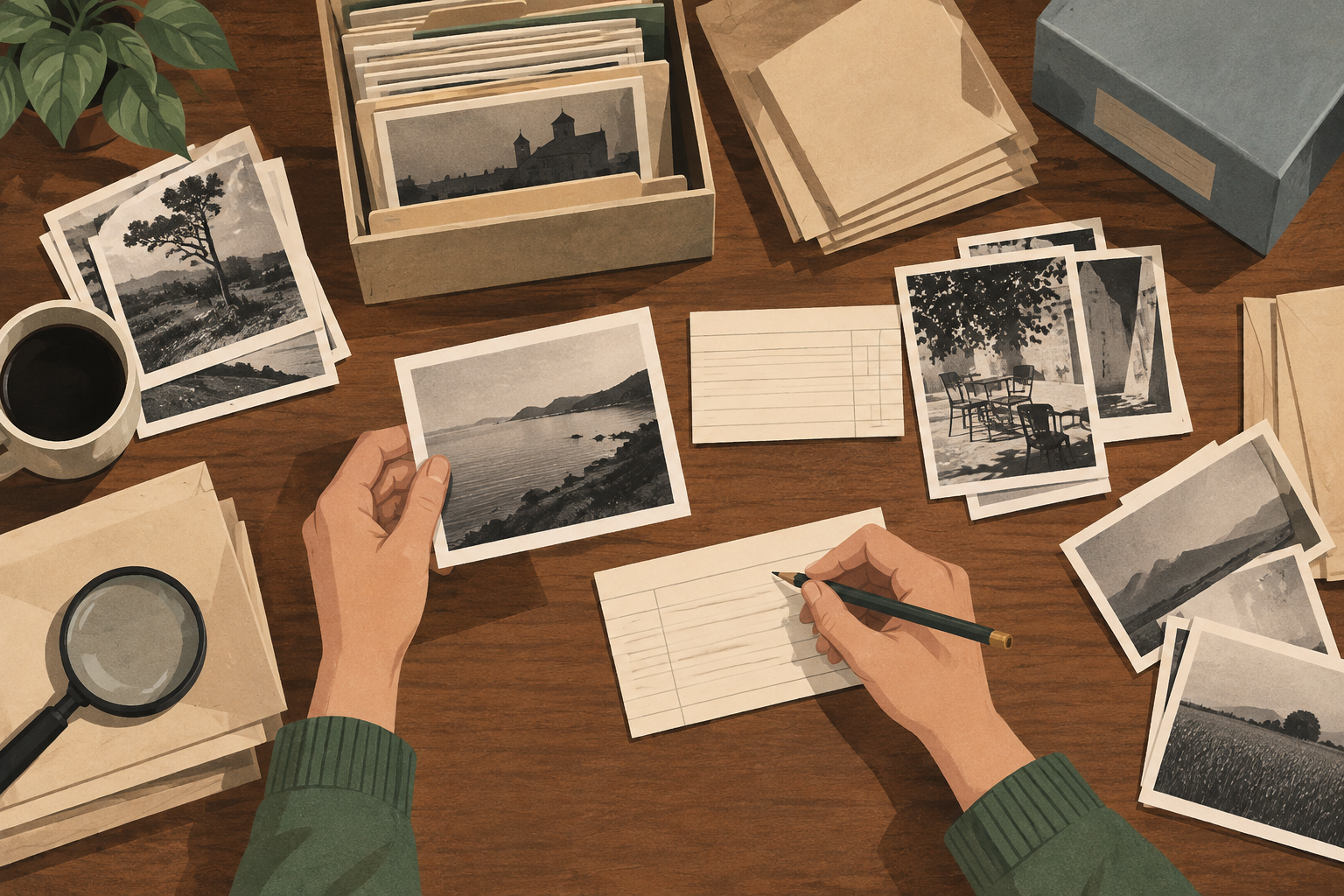
Documentation is not an administrative extra unrelated to the object. It can preserve information that maintains an object’s intellectual context and supports future research. A text on museum documentation emphasizes the need to preserve information about the conditions in which an object was found alongside the object itself. The idea can serve as a working principle: separating an object from its provenance data or documentary history impoverishes what can responsibly be said about it.
This does not mean that every gap can be filled. An incomplete record remains incomplete; a document proves no more than it states. Editorial and curatorial work also means making these limits visible rather than concealing them behind a seamless narrative.
The risk of losing information
Documentary conservation faces both material and management risks. ICCROM’s guide to risk management for museum heritage lists, among other hazards, mechanical damage, contamination, mould growth and the dissociation of archival documents. The list helps show that preserving information requires ongoing attention; placing papers in a box does not, by itself, settle the matter.
Dissociation deserves particular attention when considering interpretation: if a document is no longer linked to the object or group to which it belonged, a useful research relationship may be lost. The source identifies this as a general risk, but does not establish that it has affected a specific collection. Keeping that distinction clear—between a documented risk and an individual case—is part of responsible interpretation.
Institutional history as well as material history
Museum archives can also help researchers study the institution itself: its collections, exhibitions and programmes. A discussion of museum archive operations describes this documentary role. The Spanish Ministry of Culture’s archive guide also records historical information about the National Archaeological Museum and its archive. Read cautiously, these resources remind us that objects reach the public through processes of acquisition, custody, organization and display. Each process may leave traces, though not every trace will be available for every object.
This is why discussing decoration in a museum opens two scales of interpretation. There is the material scale—form, surface and construction—and the documentary scale—records, fonds and institutional relationships. Neither should automatically replace the other.
What can be said, and what remains open
The sources consulted support the importance of museum archives as research resources, the existence of institutional documentary fonds and the presence of risks to heritage documents. They do not identify a specific decorative object or provide a detailed history of a piece of furniture, a lamp or a textile. They therefore cannot be turned into a chronology of styles or an account of how particular objects were used.
Their contribution is more fundamental: they encourage us to treat decoration as documentable material culture and not to separate objects from the evidence that accompanies them. A piece may attract attention through its design; its history, however, is built by comparing what is visible with the available records and acknowledging what remains unknown. Preserving both object and context allows future interpretations to begin with better questions, rather than invented certainties.
- Decade
- 2000s
- Region
- Spain
- Level
- Introduction
- Entities
- Museum, Museo Arqueológico Nacional
Sources and references
- Archivo del Museo Arqueológico Nacional (Madrid, España)censoarchivos.cultura.gob.es · 2026-09-29
- Archivos de Museo: Funcionamientoevemuseografia.com · 2026-09-29
- Archivo histórico - | Ministerio de Culturawww.man.es · 2026-09-29
- Archivo - Museo Nacional del Pradowww.museodelprado.es · 2026-09-29
- Capítulo 10 - El museo como centro de investigación. La ...www.zubiaurcarreno.com · 2026-09-29
- Guía de Gestión de Riesgos para el Patrimonio Museológicowww.iccrom.org · 2026-09-29