A record is not the album
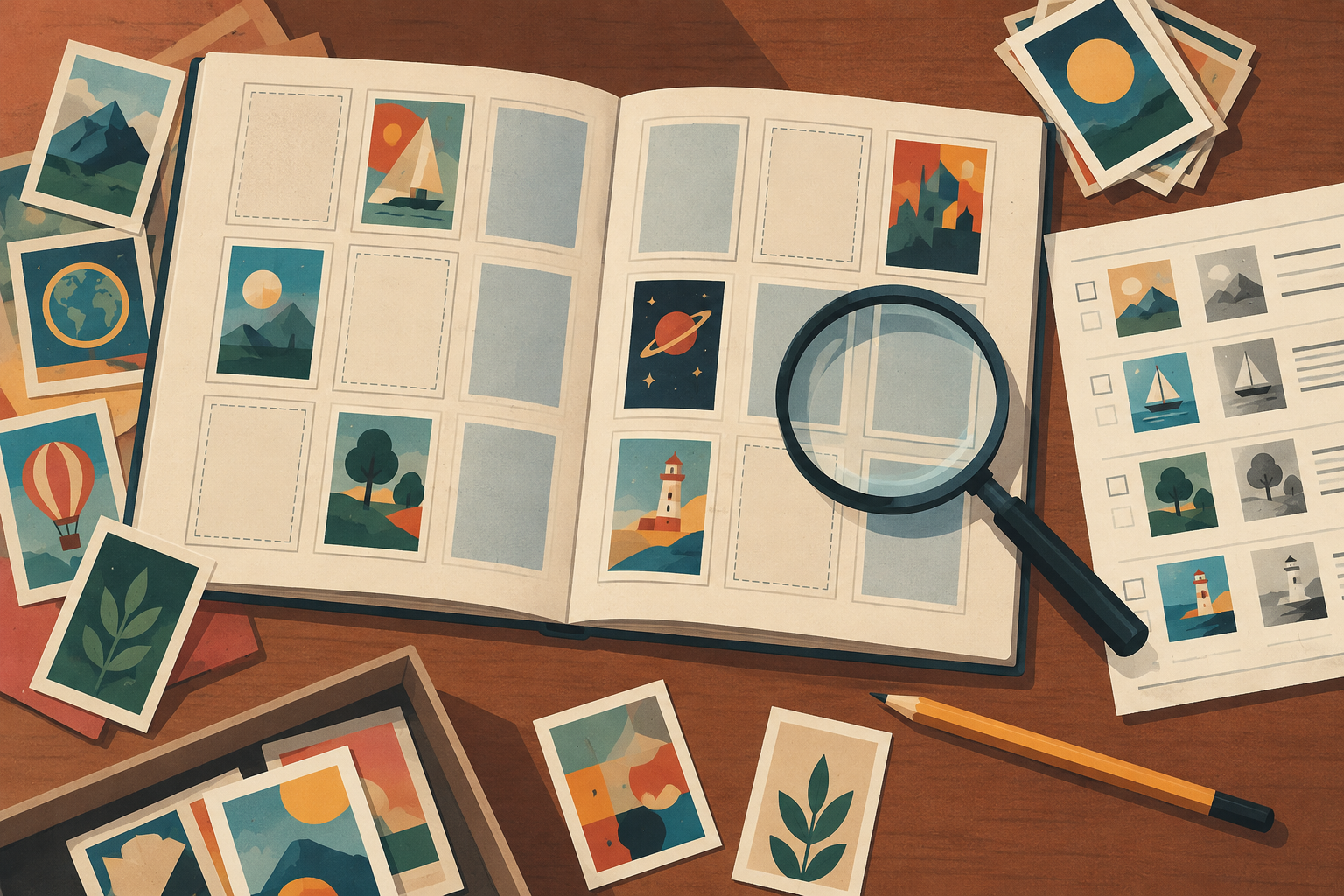
Which catalogue identifies series and variants? A cautious answer begins with a distinction: a catalogue can provide access to object records, but each record supports only what it describes. CER.es presents itself as a collective online catalogue of cultural objects. Among its results is a “Álbum de cromos” titled “Colección Zoológica,” dated 1907 and associated with the Museo Pedagógico. This record is a verifiable starting point, not a comprehensive inventory of a series or a guide to variants.
The distinction matters. Identifying one specific object is not the same as identifying every collectible it may have contained, different editions of an album, or copies that circulated elsewhere. The available record names the album, gives a date and indicates a cultural context; the supplied excerpt does not list the collectibles, provide a complete sequence, or document print runs, editorial variants or exchange methods. Those questions remain open.
What the record supports
The CER.es result contains information that can safely be cited: the object title “Álbum de cromos,” the title “Colección Zoológica,” the 1907 date, the cultural context given as the reign of Alfonso XIII, and attribution to the Museo Pedagógico. These details are useful without turning them into a broader story: they help locate and describe a particular object.
CER.es’s general page explains the collective scope of the catalogue, but the portal’s breadth should not be mistaken for completeness in every record. A record is a documentary unit: its visible fields do not automatically reveal what similar objects exist, whether versions were produced, or how to tell them apart. A variant requires comparative evidence. Without additional records or sufficiently descriptive images, distinguishing two versions would be a hypothesis, not a conclusion.
Comparing without inventing variants
When investigating a series, separate observation from interpretation. First note what the record says explicitly: its name, date, institution and any other visible fields. Then look for other potentially related records and compare only documented features. If the available information shows no material or editorial differences, missing data do not prove that variants never existed; they simply prevent us from asserting them.
Visual documentation can help identify objects: the Ibermuseos protocol describes photographic collection records as a means of identification and documentation. An image, however, cannot by itself settle provenance, the date of an edition or an object’s circulation history. A sound comparison would require knowing what each photograph depicts and which object it records. The CER.es result supplied here contains no detailed images of the album’s inside pages, so no such information should be attributed to the record.
The archive around the object
The Museo del Álbum de Cromos Villa de Estadilla describes its exhibition aim as presenting a century of albums, from 1900. That description confirms the existence of an institution dedicated to albums and offers a useful framework for considering groups of objects rather than isolated pieces. It does not, by itself, show that the museum holds a particular variant of the 1907 album or documents specific exchanges.
According to the Ministry of Culture, state museum archives preserve documentation about objects from the time they are deposited. The Archaeological National Museum’s Historical Archive describes itself as a research source for both its departments and external researchers. These references help explain why an object record may be only one layer of research: documents related to accession and custody can add context. They do not establish that a particular file about this album exists.
Exchanges leave traces too
Circulation and exchange are important questions in collecting, but the evidence provided here does not describe exchange practices associated with the 1907 album. We therefore cannot reconstruct who traded collectibles, under what circumstances or according to which rules. As a research method, testimonies, annotations, correspondence and institutional documents can be treated as potential evidence, provided they are located and attributed accurately.
This caution also prevents present-day price or rarity from being recast as historical fact. A collections catalogue can help identify and locate cultural objects; that does not make it a price list, proof of scarcity or a complete record of an object’s popularity. Those claims would require specific sources that are not available here.
An open question, with a concrete answer
The “Colección Zoológica” record answers the question only in part: a catalogue such as CER.es can identify an album, assign a date and provide institutional context. It cannot identify every collectible series and variant, and the known record provides no basis for reconstructing exchanges. Distinguishing what is documented from what is missing does not diminish the catalogue’s value; it establishes an honest foundation for further research.
For readers and collectors, the practical rule is straightforward: cite existing fields precisely, look for supporting documentation before declaring variants, and make gaps explicit. The catalogue then stops being a promise of a complete history and becomes a verifiable tool for building one, object by object.
- Decade
- 2000s
- Region
- Spain
- Level
- Enthusiast
- Entities
- Museum, Museo Arqueológico Nacional, Museo del Álbum de Cromos Villa de Estadilla
Sources and references
- CER.es Colecciones en Red - Ministerio de Culturaceres.mcu.es · 2026-10-10
- Archivo histórico - | Ministerio de Culturawww.man.es · 2026-10-10
- ARCHIVOS DE LOS MUSEOS ESTATALESwww.cultura.gob.es · 2026-10-10
- protocolo-documentacion-visual.pdfwww.ibermuseos.org · 2026-10-10
- MACVE. Museo del Álbum de Cromos Villa de Estadillaculturadearagon.es · 2026-10-10
- CER.es Colecciones en Red - Resultados de la búsquedaceres.mcu.es · 2026-10-10