A saved web page is not a lived web
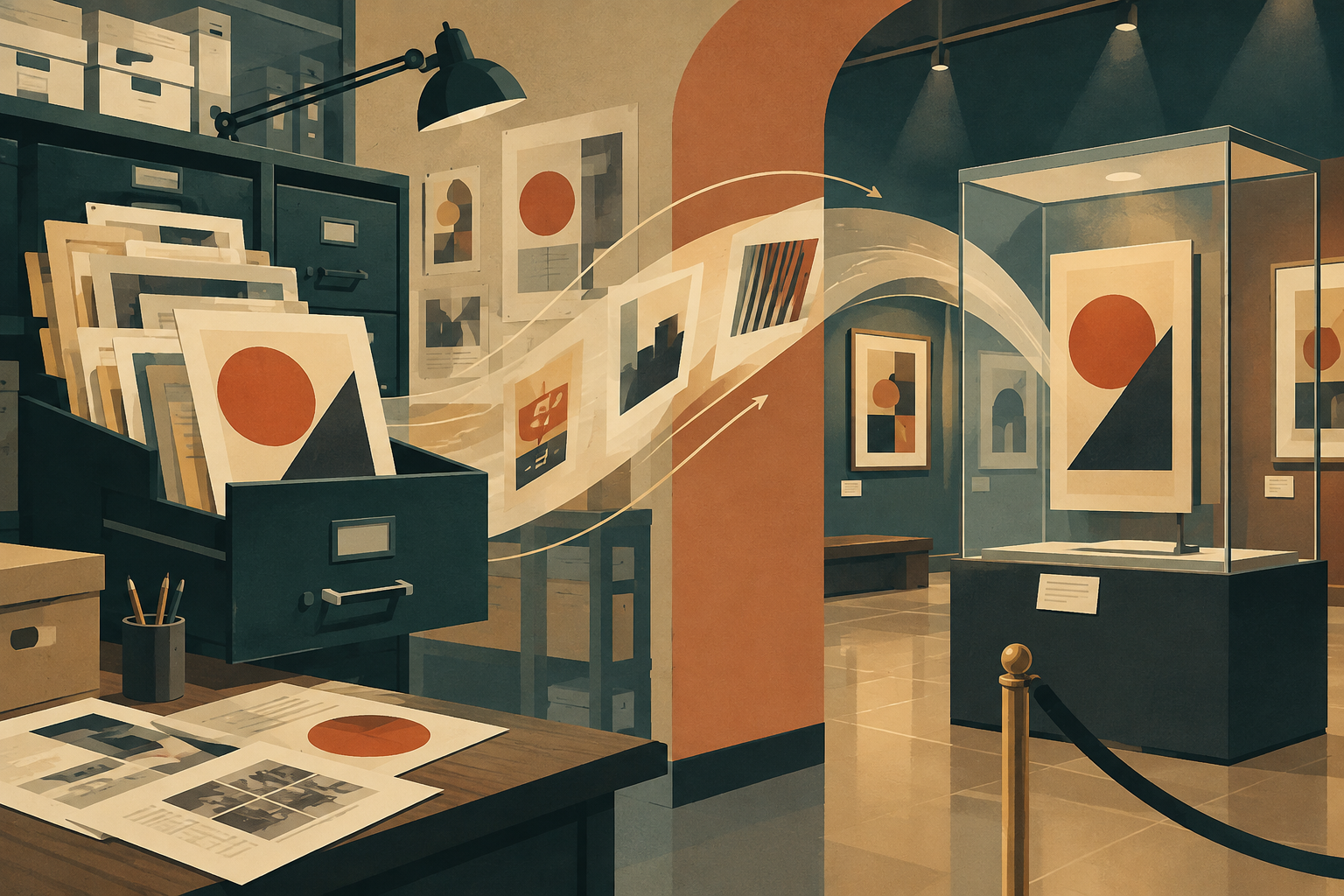
An archived page can look like a window onto the past: text, images, links, and a capture date. Yet that window has a technical and material frame. The National Library of Spain’s Archivo de la Web Española describes a collection of websites gathered to preserve Spain’s documentary heritage on the Internet. That mission makes a capture a valuable historical source, not a complete recording of connected life.
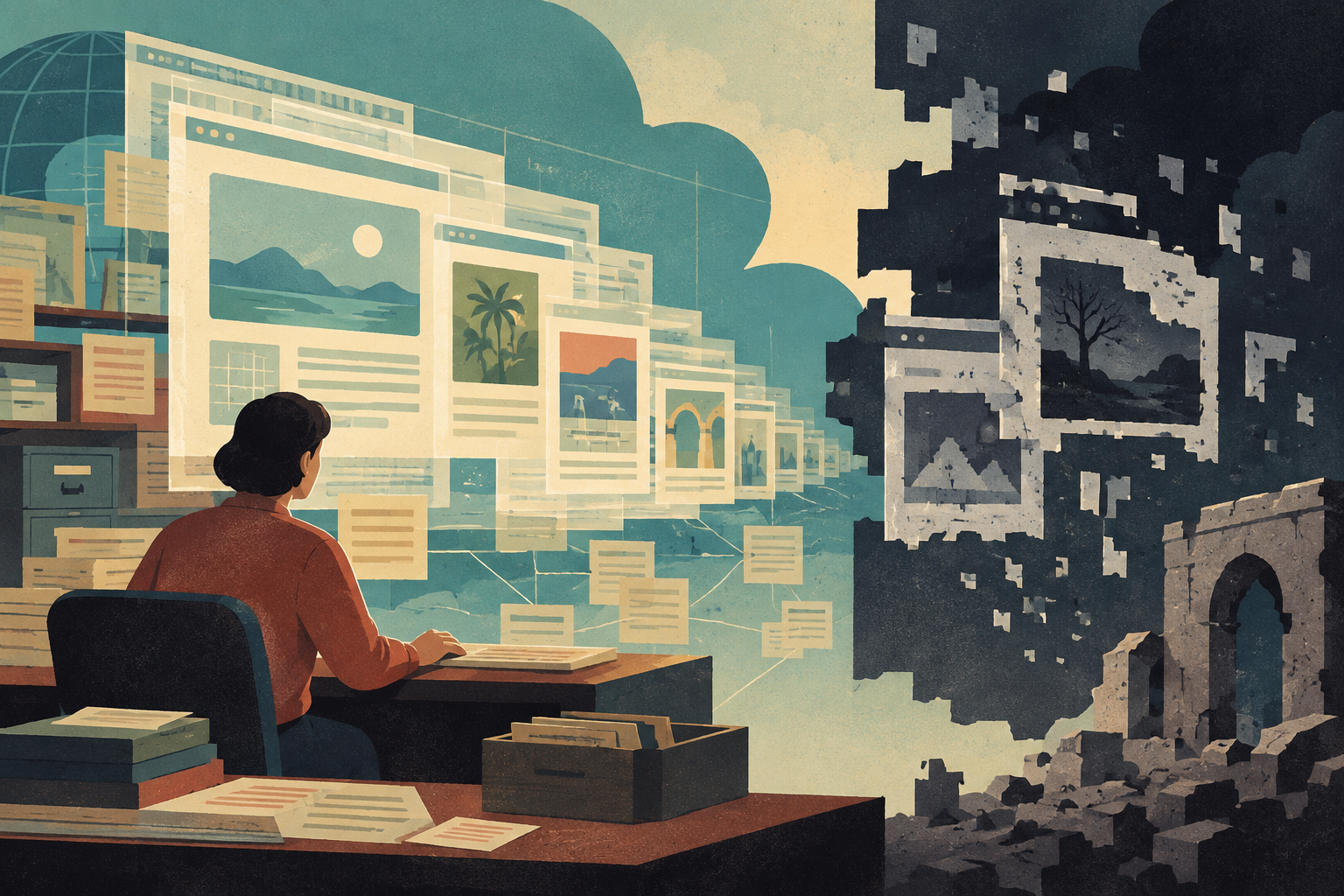
The distinction matters. A site may appear only in part, a link may not reach its destination, and elements dependent on external services may be absent. A capture is evidence of what the archive was able to collect at a particular moment. By itself, it does not establish what every user saw, how long a page took to load, or how an entire service worked.
A capture is a situated document
The Archivo de la Web Española’s institutional description offers a concrete starting point: which sites are collected, and for what purpose? It says the collection is formed to preserve documentary heritage on the Internet. This frames the archive as an act of selection and preservation, not a neutral mirror that records everything.
Reading a preserved page therefore requires attention to its conditions. The date associated with content, the date of capture, and the date someone remembers using a site are not necessarily the same. A capture may preserve one version, but it does not automatically prove that the version was available throughout a period or represented every visitor’s experience.
The supplied search results contain no specific captures, detailed inventories, or technical documentation of collection procedures. It would therefore be inappropriate to attribute coverage, capture frequency, or technical capabilities that the evidence does not confirm. This limit does not weaken the analysis; it requires us to state precisely what the evidence supports.
From page to service
The subject is not only what pages looked like, but the relationship between people and services. A website may document an entry point, an information section, or a contact method. If several captures and supporting documentation survive, they could be compared to identify visible changes and raise questions about a service’s development. But moving from those clues to claims about use requires further evidence.
A preserved interface is not, on its own, a record of use. It cannot tell us how many people reached it, what they wanted, or whether they completed a task. Such questions require complementary sources, such as contemporary documentation, institutional records, or attributable testimony. The evidence supplied here identifies only the Archivo de la Web Española’s general preservation purpose; it does not provide those specific materials.
This distinction prevents us from confusing a service with its visible page. Networked services combine content, links, and dependencies that may be incomplete in a capture. A preserved document can help reconstruct parts, identify absences, and guide further research; it cannot rebuild the interaction in full.
Questions an archive makes possible
For anyone investigating a vanished service, the practical question is what can actually be verified in the preserved material. Is there more than one capture? Have the text or structure changed? Are links or references preserved that might identify other sources? Does the page mention a particular organization or function? These questions do not assume answers; they describe a cautious way to examine web documents.
It is also useful to separate what a capture shows from what a reader infers. A preserved help section documents that the section was present in that version; it does not prove that it solved every problem or was used in a particular way. A date printed on a page should not automatically be mistaken for its archive date.
The National Library of Spain provides a clear institutional basis for this approach by describing its archive as a collection of sites gathered to preserve documentary heritage. That description does not replace consultation of individual records, but it explains why preserved pages can be treated as sources and why they must be read within limits.
Absences, dependencies, and caution
An element missing from a capture does not necessarily prove it never existed. It may reflect a preservation limitation, an external dependency, or a page variation; without specific information, we cannot decide which explanation applies. Likewise, a preserved page does not mean the associated service remains accessible or fully documented.
This caution matters especially when writing about everyday life online. A memory may be genuine and meaningful, but it does not by itself establish a service’s exact chronology. Verifiable dates need corresponding documentation, while personal experiences should be identified as recollections rather than presented as captures or institutional records.
Reconstruct without filling the gaps
The value of a web archive lies in providing consultable evidence about sites that might otherwise change or disappear. For the Spanish collection, the institutional source specifies its purpose: preserving collected websites as documentary heritage. That fact supports a history of preservation, even though the supplied evidence does not allow us to narrate the trajectory of a particular service.
The best reconstruction does not conceal gaps; it makes them visible. One capture lets us describe one version. Several sources can add context. Comparison may suggest change. But the full experience of connection—people, timing, interactions, and services—requires more than one kind of document.
A web archive does not return the Internet as it was lived. It preserves traces that allow better questions and, when paired with relevant documentation, the reconstruction of parts of that history. Respecting the distance between trace and experience is how digital history avoids turning the past into an invented scene.
- Decade
- 2000s
- Region
- Spain
- Level
- Introduction
- Entities
- Archivo de la Web Española, Internet
Sources and references
- Archivo de la Web Española | Biblioteca Nacional de Españawww.bne.es · 2026-10-13
- Archivo - MUSEO NACIONAL DE ANTROPOLOGÍAwww.cultura.gob.es · 2026-10-13
- De la ficha erudita al catálogo digital en Internetwww.man.es · 2026-10-13
- La necesaria transformación de los archivos históricos | gttwww.gtt.es · 2026-10-13
- De la pinacoteca a la red: los archivos de museos en la era ...produccioncientifica.ucm.es · 2026-10-13