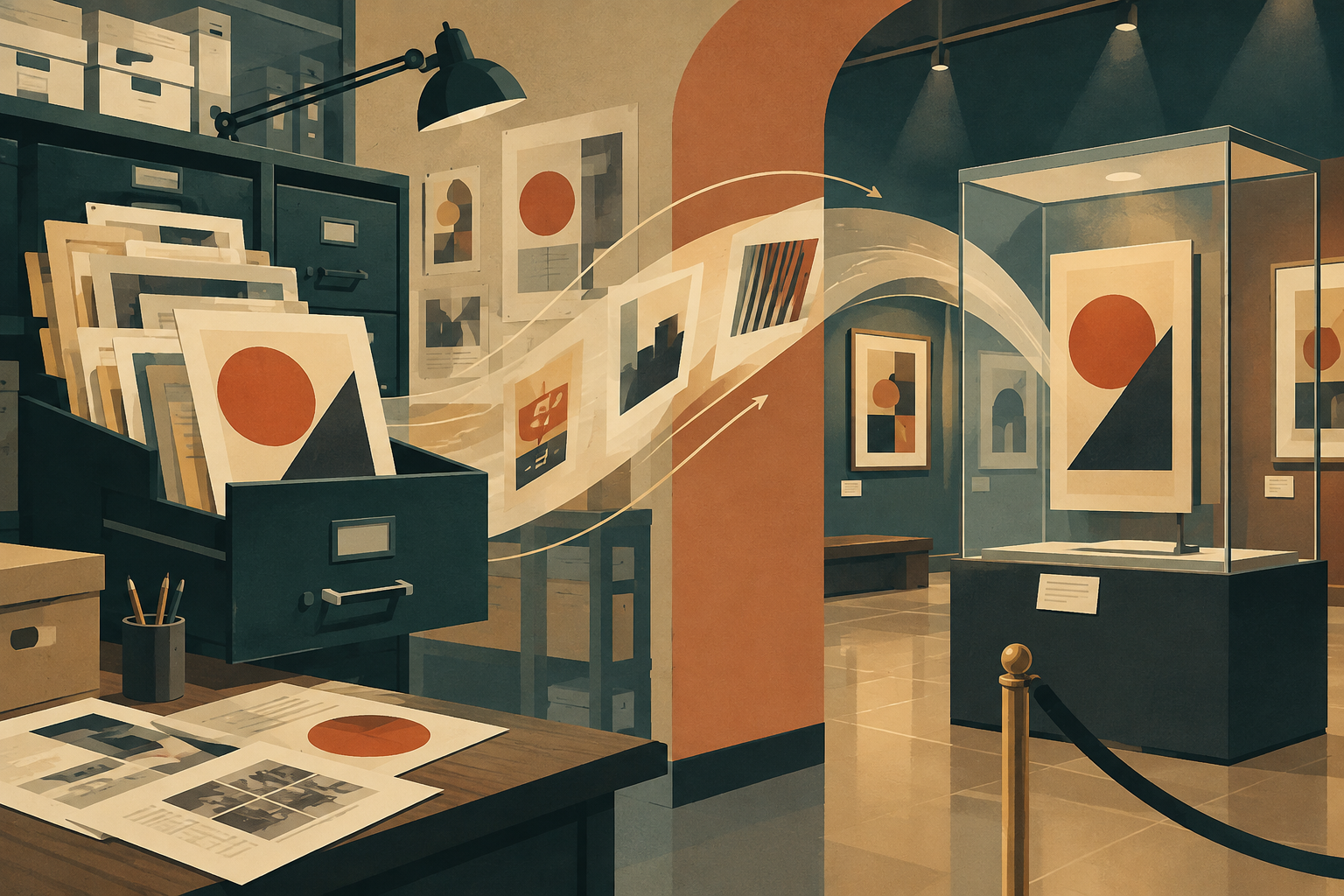
The transition of an advertising design piece from an organizational archive to a museum display case is not a simple change of location, but a redefinition of its cultural function. While in the archive the object serves to document the institutional history or the development of a collection, in the museum it becomes a testament to the functional and aesthetic decisions of its time. This process requires a deep understanding of how design organizes information and proposes ways of using objects, distinguishing functional decisions from simple aesthetic labels.
The function of the archive in preserving design
Museum archives document the history and development of the institution, its collections, exhibitions, and programs. In the case of design and advertising, these archives contain not only the final pieces but also drafts, technical specifications, and intake records for each object. This documentation is crucial for understanding the context of creation and the original intentions of the designer. However, the archive alone does not always manage to convey the visual and functional experience of the piece to the general public.
Design as a visual and functional language
Design has shaped the world we live in, improving our lives in ways we often do not perceive. In the context of advertising, design is not just decoration, but a tool to communicate messages and guide consumer behavior. When an advertising piece is preserved, not only its visual appearance is preserved, but also the functional logic that supports it. This includes typography, color, composition, and interaction with physical or digital space.
Preventive conservation and the record of works
The conservation of design and advertising collections requires a preventive conservation plan that considers environmental conditions, handling, and storage. The museum record in the 21st century has evolved to include not only the movements of works in loans and itineraries, but also customs figures and the digital management of metadata. This precision in the record allows tracking the history of each piece and ensuring its long-term integrity.
Cultural context and the economics of culture
The economics of culture studies the creation, distribution, and consumption of cultural products, including the design and advertising industry. Since the 1980s, the study of the cultural industry has expanded to include not only visual and performing arts, but also the economics of cultural institutions, such as museums and libraries. This context is fundamental to understanding how advertising design pieces acquire economic and cultural value, and how their conservation contributes to the preservation of cultural heritage.
The transformation of the piece into a museum object
When an advertising design piece is exhibited in a museum, its reading changes. It is no longer seen only as a marketing tool, but as a historical document that reflects the social, economic, and technological trends of its time. This change in perspective requires the museum not only to preserve the piece, but also to contextualize it, providing the visitor with the necessary information to understand its meaning and relevance.
The limits of the verifiable and interpretation
Although the archive and the museum record provide a solid basis for conservation and exhibition, there are always limits to what can be verified. The interpretation of the designer's intentions and the impact of the piece in its original context can be subjective and depends on research and collaborative work with other archives, libraries, and museums. It is important to differentiate documented facts from interpretation, and to be transparent about the uncertainties that persist.
Conclusion
The transformation of design and advertising pieces into museum objects is a complex process that involves physical preservation, detailed documentation, and cultural contextualization. This process not only protects heritage, but also allows future generations to understand how design has influenced society and culture. By understanding the functional and aesthetic decisions of each piece, we can better appreciate the value of design as a form of information organization and a proposal for the use of objects.
- Decade
- 2000s
- Region
- Global
- Level
- Enthusiast
- Entities
- Museum
Sources and references
- Archivos de Museo: Funcionamientoevemuseografia.com · 2026-10-13
- EL REGISTRO DE MUSEOS EN EL SIGLO XXIwww.icom-ce.org · 2026-10-13
- Diseño y patrimonio cultural: cómo asegurar la conservación ...turia.uv.es · 2026-10-13
- El Plan de Conservación Preventiva de las colecciones del ...www.marqalicante.com · 2026-10-13
- MUSEOS ESTATALES. UNA IMAGEN PARA LA ...www.cultura.gob.es · 2026-10-13
- Economía de la culturaes.wikipedia.org · 2026-10-13