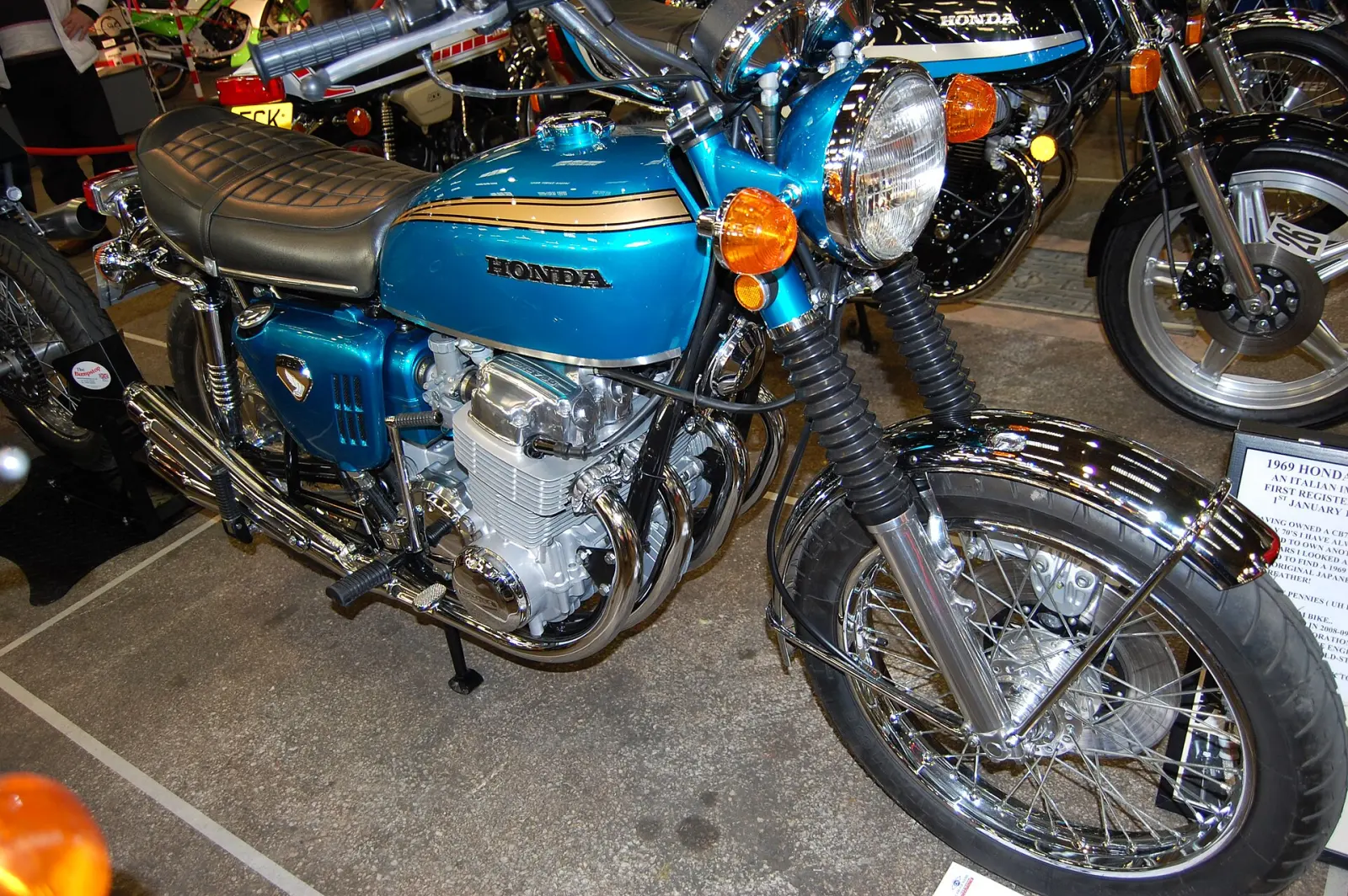
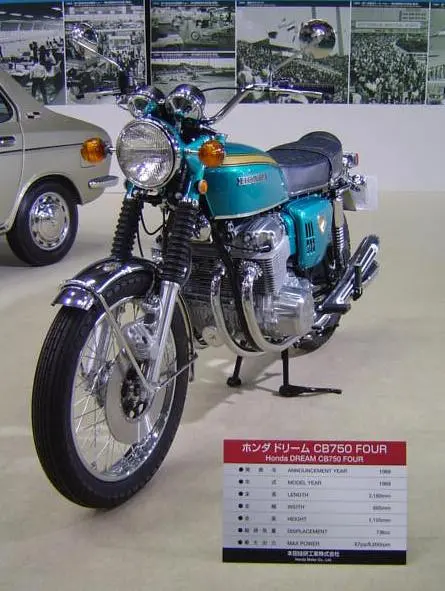
The introduction of the Honda CB750 Four in 1969 represented a paradigm shift in the two-wheeled industry. Before its arrival, the global market was dominated by British and American twins, while Honda had consolidated its position as a world leader with smaller-displacement models like the C100 Cub and the CB72/77 series. The CB750 did not just compete in the market; it redefined rider expectations and forced rival manufacturers to rethink their engineering and commercial strategies.
Origins and competitive context
The development of the CB750 was driven by Honda's strategic need to compete in the US market. In 1967, Bob Hansen, service manager at American Honda, traveled to Japan to discuss with founder Soichiro Honda the possibility of transferring Grand Prix technology to a production motorcycle. The regulatory context of the time played a crucial role: American Motorcyclist Association (AMA) rules limited overhead-valve motorcycles to 500 cc, while allowing side-valve Harley-Davidsons to compete with 750 cc engines. This disparity motivated Honda to create a large-displacement machine that could compete on the track and, simultaneously, be sold on the street. The result was presented at the Tokyo Show in November 1968 and publicly launched in the UK in April 1969.
Technical innovation
Technically, the CB750 was a masterpiece of engineering for its time. It featured a 736 cc, transverse inline-four, air-cooled engine with a single overhead camshaft (SOHC). Although this configuration was known in racing, it was unprecedented in an affordable production motorcycle. Additionally, it was among the first to incorporate a hydraulic front disc brake, an innovation that significantly improved braking safety and performance. With a launch price of $1,495, it offered a value proposition that its rivals could not match. Specialized magazines like Cycle World described it as "the most sophisticated production bike to date," highlighting its 200 km/h top speed, fade-free braking, and complete instrumentation.
Commercial and cultural impact
The commercial and cultural impact was immediate. Honda initially limited the production of engine casting molds, using a permanent mold technique that resulted in an initial run of 7,414 units, highly sought after by collectors. The bike remained in the production line for a decade, with over 400,000 units manufactured. Its success forced the AMA to change racing rules in 1970, standardizing the 750 cc displacement for all engines, which allowed brands like Triumph and BSA to compete with their 750 cc triples.
The CB750 was not only a commercial success but also established a new standard for sport bikes. Its design, which included an electric starter, turn signals, dual mirrors, and easily maintained valves, made it accessible to the general public without sacrificing performance. The Society of Automotive Engineers of Japan has recognized it as one of the 240 landmarks of Japanese automotive technology, and it is part of the AMA Hall of Fame and exhibitions such as The Art of the Motorcycle. The CB750 Four demonstrated that racing technology could be democratized, laying the foundations for the era of Japanese superbikes that would dominate the following decades.
Documentary gallery
- Decade
- 1960s
- Region
- Global
- Level
- Enthusiast
- Entities
- Cuatro, Honda CB750 Four
Sources and references
- Honda CB750 y CR750translate.google.com · 2026-11-02
- Reel by Vento Otumba (@ventootumba) · July 10, 2026www.instagram.com · 2026-11-02
- Día Viernes 4 de Octubre de 9:00 a.m. ...www.facebook.com · 2026-11-02
- GORI DE PALMA - "Witch House" Gibraltar Fashion Week ...www.instagram.com · 2026-11-02
- ✅✅ Exhibición nunca antes vista en la región, domingo 4 ...www.facebook.com · 2026-11-02
- Te mostramos un poco de lo que tenemos. 40 años y la misma ...www.instagram.com · 2026-11-02
- Honda CBR900RR Fireblade (1992): la deportiva que lo ...antre-du-motard.com · 2026-11-02
- La Moto de: #MissionImpossible Rogue Nationwww.tiktok.com · 2026-11-02