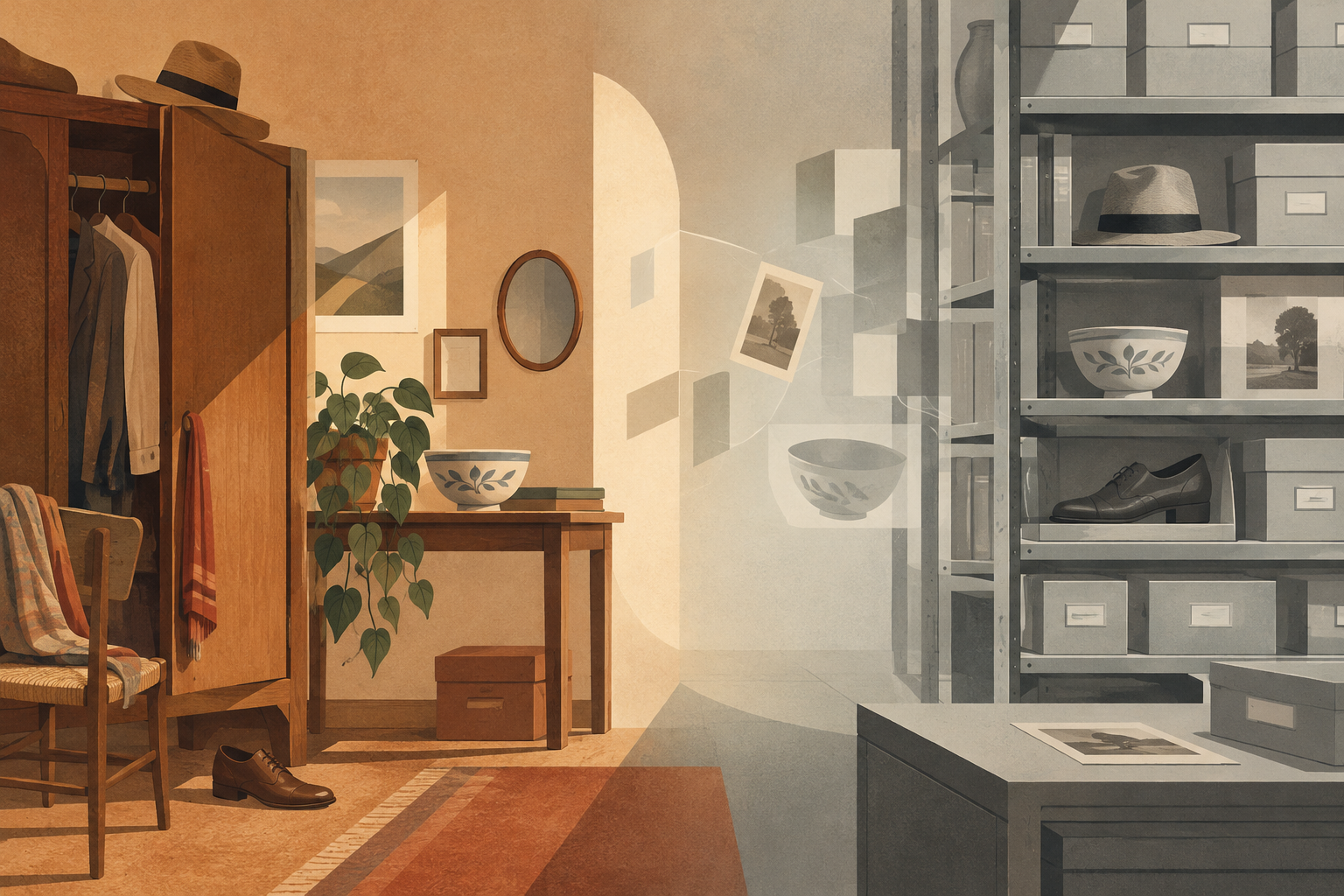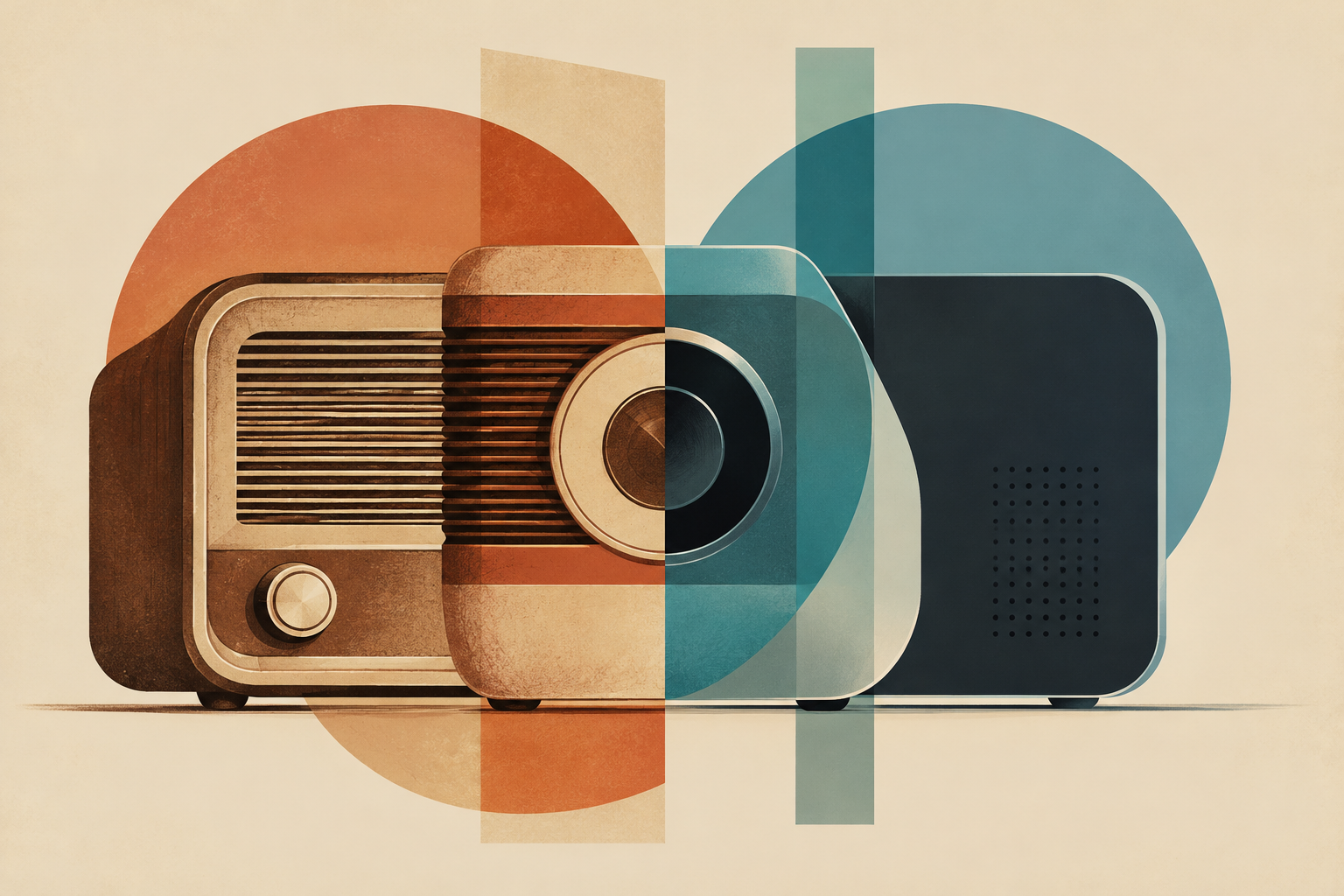
What makes a present-day product look retro? It is not enough for something to be new and quote an old shape: the label describes a relationship between design, memory and perception, not the object’s material age. A study published in 2013 on purchase factors for retro products and the segmentation of their potential market places the question within the field of consumption. The available information, however, summarizes only the study’s purpose; it does not provide detailed findings that would establish why a particular group buys retro products. Within that limit, we can propose a design reading: examine what evokes the past, what has been updated, and the context in which the object is made and used.
A word that does not make a new object old
“Retro” can describe an aesthetic, but it does not prove that a product is historical or faithfully reproduces an earlier model. The distinction matters: a visual reference may bring an era to mind without sharing its manufacturing, technology or conditions of use. A contemporary object belongs to its own time, even when it draws on forms associated with another.
The available dossier refers to a study of the potential market for buyers of retro products. According to the summaries provided, its purpose was to analyze and segment that market. The full method, findings and participant characteristics are not detailed here. The study can therefore frame questions about consumption, but it cannot serve as evidence for a universal motive.
Three dimensions for reading a reinterpretation
One useful way to examine retro design is to separate three dimensions. The first is visual: silhouettes, proportions, colors or graphic devices can evoke a period. The second is material and technical: a present-day product’s materials, components and capabilities may differ from those of any object it references. The third is contextual: its production, sale and use take place under contemporary conditions.
This is an editorial tool, not a classification attributed to the 2013 study. It helps prevent surface resemblance from being mistaken for historical continuity. It also makes it possible to ask precisely what a design preserves—such as a recognizable formal language—and what it changes to meet present-day uses.
Historical reference as a design operation
Evoking the past involves selection. A design may recover an appearance or detail while leaving out other features of the associated period. That is not necessarily a flaw: it is what distinguishes reinterpretation from complete reproduction. But the reference must be described carefully. Without documentation of a particular product and its historical model, it is impossible to confirm a lineage, an intended tribute or a specific degree of fidelity.
The evidence includes a Canva page presenting general examples of historical graphic styles and their use as contemporary inspiration. It is a practical guide, not sufficient evidence for attributing a particular movement to a specific product. Its relevance here is limited: it reminds us that aesthetic references circulate across eras, but does not show how any particular item was designed or received.
From appearance to the experience of use
Appearance is only one part of the relationship between a product and its consumer. An evocative form can coexist with contemporary materials, technologies or functions; conversely, a design need not reproduce every old detail to invite a retro reading. Assessing that combination requires evidence about the object: verifiable images, manufacturer documentation, specifications and, when making claims about reception, sources that document that reception.
Without such material, it would be inappropriate to attribute nostalgia, a desire for authenticity or a preference for a particular decade to buyers. Those are possible questions in consumer research, but the available records do not establish them as findings of the cited study. The difference between a research question and a demonstrated result is essential if promotional language or intuition is not to be mistaken for evidence.
What can be said, and what remains open
The sources identify a 2013 academic article whose stated aim is to analyze the potential market for buyers of retro products. They also support the general observation that the term is applied to products and styles drawing on references from the past. They do not identify a specific contemporary brand or product, or document a launch, company, sales date or particular comparison between a present-day object and a historical one.
That limitation does not prevent a general interpretation; it does prevent presenting one as a product history or a substantiated portrait of buyers. Developing specific cases would require consulting the complete study and gathering primary sources for the objects under discussion. Without those materials, claims about materials, functions, dates or intentions would exceed the available evidence.
A useful description, not a historical label
A contemporary product looks retro when its design activates recognizable references to the past, but a rigorous reading keeps the distance between evocation and age in view. Ask which element creates that impression, what present-day conditions accompany it, and what evidence supports the comparison.
The cited study’s contribution is to offer a point of entry through consumption: the phenomenon can be investigated as a market, although the available summary does not allow its findings to be repeated. Discussing specific objects requires documenting each case. Until then, “retro” describes an aesthetic and cultural operation; it does not, by itself, certify a history.
- Decade
- Contemporary
- Region
- Global
- Level
- Introduction
- Entities
- No linked entities
Sources and references
- Estudio de los factores de compra de productos retro y ...www.sciencedirect.com · 2026-10-18
- Volver a lo retro: Cómo dar nueva vida creativa a tus ...translate.google.com · 2026-10-18
- Estudio de los factores de compra de productos retro y ...www.cya.unam.mx · 2026-10-18
- (PDF) Estudio de los factores de compra de productos retro ...www.researchgate.net · 2026-10-18
- Estudio de los factores de compra de productos retro y ...www.redalyc.org · 2026-10-18