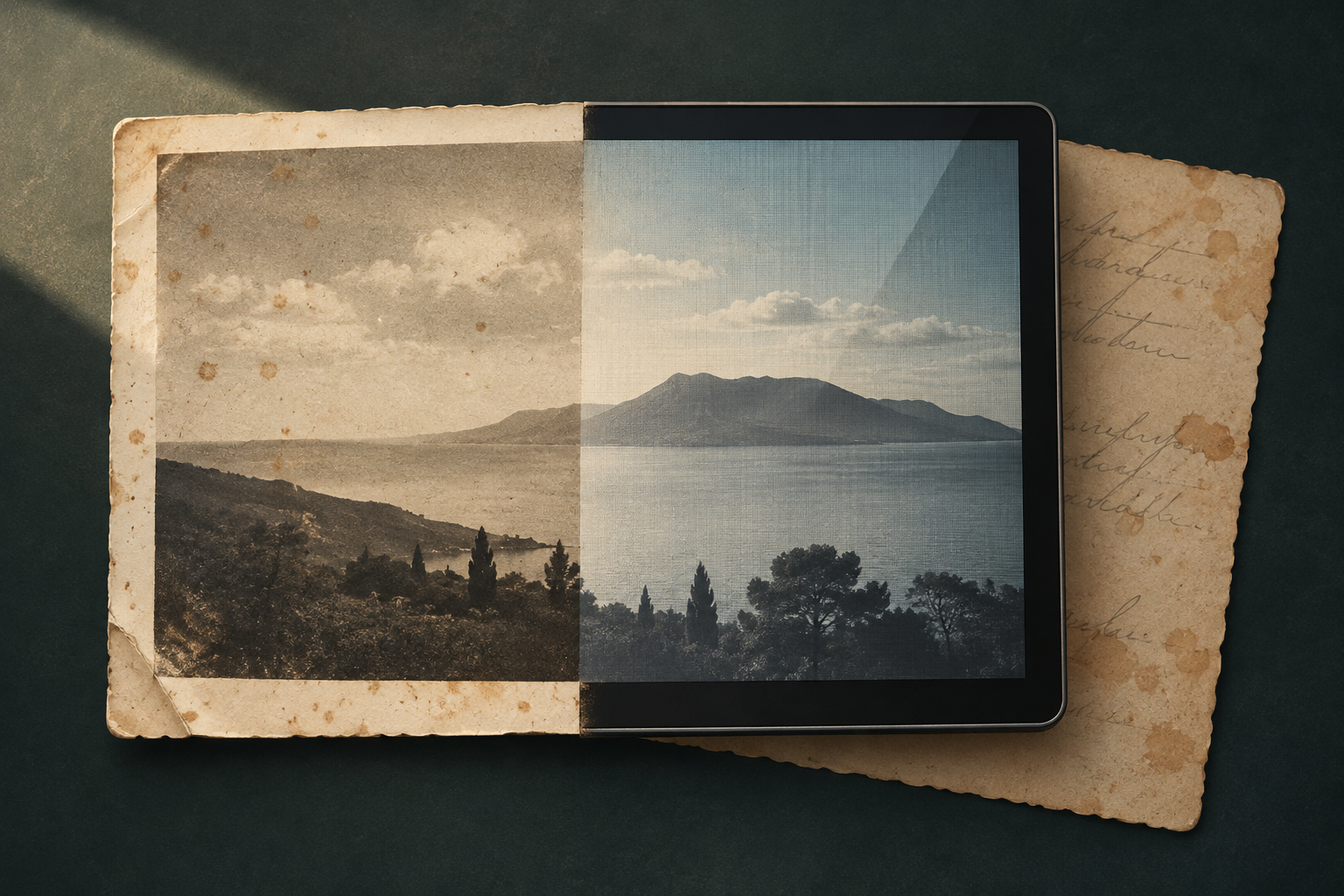
Photography has transcended its merely aesthetic function to become a document that requires context to be fully understood. In Latin America, this transformation has led institutions to redefine the purpose of the photographic archive. It is not just about storing physical supports, but about preserving the forms of affection, identity, and everyday life that images encapsulate. This paradigm shift positions the archive not as a static deposit, but as a living space where collective memory is constantly constructed, transmitted, and re-signified.
The institutional redefinition of the archive
Institutions such as the Fototeca del Museo de la Ciudad in Mexico and the Museo Archivo de la Fotografía in Chile have been pioneers in this new conception. The Fototeca, established in 2010, is dedicated to the conservation of photographic heritage from the 19th century to the present. Its focus is not limited to the physical integrity of the pieces, but seeks to document history and culture through the image. Similarly, the Museo Archivo de la Fotografía in Chile operates in a context saturated with digital images, where the value of the analog and the physical acquires new relevance as an anchor of memory.
Cultural resistance to conservation
Despite institutional advances, significant challenges persist. In Mexico, for example, it has been noted that there is still cultural resistance and little support for the conservation of photography. This lack of archival culture underscores the need to promote greater awareness of the documentary value of images. Photographic conservation is not universally seen as a priority, which makes it difficult to preserve collections that could be fundamental to the understanding of national and local identity.
The museum as a space for re-signification
Contemporary museums have evolved to act as living spaces where collective memory is not only stored but activated. Evidence suggests that preserving a photograph means keeping alive the narrative that surrounds it. This includes human relationships, historical contexts, and the emotions that the image evokes. By integrating these dimensions, photographic archives contribute to the construction of a richer and more nuanced historical memory, moving away from mere technical cataloging.
Best practices in the regional context
The analysis of best practices in the conservation of photographic heritage, such as those carried out in the Colombian context, reveals the importance of adapting conservation strategies to local realities. These practices are not universal, but must consider the climatic conditions, available resources, and cultural particularities of each region. Collaboration between institutions, as observed between the Museo Archivo de la Fotografía and the Department of Photography of the Presidency in Chile, allows for the creation of perfectly documented archives that serve as reliable historical records.
The role of documentation and context
The value of a photograph lies in its ability to document history and culture, not just its physical integrity. To achieve this, it is crucial that each image be accompanied by exhaustive documentation that includes its origin, its context of creation, and its subsequent trajectory. This documentation allows the image to function as a historical document, providing researchers and the general public with a deeper understanding of the events and societies that the image represents.
Challenges in the digital age
In a context saturated with digital images, physical photography acquires a new dimension. Digitization, although necessary, does not replace the experience of the original image. Photographic archives must navigate this terrain, ensuring that the transition to digital format does not imply the loss of the context and materiality that give meaning to the image. The preservation of photography in the digital age requires a comprehensive approach that combines technology with a deep understanding of the cultural and historical value of images.
Conclusion
Photographic archives in Latin America are undergoing a transformation that redefines their role in society. By moving from being deposits of supports to spaces of living memory, these institutions contribute to the construction of cultural identity and historical memory. However, this process faces significant challenges, including cultural resistance and the need to adapt conservation practices to local realities. The future of photography as a document depends on the ability of these institutions to keep alive the narrative that images encapsulate, ensuring that collective memory is not lost in time.
- Decade
- 2000s
- Region
- Latin America
- Level
- Enthusiast
- Entities
- Museum
Sources and references
- análisis de buenas prácticas de la conservación delrepository.udistrital.edu.co · 2026-10-18
- Fotografía y archivodoi.org · 2026-10-18
- preserva formas de afecto, identidad y vida cotidiana que ...www.facebook.com · 2026-10-18
- En México falta cultura para conservación de la fotografíawww.eleconomista.com.mx · 2026-10-18
- Fototeca del Museo de la Ciudad: Patrimonio Visual | PDFes.scribd.com · 2026-10-18
- A pesar de que en el imaginario social poco resuena ...www.facebook.com · 2026-10-18
- 00-CONSERVACION FOTOGRAFIAwww.memoriachilena.gob.cl · 2026-10-18
- Foro Anual 2021fotobservatorio.mx · 2026-10-18