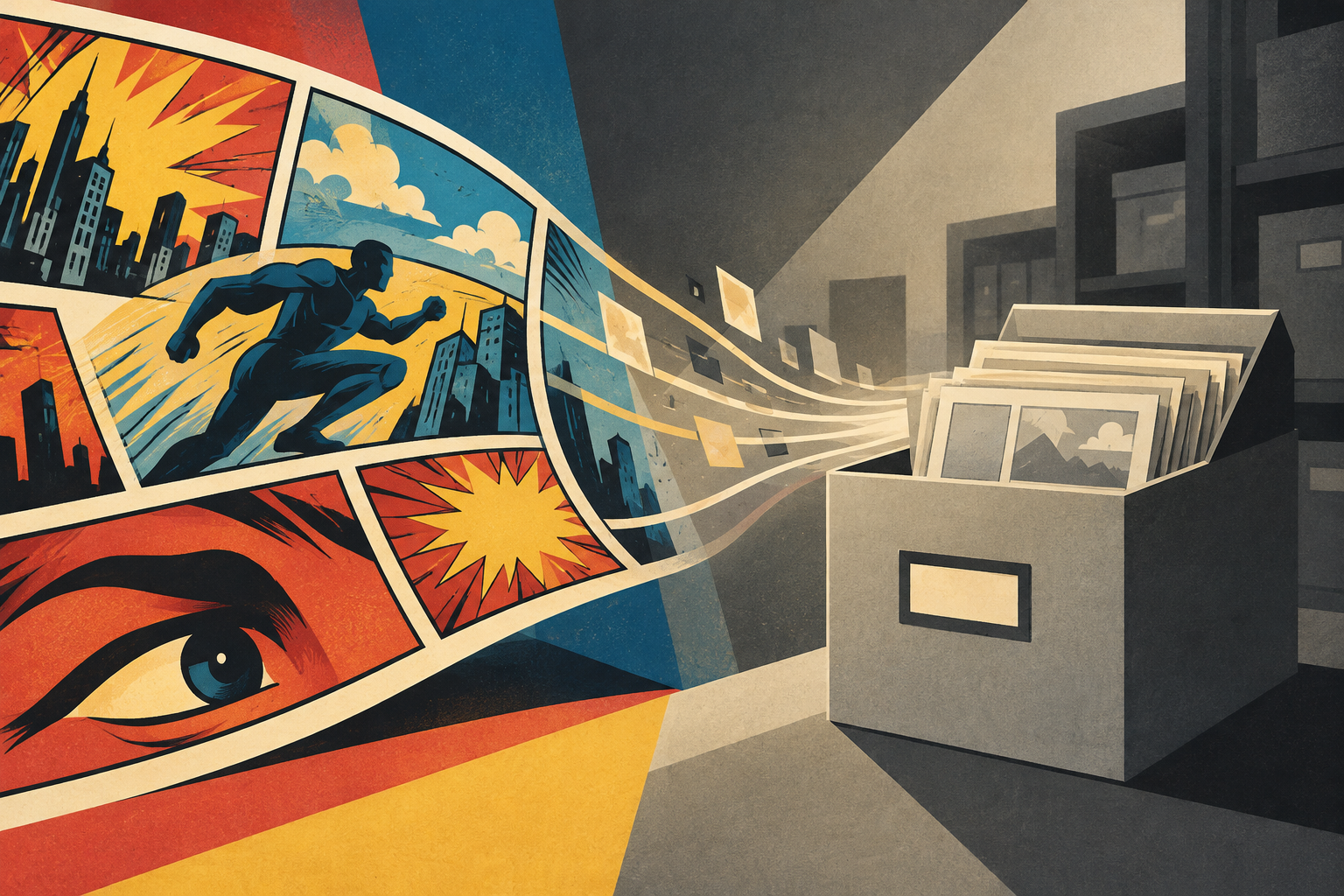
Product photography changed more than its tools when it moved from film to digital. The transition also altered how an image could reach a campaign and its audience. The available material supports one specific point: launch photographs need to be ready before an event and may accompany a press release, an online store and advertising on launch day. That requirement makes the practical value of a digital file visible, but it does not tell the full history of digital photography or establish that the sensor alone replaced the negative as the final support.
From physical object to file
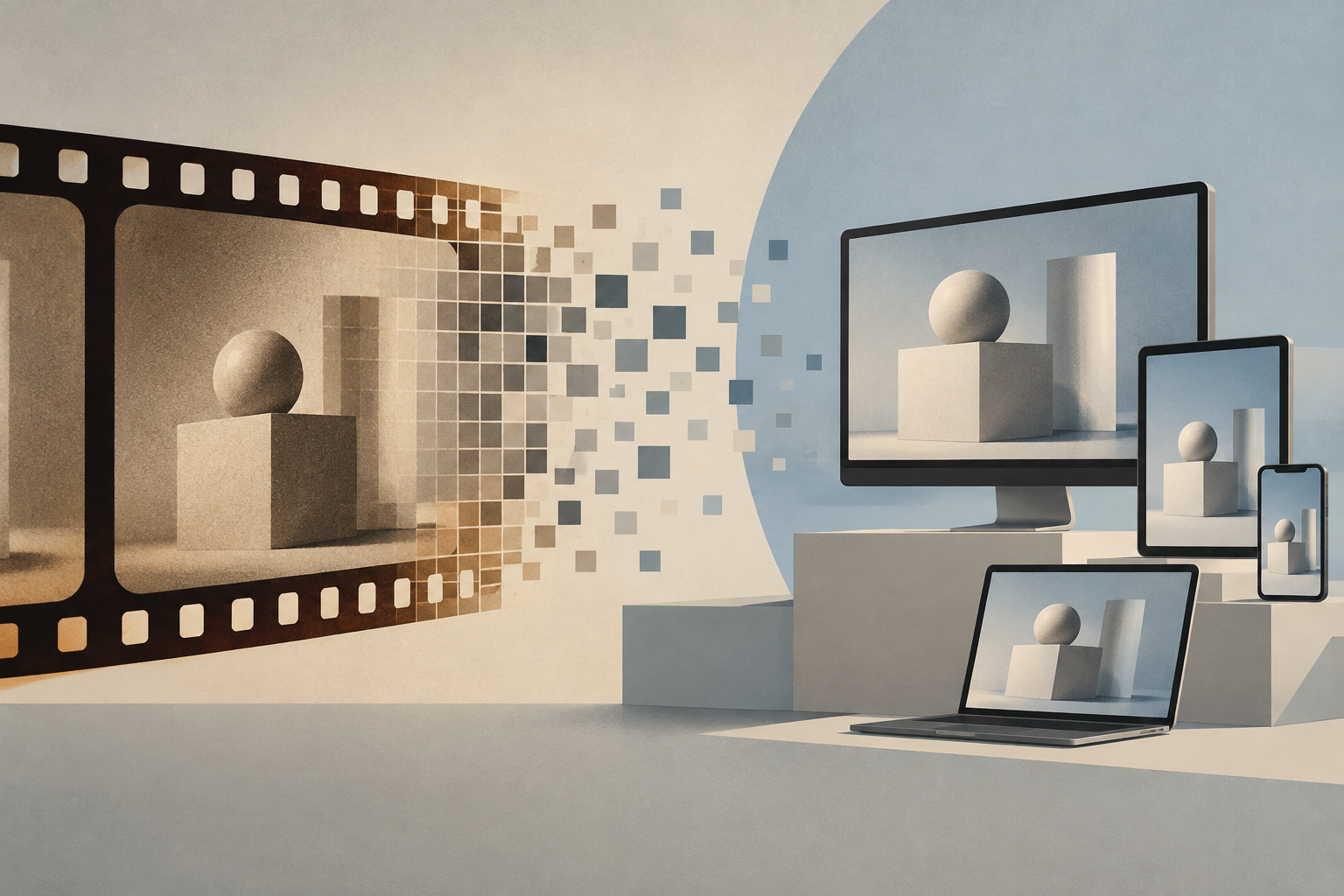
With film photography, an image is recorded on a material medium and then developed through chemical processes. In digital photography, capture becomes data stored electronically. The distinction matters because use and reproduction no longer have to depend on a physical negative as an essential intermediate. Still, it is important to distinguish the sensor that records light from the file that is stored and distributed: they are not the same component and do not perform the same function.
That broad description is useful, but it simplifies a chain of work. The supplied sources do not describe cameras, formats, digital processing workflows, color management or storage systems. We can therefore discuss a shift from a photochemical medium to data-based storage, but cannot reconstruct every technical stage here.
Images ready before launch
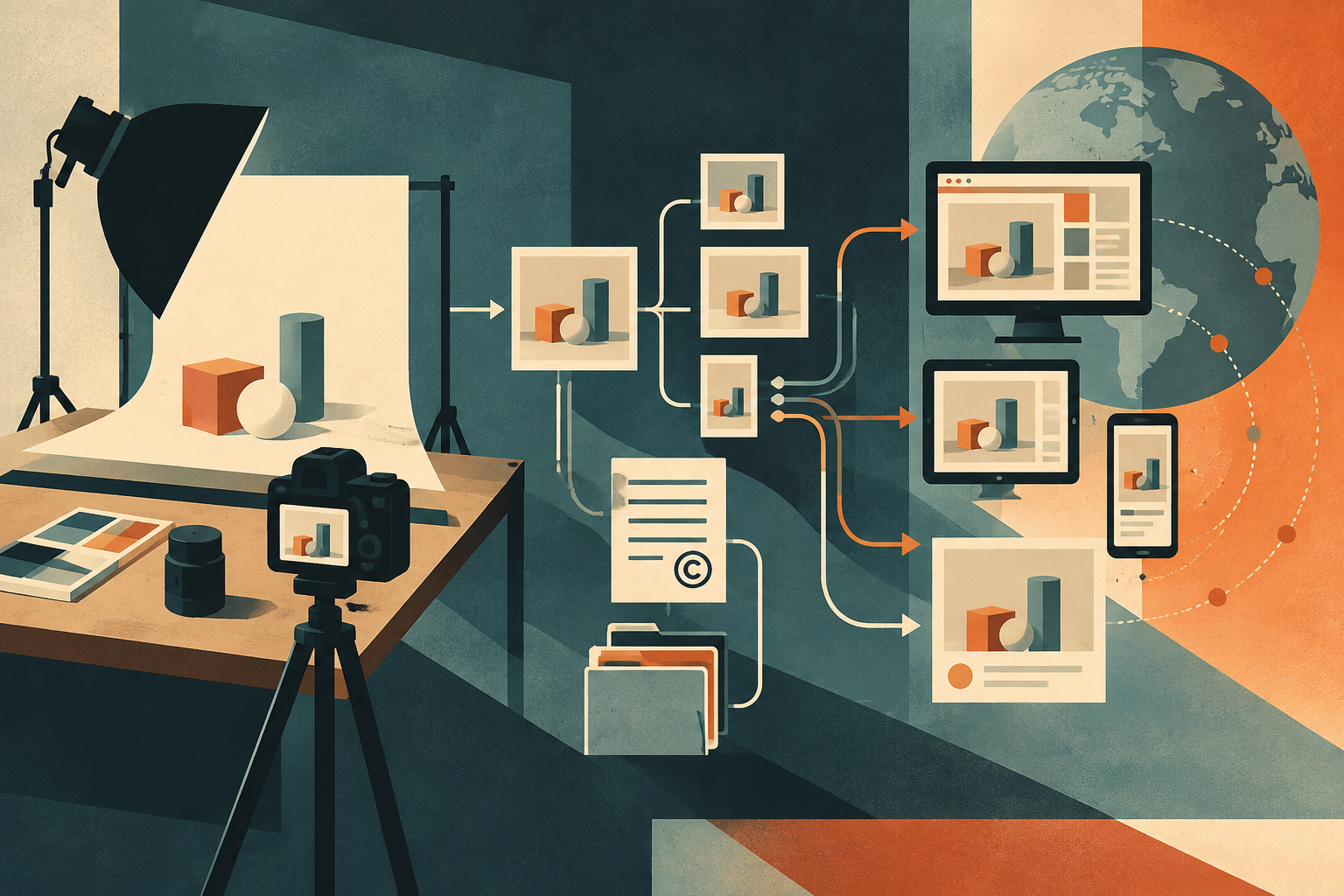
A source on photography for brand launches says images should be prepared before the event and can accompany the press release, online store and advertising on launch day. Photography appears not merely as a record of a product, but as material within a coordinated communication effort. Its schedule is tied to the moment when a brand presents that product.
This requirement offers a useful comparison between supports. A physical negative needs developing, and prints have to be produced for later uses; a digital file can circulate and be adapted with less dependence on those steps. The evidence, however, provides no timings and compares no particular workflows. It is more accurate to speak of a potential increase in the ease of preparing and distributing images than to claim that digitalization is universally or automatically faster.
Circulation and adaptation
An electronic file can be shared across different publication destinations and adjusted to communication needs. A press release, an online store and advertising are separate channels that may use images from the same launch. This range helps explain why commercial photography benefits from a reproducible, portable medium: an image needs to function in more than one context.
But “adaptation” does not mean every version is interchangeable, nor does a file guarantee consistent presentation. The sources do not explain how images are prepared for each channel or who decides on crops, colors or dimensions. Those details belong to processes not documented here. We can cautiously infer that an available file facilitates successive uses, while editorial and technical decisions remain necessary.
What changes and what remains
The transition alters the image’s material form and circulation, not the need to construct it visually. Photography still depends on light and composition, even when its final support is digital. In product photography, that continuity matters: a file does not by itself decide what to show, how to arrange the elements or what reading the image should invite.
It is therefore imprecise to describe the change as a total replacement of photographic practice. Capture changes, as do the ways the result is stored and moved; the work of conceiving an image and assigning it a commercial role remains. Digitalization affects production and publication logistics, while visual decisions continue to be central.
A cultural shift in circulation
The cultural importance of the medium also lies in the relationship between image and time. When a photograph has to accompany launch materials scheduled for a particular date, having it available in advance becomes part of product communication. The commercial image becomes material prepared to circulate across several settings, not simply an object to keep or print.
This does not establish that contemporary visual culture is wholly immediate, or that film disappeared from all professional practice. The evidence concerns uses associated with brand and product launches and offers a general account of digital transition. It helps identify a logic of circulation, not measure its reach across the whole industry.
Limits of the evidence
The material consulted includes a description of photographic preparation for launches and general references to corporate production services and event photography. It provides no chronology of digital adoption, sales figures, photographers’ testimony or technical comparison between film and sensors. Nor does it tie the change to a specific date, company or innovation.
For that reason, the phrase “sensor as a new support” needs care. The sensor participates in digital capture, while stored data make up the file that can circulate. Conflating these levels obscures the more useful conceptual shift: photography moves from dependence on a material negative to an organization around digital capture and a reproducible file.
Photography as an image ready to travel
The shift from film to digital is best understood as a transformation in the availability and circulation of product photography, rather than a complete break with its visual principles. For launches, having images prepared in advance allows them to accompany different communication materials. The evidence supports that role, although it does not detail the technical process that makes it possible.
The conclusion is specific: digital technology made the photographic result more flexible to use in campaigns and publications, while the construction of the image continued to depend on decisions about light and composition. The transition changed the support and the logistics; it did not eliminate photography as representational work.
- Decade
- 2000s
- Region
- Global
- Level
- Introduction
- Entities
- No linked entities
Sources and references
- El factor temporal y el ritmo como distintivo entre fotografía y vídeodoi.org · 2026-10-17
- Fotografía para lanzamientos de marca y producto - eventecheventech.mx · 2026-10-17
- Producción de fotografía y video corporativowww.estudio2957.com · 2026-10-17
- Fotos para eventos de marca y lanzamiento de productoswww.fotofuneventos.com · 2026-10-17
- Sonyes.wikipedia.org · 2026-10-17
- Shutterstockes.wikipedia.org · 2026-10-17