The materiality of the Argentine home underwent a profound restructuring during the first half of the twentieth century. Far from being a linear process of modernization, the incorporation of durable goods such as electric refrigerators and gas stoves introduced complex changes in daily routines. The work of Fernando Rocchi, published in 2022, examines this period between 1920 and 1970 to understand how these objects transformed not only food preparation but also the social organization of domestic space. This review focuses on available historical evidence, avoiding generalizations about a unique modernization experience.
The context of domestic consumption
Studies on everyday life have proliferated in recent decades, focusing on material conditions, food, and culinary practices. In Argentina, the adoption of domestic technology was not an isolated phenomenon but part of a broader transformation of social relations. The presence of these appliances marked an inflection point in how families interacted with their immediate environment. It is not simply a story of technical progress but a reconfiguration of expectations and daily practices.
The arrival of electric refrigeration
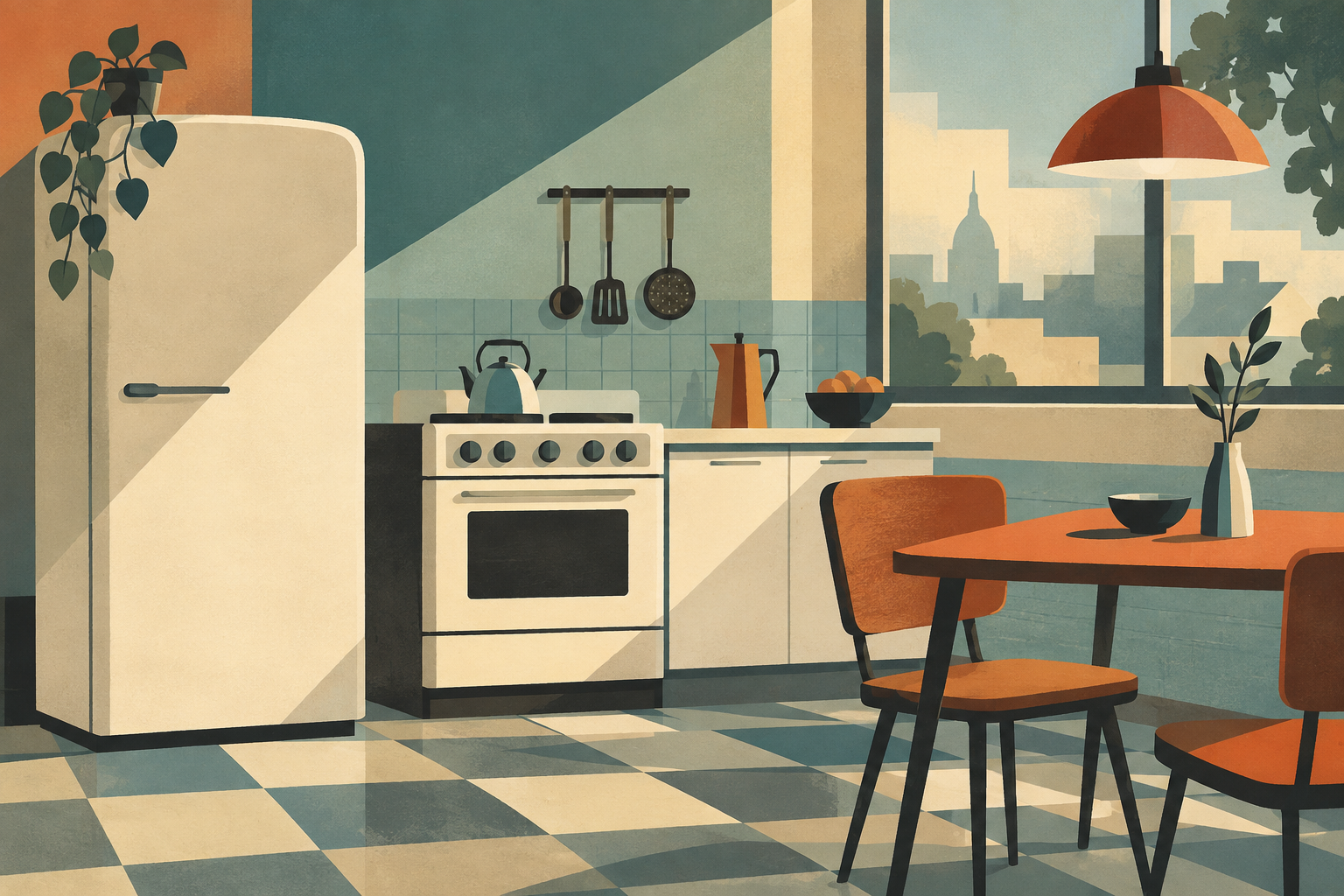
The electric refrigerator represented one of the most significant changes in food preservation. Before its widespread adoption, preservation depended on manual methods and the seasonality of products. The arrival of this device altered domestic logistics, allowing for a greater variety of ingredients and reducing the frequency of shopping. However, its availability was limited by economic factors and electrical infrastructure, meaning its impact varied considerably between different social strata.
Gas stoves and efficiency
Simultaneously, the gas stove offered a more efficient alternative to traditional cooking methods. The transition to this type of stove implied a reduction in time spent on meal preparation and an improvement in home safety. These changes were not immediate or universal; they depended on access to credit and the geographical location of homes. The standardization of gas stoves contributed to a new normality in urban culinary practices.
Impact on gender roles
The introduction of these devices had direct implications for the distribution of domestic labor. Although the initial intention of advertising and the industry was to free up time for women, the reality was more nuanced. The reduction in manual labor load did not always translate into greater autonomy or an equitable redistribution of responsibilities. In many cases, social expectations continued to assign home management to women, albeit with more modern tools. This tension between the technological promise and social reality is a key aspect of the research.
Inequalities in adoption
Evidence shows that domestic modernization was an unequal process. Access to refrigerators and gas stoves depended on social class, geographical location, and the ability to access credit. Urban middle classes were those that experienced significant penetration of these goods by 1970, while other social sectors continued to rely on traditional methods for longer. This gap reflects the broader economic structures that conditioned consumption in Argentina during that period.
Limitations of historical evidence
It is important to recognize the limits of what can be verified through available sources. Data on the adoption of these goods often comes from sales records, surveys, or retrospective studies that may not capture the totality of everyday experience. Furthermore, historical memory may be biased by nostalgia or the idealization of modernity. Therefore, any interpretation must be made with caution, taking into account the uncertainties inherent in reconstructing the past.
Conclusion
The history of durable goods in Argentina between 1920 and 1970 reveals a complex and unequal domestic modernization. The adoption of electric refrigerators and gas stoves was not a single event but a gradual process that varied according to social and economic context. These objects not only changed the way food was cooked and preserved but also reconfigured gender dynamics and the structure of leisure time. Understanding this transformation requires avoiding romantic views of a homogeneous modernity and recognizing the diversity of experiences that shaped everyday life in the twentieth century.
- Decade
- 1970s
- Region
- Latin America
- Level
- Introduction
- Entities
- Heladera eléctrica, Argentina
Sources and references
- FAMILIA Y VIDA COTIDIANA, II.doi.org · 2026-10-20
- La transformación de la vida cotidiana: la evolución de los bienes durables en Argentina, 1920-1970openalex.org · 2026-10-20
- La transformación de la vida cotidiana: la evolución de los bienes durables ...journals.openedition.org · 2026-10-20
- la evolución de los bienes durables en Argentina, 1920-1970www.scielo.org.co · 2026-10-20
- La transformación de la vida cotidiana: la evolución de los bienes durables ...www.researchgate.net · 2026-10-20