The history of modern food is not limited to the evolution of recipes or the availability of ingredients. There is a less visible but equally decisive layer that resides in presentation, packaging, and the commercial narrative surrounding food. Between 1970 and 2009, the concept of the snack underwent a metamorphosis that transcended the nutritional to enter the realm of material culture. What was once a quick, anonymous bite became an object with a brand, design, and a specific position within family dynamics. This article examines how the food industry redefined the place of the snack on the table, using design and advertising as tools to alter consumption habits that seemed unchangeable.
The 1970 Turning Point
The year 1970 is often cited as a key moment in the chronology of popular foods in the United States. It was the year products were introduced that sought to elevate the perceived value of basic ingredients. A highlighted example is the launch of Orville Redenbacher's gourmet popcorn. This product did not just offer a different taste; it proposed a more refined consumption experience. By labeling a common product like popcorn with the term 'gourmet,' the industry established a new hierarchy of quality. This move marked the beginning of a trend where the snack ceased to be a simple food substitute to become a product with a clear brand identity and a price reflecting that perception of superiority.
The Expansion of Global Brands
Parallel to individual product innovation, the following decades saw the consolidation of major food corporations. Brands like Mars and Arcor expanded their global presence, not only through mass distribution but through the diversification of their portfolios. Arcor, for instance, began in 1951 as a candy factory and evolved into a corporate group that acquired brands with long histories, such as Noel. This acquisition was not just a financial operation but a cultural strategy that allowed the company to absorb the history and loyalty of local brands. Similarly, Mars, founded by Frank C. Mars with the sale of buttercream candies, built an empire based on flavor consistency and omnipresence in supermarket shelves. The expansion of these brands demonstrated that the snack could be a vehicle for market cohesion on an international scale.
Packaging as Identity Communicator
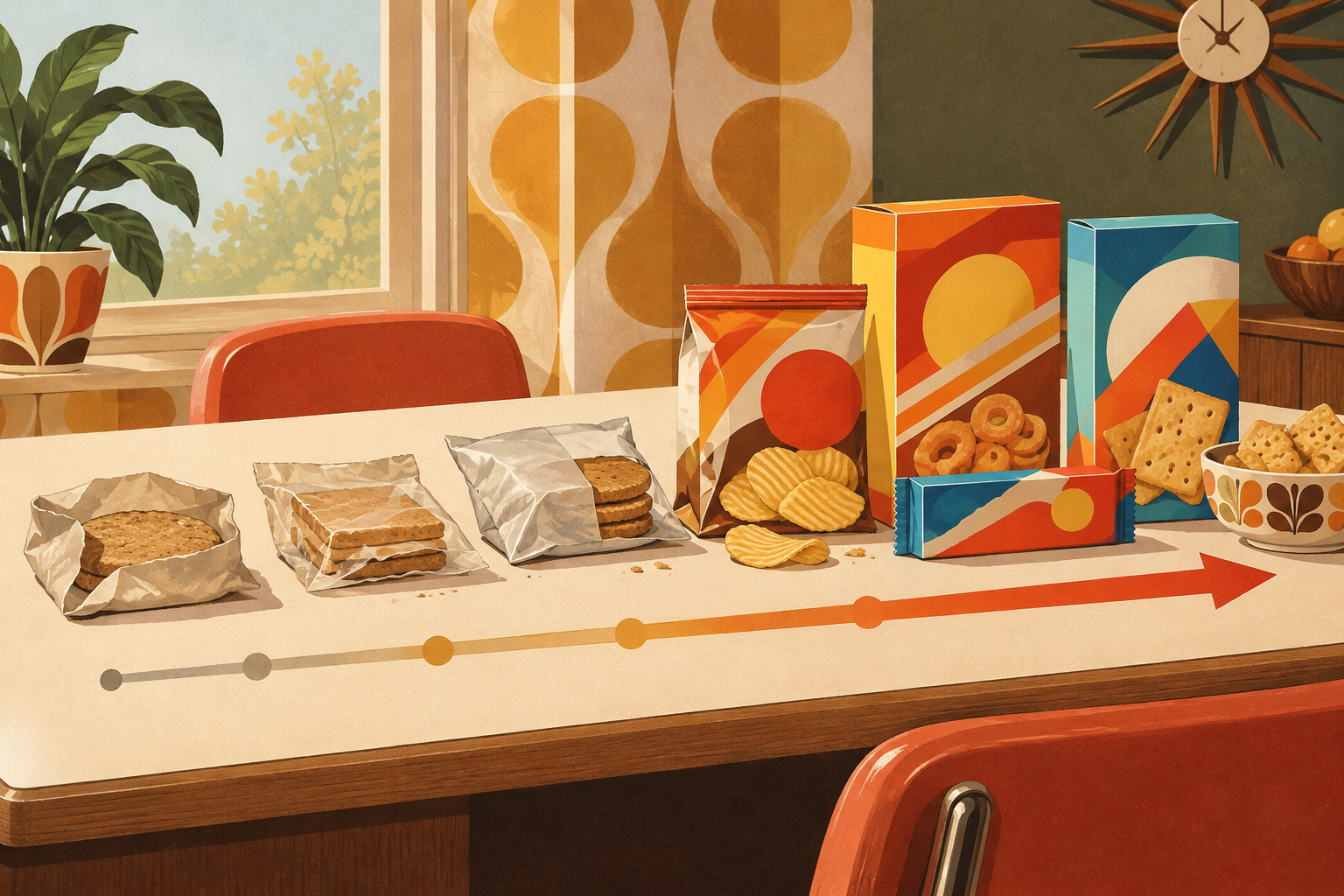
One of the most underestimated aspects of this transformation was the role of packaging. In the pre-industrial era, food was bought in bulk or in simple wrappers. With the arrival of mass production, packaging became the first interface between the product and the consumer. It was not just about protection from moisture or contamination, but a marketing tool. The package design communicated the brand's identity, values, and positioning. A colorful and eye-catching package could suggest fun and youth, while a more sober one could evoke quality and tradition. This visual communication directly influenced consumer preferences, especially among children, who became the main drivers of snack demand in the home. The separation between commercial promotion and domestic practice became sharper, as television and magazine advertising created a desire that the package on the shelf had to satisfy.
Reconfiguring the Family Table
The introduction of industrialized snacks altered the structure of family meals. Traditionally, the table was organized around main dishes and sides. The snack, if it existed, was a marginal element. However, as products like Oreos, Lorna Doons, Animal Crackers, and Fig Newtons became omnipresent, the snack gained its own space. It was no longer something eaten between meals out of necessity, but a category of consumption in itself. This reconfiguration had social implications, as snack consumption became associated with leisure, television, and informal socialization. Advertising played a crucial role in this process by associating these products with happiness, comfort, and modernity. Families began to interact with food in a more fragmented way, consuming small portions of packaged products throughout the day, rather than sitting down to eat at fixed times.
Historical and Social Dimensions
To fully understand this phenomenon, it is necessary to situate it in the context of the social history of food. Academic studies have pointed out that the distribution of food has historically been unequal, and that industrialization not only changed what we eat but how we understand it. Food ceased to be seen solely as a biological resource to become a symbol of status and lifestyle. The introduction of products like Hamburger Helper or Morton's salt substitutes in the same 1970s decade reflects a trend toward convenience and flavor modification. These products not only facilitated food preparation but also intervened in the perception of taste, creating dependencies toward certain salt, sugar, or fat profiles. The history of food, therefore, is not just a chronology of inventions, but a narrative of how economic and cultural power structures shape our daily decisions.
Limitations of Available Evidence
It is important to recognize that the available evidence on this topic has certain limitations. Documentary sources, such as food industry timelines and corporate websites, offer a general view but often lack depth regarding the subjective perceptions of consumers of the time. There are no precise quantitative data on how spending on snacks changed compared to other foods during this period, nor detailed ethnographic studies on how specific families adapted their routines. Furthermore, information on brands like Mars and Arcor comes primarily from their own historical narratives, which may introduce biases in the interpretation of their cultural impact. The absence of primary sources documenting everyday conversations or personal attitudes toward these products limits the ability to make definitive claims about the psychology of consumers in the 1970s and 80s.
Conclusion
The transformation of the snack between 1970 and 2009 was a multifaceted process involving product innovations, packaging design, marketing strategies, and changes in the social structure of food. What began as a search for convenience and variety evolved into the creation of a consumption culture where the snack has its own symbolic and economic value. Global brands played a central role in this process, standardizing flavors and creating identities that transcend local borders. However, this change was not uniform or inevitable; it was the result of strategic decisions made by the food industry in response to the economic and social conditions of the time. Understanding this history allows us to see how everyday objects, like a bag of popcorn or a chocolate bar, are actually cultural artifacts that reflect and shape our relationship with food, time, and consumption.
- Decade
- 1970s
- Region
- Global
- Level
- Introduction
- Entities
- Televisión, Arcor, Orville Redenbacher
Sources and references
- De panzas y prejuicios: la historia y la comidadoi.org · 2026-10-20
- comidas populares estadounidenses del siglo XXtranslate.google.com · 2026-10-20
- LA HistORiA de LA HistORiA de LA ALiMentAciÓndialnet.unirioja.es · 2026-10-20
- Nuestra Historiawww.arcor.com · 2026-10-20
- Nuestra historia | Mars Argentinawww.mars.com · 2026-10-20
- nuestra-historia.pdfobjectstorage.us-ashburn-1.oraclecloud.com · 2026-10-20