A film leaves more than one trace
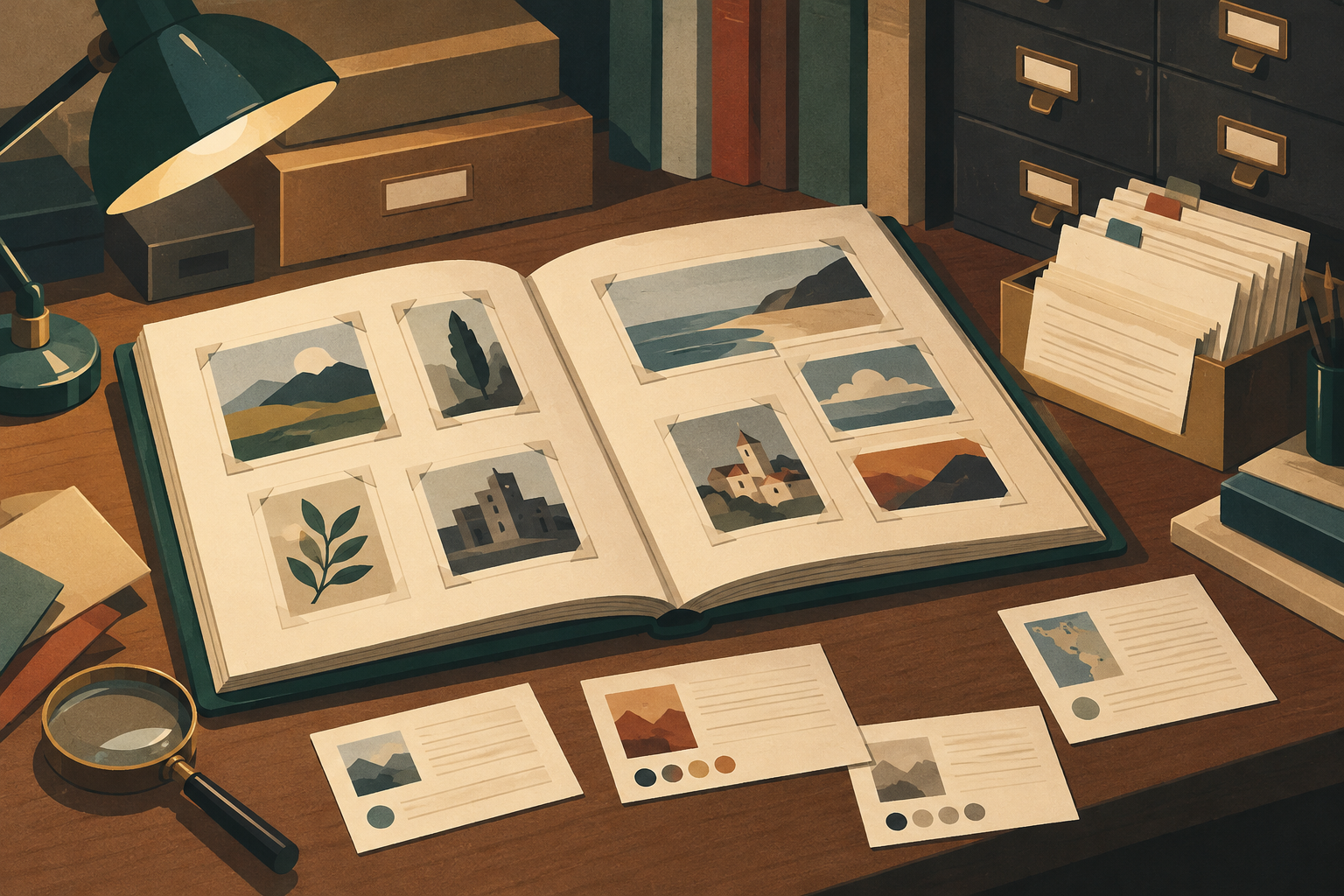
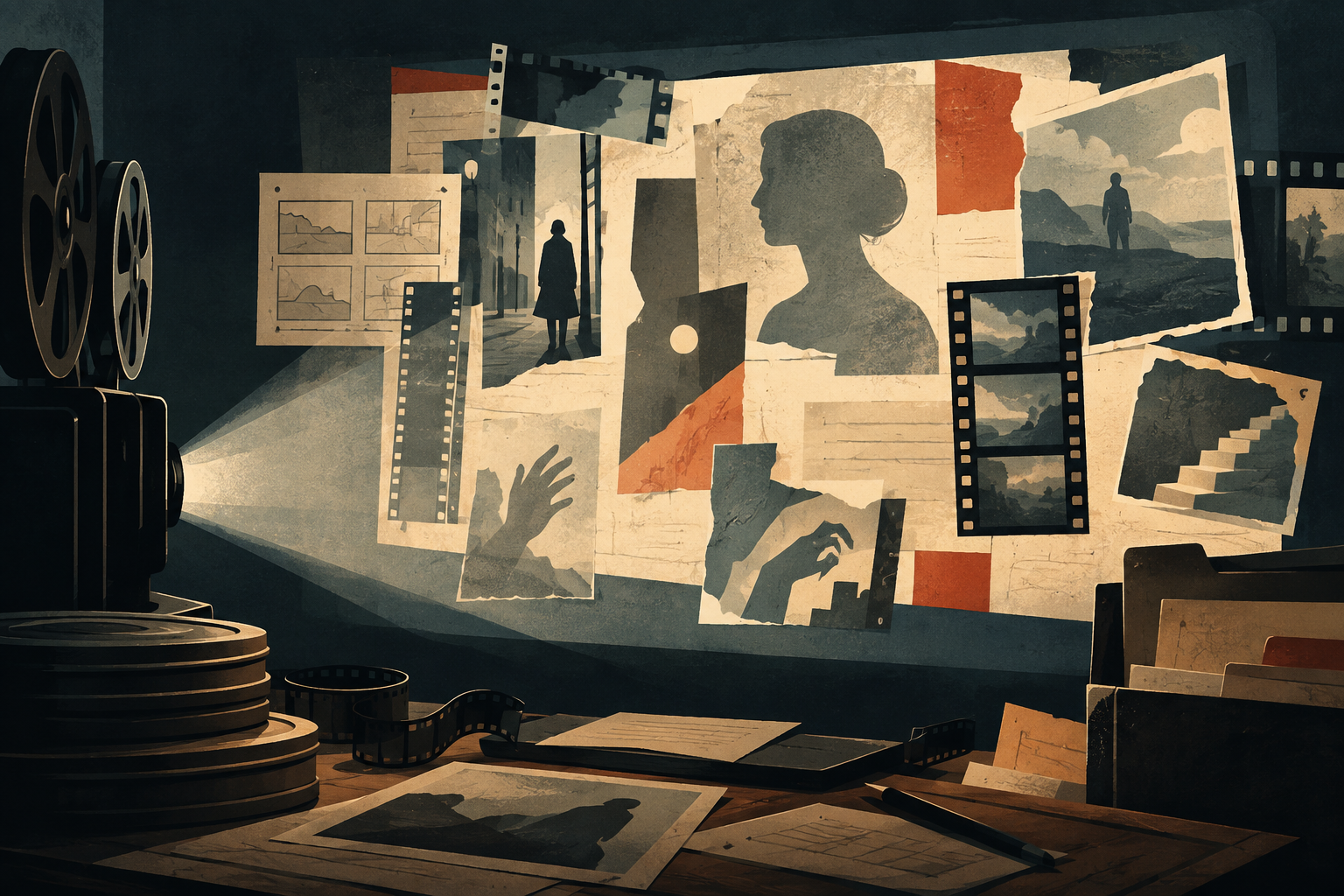
A film does not enter an archive only as moving images. Posters, handbills, production photographs, publicity guides and production records may also survive around it. A proposal for a cinema museum in Spain lists materials such as advertisements, set documentation and still production photographs; a publication on audiovisual archives likewise points to posters, programmes, photographs and guides as records that help us see how cinema was presented. These materials do not replace the film. They let us ask different questions about its circulation and memory.
The distinction matters. A print allows us to study the work on screen; a poster documents one way of advertising it; a programme records another kind of presentation. Each object has its own scope and gaps. Grouping them under the general label “film material” can erase those differences.
From description to interpretation
R. Domínguez-Delgado’s article on film documentation places description within the history of film archives and museums, and mentions registration details such as accession number, title, filmmakers, genre and filming dates. Such information helps locate and organise materials. It does not, by itself, show how a film was received or what every viewer thought.
The distinction between evidence and interpretation is especially useful when reading publicity documents. A guide or advertisement can show what was communicated and which images were selected to promote a work. Describing that strategy requires examining the document; attributing effects to audiences would require further evidence. Preserved publicity is not a reception survey.
Circulation also requires evidence
The question of how a film’s reception changed between theatrical exhibition and home video is compelling, but it cannot be answered simply by finding documents about a film. The study of film distribution in Spain can address companies, cinemas and documentary memory, as the RetroPause article on that infrastructure proposes. Even so, tracing a specific title from cinema exhibition to a video release would require sources that establish each step: distribution records, edition documentation and dated materials that can be compared.
The evidence supplied here does not document an individual case of a theatrical release followed by a video edition, nor does it allow us to measure a change in reception. A research possibility should not be turned into a proven story. The question can guide a search; it cannot fill the gaps with an assumed collective memory.
Historical context is not a backdrop
The volume Historia y cine. La construcción del pasado a través de… presents cinema as a historical agent and a documentary source. That perspective reminds us that a film and the documents around it can be studied in relation to their context, but they are not interchangeable. A work may offer evidence about an era through its forms and stories; a production document may provide clues about how it was made; an exhibition record may help locate where it circulated. None automatically answers every question.
The study of the difficulties of researching cinema’s social history through Alba de América (Orduña, 1951) points, through its own case, to specific challenges in this field. Its title and reference identify the subject it addresses, but do not justify transferring unavailable conclusions to other films. Caution also means not turning one example into a universal rule.
The archive shows, and leaves things out
The Museo Reina Sofía programme Cine y casi cine 2002 offers an example of how a shoot’s material history may matter to interpreting a work. The available description refers to the complexity of that material history; it does not provide enough evidence to generalise details to other productions. Similarly, the book El archivo audiovisual y la escritura de la historia invites us to treat the archive as part of historical writing, rather than as a transparent, complete window.
What survives depends on which documents endured, were described and can be consulted. An absence from the material examined does not prove that a document never existed, or that a film did not circulate through a particular channel. Such a conclusion requires defining the archive and explaining what was searched.
A history with visible limits
Posters, photographs and documentary records make it possible to study what was advertised, how some traces of production were organised, and which questions about a film merit further research. They do not, by themselves, restore the experience of the cinema, the domestic life of a video edition or the reception of different audiences.
A rigorous study can frame the route from cinema to video as a question and seek documentation capable of answering it. Until relevant evidence appears, the most useful conclusion is not to invent a nostalgic continuity, but to distinguish what each source establishes from what remains to be verified. The archive does not stand in for the film: it makes visible the work required to write its history.
- Decade
- Contemporary
- Region
- Spain
- Level
- Enthusiast
- Entities
- Museum, Museo Reina Sofía
Sources and references
- El archivo audiovisual y la escritura de la historiaidartesencasa.gov.co · 2026-10-02
- Las dificultades de la investigación en historia social del cine: Alba de América (Orduña, 1951)doi.org · 2026-10-02
- La Documentación Fílmica: marco contextual históricorevistas.ucm.es · 2026-10-02
- Historia y cine. La construcción del pasado a través de ...ifc.dpz.es · 2026-10-02
- Cine y casi cine 2002www.museoreinasofia.es · 2026-10-02
- PROYECTO DE CREACIÓN DE UN MUSEO DE CINE EN ...eldocumentalistaudiovisual.com · 2026-10-02
- Distribuir cine en España: empresas, salas y memoria ...www.retropause.com · 2026-10-02