A preserved page is not the whole service
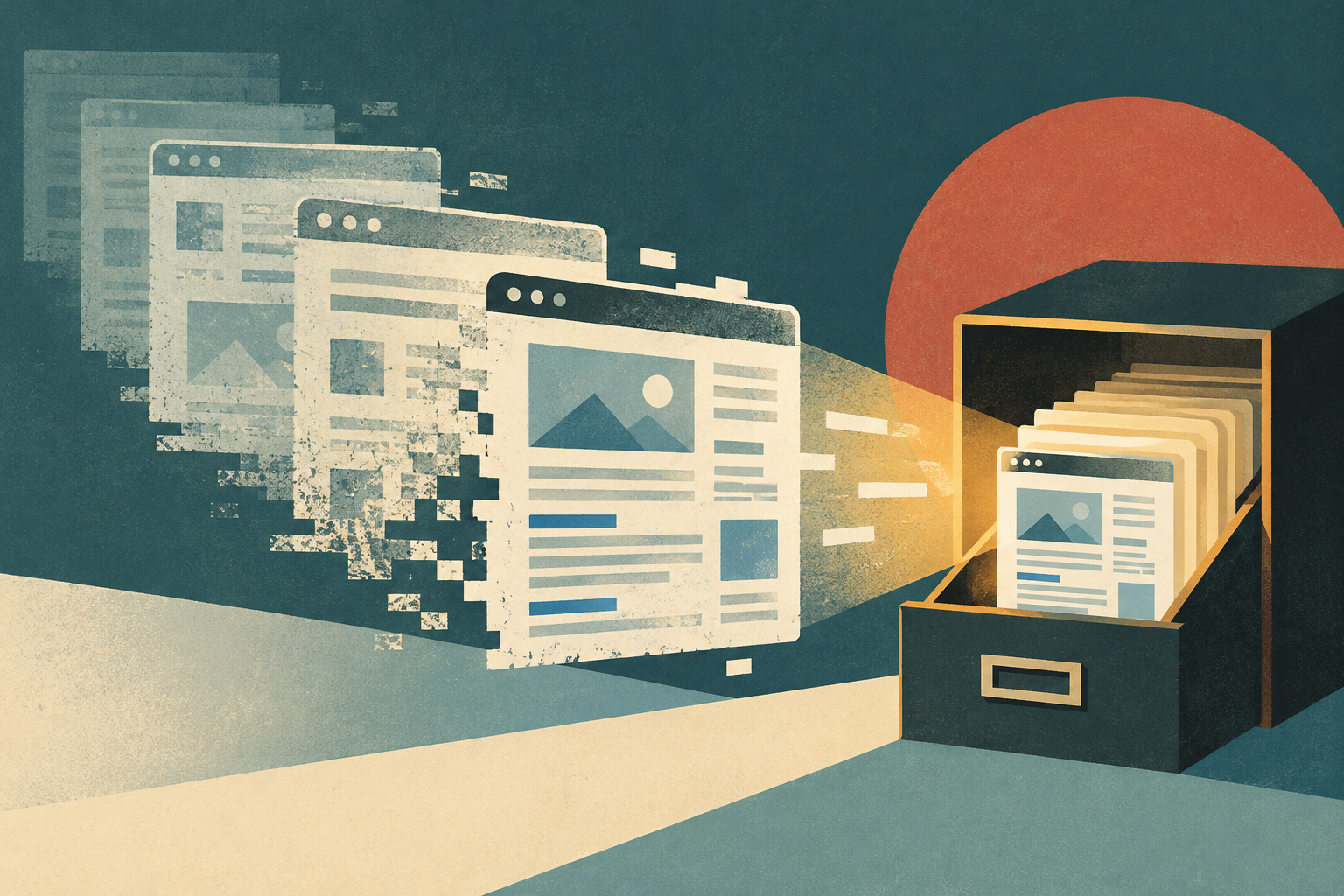
An old page can look like a direct window onto the past: a name, an interface, a text made visible again. Yet what it shows is narrower—and more useful for that reason—when read carefully. A capture documents a representation at the time it was collected; on its own, it does not establish how long the page was available, who used it, or how the service worked as a whole.
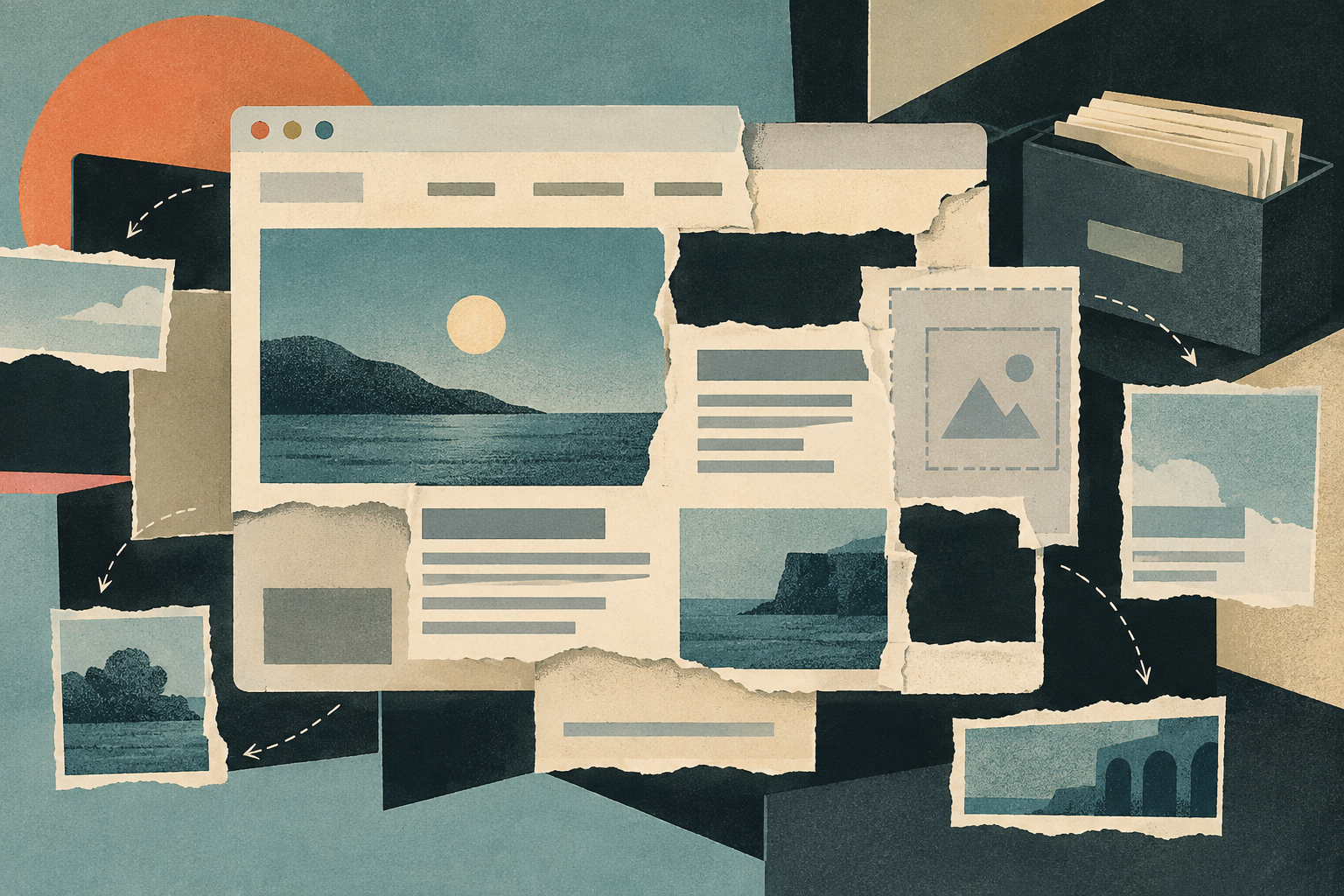
The research question is not only what a website looked like, but which traces can describe a relationship between people and a service. Answering it requires distinguishing the preserved page from the full experience: navigation, exchanges, routines and changes may leave uneven traces or none at all. An archive supports bounded claims. It should not use imagination to fill what is missing.
What a web archive preserves
The National Library of Spain describes its Spanish Web Archive as a collection of websites gathered to preserve Spain’s documentary heritage on the internet. That description establishes a purpose and a type of material: websites collected as part of a documentary collection. It does not establish that every Spanish page, every version of a site, or every service has been preserved exhaustively.
That distinction matters when interpreting absences. A page’s absence from a collection consulted does not prove it never existed; it may simply mean it is not in the material available for that search. Conversely, finding a page does not prove that it was continuously accessible or that all its functions were saved. The collection is a research source, not a complete reproduction of the connected past.
A capture date does not date a memory
People often organize memories into periods: “when I used that service,” “before it changed,” or “back when everyone connected differently.” Such phrases can guide a search, but they are not, by themselves, verifiable dates. Dating a page or a change requires evidence that documents a date, and the claim should specify which date it establishes: a capture, publication, modification, or attributed recollection.
RetroPause’s cautious chronology of networks before the web argues against assigning a single birth date and recommends treating milestones according to what the evidence allows us to say. The same caution applies to archived pages: a network’s development, a service’s availability and users’ experiences should not be collapsed into one date. They are related questions, but not interchangeable ones.
Cross-check sources without treating them as equivalent
An archived page becomes more informative when compared with institutional documentation, research and published accounts. Each source answers different questions. The National Library of Spain explains the purpose of its collection; a document from the Technical University of Madrid provides an overview of the history of data networks and the internet in Spain; and Telefónica’s history offers a general account of the internet’s evolution. These are starting points with different scopes, not identical evidence about a particular service.
Retrospective accounts also need context. A memory may provide vocabulary, remembered practices or leads for locating material, but should not automatically be treated as a timestamp. Likewise, a summary chronology can guide research without replacing the documents that support each date. It is useful to record who produced each source, what it claims and what lies beyond its scope.
Reconstruct use without filling the gaps
To study the relationship between people and services, a captured page can prompt specific questions: what information it presented, whom it seemed to address, or what actions it invited. The answer should stay within what the evidence shows. An interface that appears to offer a feature does not prove that it worked on every visit; preserved text does not establish how users received it.
The Technical University of Madrid’s study of the history and beginnings of the internet in Spain offers a broad frame for placing the material, while institutional sources and chronologies can identify other levels of context. But the supplied evidence does not provide an inventory of functions, attributable user testimony, or usage records for a particular service. Those details must not be presented as facts. Stating this limit does not weaken a reconstruction: it makes clear where documentation ends and speculation would begin.
A history made of limits, too
Web archives can restore the visibility of pages no longer encountered at their original locations and provide material for historical questions. Their strength is preserving traces; their limit is that no single trace equals an entire practice. Institutional documentation helps explain what is collected, and academic and historical overviews help provide context, but each claim needs a relevant source.
The most responsible way to tell the story of the internet before today is to keep these distinctions visible: page versus service, capture versus publication date, memory versus document, and absence from a collection versus historical non-existence. A reconstruction need not promise to recover what cannot be recovered. It can do something more solid: describe what can be verified, identify what is missing and leave open further research into how people related to the services they used.
- Decade
- 2000s
- Region
- Spain
- Level
- Enthusiast
- Entities
- Archivo de la Web Española, Internet
Sources and references
- Historia de Internet: ¿cómo nació y cuál ha sido su evolución? -www.telefonica.com · 2026-10-11
- Internet antes de la web: una cronología cautelosa de las redeswww.retropause.com · 2026-10-11
- Historia de Internet y de sus inicios en Españaoa.upm.es · 2026-10-11
- Hitos de la historia de Internetanci.gob.cl · 2026-10-11
- Archivo de la Web Española | Biblioteca Nacional de Españawww.bne.es · 2026-10-11