A surviving image is not a schedule
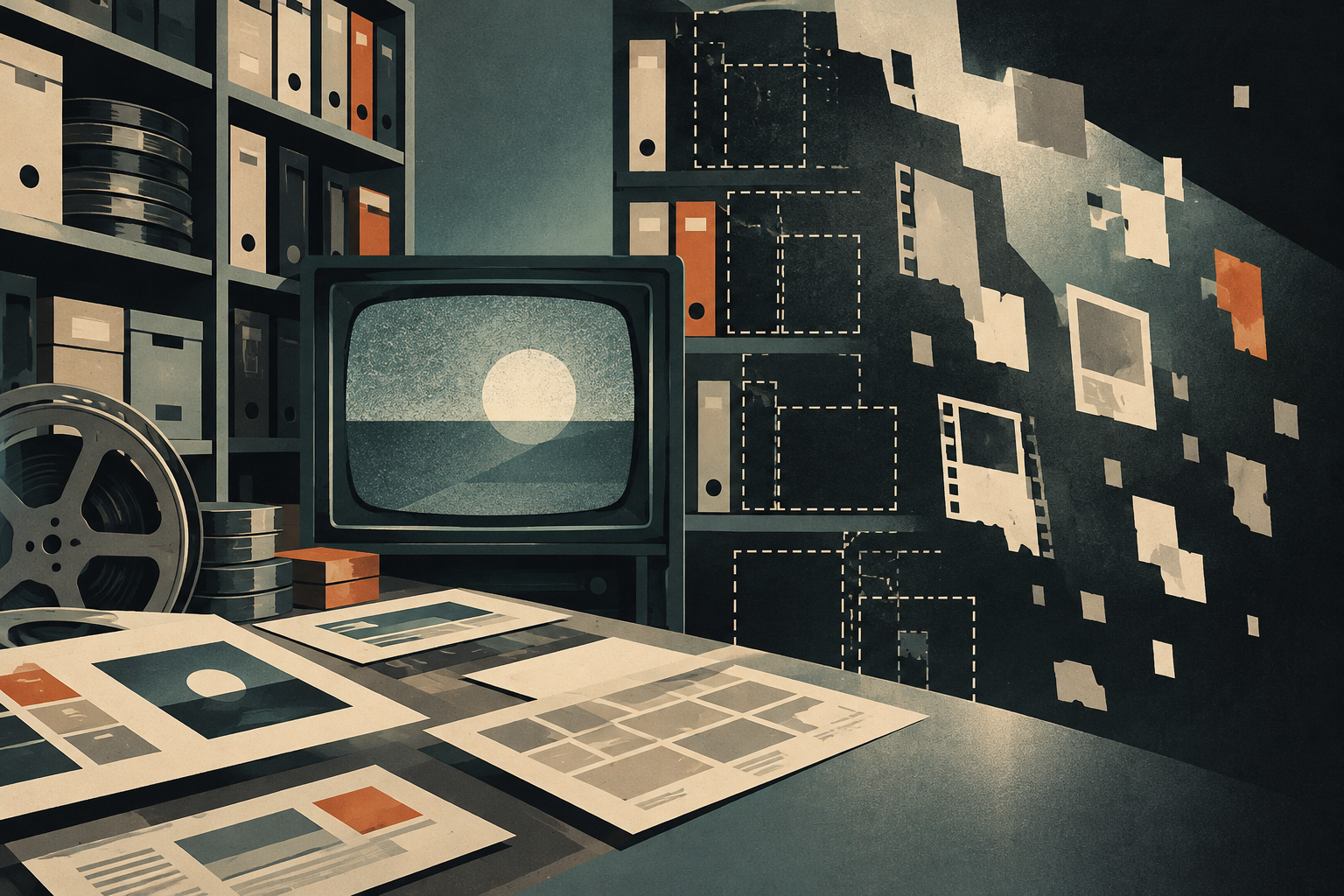
Television was not only a succession of images; it was also an arrangement of broadcasts and an experience shared over time. A single recording cannot capture that whole dimension. It may document what appears on screen, but it does not by itself establish when it aired, what came before it, or how it was announced. This distinction is simple, but essential to historical reconstruction.
The evidence available here supports the importance of audiovisual preservation and the study of television archives. It does not, however, provide specific schedules, catalogues of home recordings, or detailed accounts of how recording equipment was used. The soundest starting point is to recognise that boundary rather than fill the gaps with assumed memories.
What preservation research contributes
An academic work from the Complutense University of Madrid is titled Preservación del patrimonio audiovisual de televisión (Preservation of television audiovisual heritage). Its available summary connects the discussion with the recognition of audiovisual archives as heritage and recommendations for their safeguarding. This makes it possible to frame preservation as a heritage and research issue, not merely a technical one.
Another academic record, about television audiovisual archives in Argentina, focuses—as its available title indicates—on paths of neglect. Its framing points to the role of legal and institutional conditions in archive history. But the supplied record does not describe those paths in detail. Without consulting the full work, we should not attribute specific findings to it or treat its title as a comprehensive account of the Argentine situation.
Institutional archives and their limits
The Spanish Ministry of Culture’s information on state museum archives says that they preserve documentation about the objects in their care from the time of deposit. The National Archaeological Museum’s page, in turn, describes its historical archive as a research source for museum departments and external researchers. These institutional references help explain that an archive can provide contextual documentation as well as objects or images.
Those pages describe museum archives, however, not a collection of television schedules. They offer general guidance on archival documentation; they do not prove which sources exist for reconstructing a particular broadcast schedule. Keeping that distinction clear prevents us from applying one archive model to another without justification.
How to approach reconstruction
Research into a broadcast should distinguish at least between surviving content, information about its transmission, and documents that contextualise its production or reception. A schedule, if found, would answer a different question from a recording: what was announced for a particular time slot and date? Other records might help compare what was announced with what survives. This is a proposed research method, not a claim that the cited sources contain those materials.
A dissertation on television in Cartagena and cultural identities offers a further thematic lead: television research can include questions about cultural identity as well as broadcast works. The record identifies it as a 2011 dissertation, but the material supplied does not summarise its findings. Its value here is therefore to indicate a possible area of inquiry, not to support conclusions about Cartagena.
Recording programmes: an open question
The ability to record programmes could change the relationship between transmission and reception: a recording makes it possible to watch something at another time. Yet none of the available descriptions documents who recorded programmes, how often, which programmes they chose, or how these practices changed their schedules. Presenting such changes as established facts would go beyond the supplied evidence.
Answering those questions would require sources specifically about recording practices and their context. Preservation research helps explain why audiovisual records matter; it cannot replace documentation of everyday use. Nor can one surviving recording establish a general experience.
Reading absences without filling them in
The firmest conclusion is also the most cautious: preserving images is essential to television research, but it is not the same as preserving television’s entire history. The sources gathered here offer starting points on preservation, institutional documentation, and academic research themes. They do not provide a schedule, a broadcast chronology, or conclusive evidence about domestic recording habits.
That limitation does not make archives useless; it defines the questions that still need investigation. Responsible history distinguishes what a source documents from what it merely prompts us to ask. In television, that distinction lets us treat absences as a research problem rather than an invitation to invent memories.
- Decade
- 2000s
- Region
- Global
- Level
- Enthusiast
- Entities
- Museum, Televisión, Museo Arqueológico Nacional
Sources and references
- La televisión de Cartagena y las identidades culturalesopenalex.org · 2026-10-11
- La ley que olvidaron. Itinerarios del desamparo de los archivos audiovisuales de televisión en la Argentinaopenalex.org · 2026-10-11
- Archivo histórico - | Ministerio de Culturawww.man.es · 2026-10-11
- ARCHIVOS DE LOS MUSEOS ESTATALESwww.cultura.gob.es · 2026-10-11
- Preservación del patrimonio audiovisual de televisión El ...eprints.ucm.es · 2026-10-11