Format is not an external detail
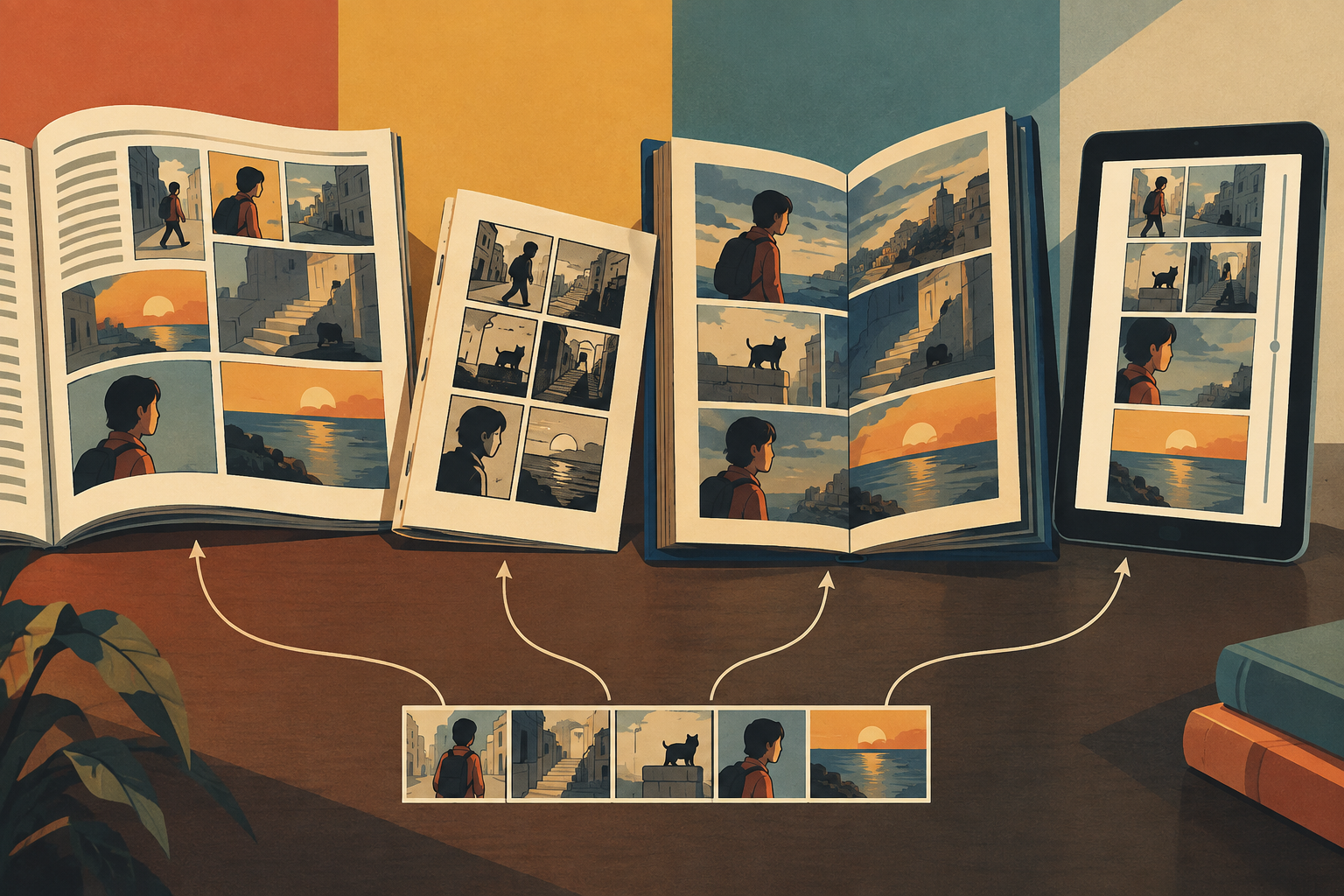
A drawn story is read on an organized surface: panels, intervals and text form a sequence the reader must follow. Yet a work does not always reach its audience in the same way. A magazine, fanzine, album and graphic novel are different formats. Rubén Varillas’s study brings these categories together in its title, “El cómic, una cuestión de formatos” (“Comics: A Question of Formats”). That list is a starting point, not a conclusion: the supplied sources do not describe the material characteristics of each format or document specific changes to a particular work.
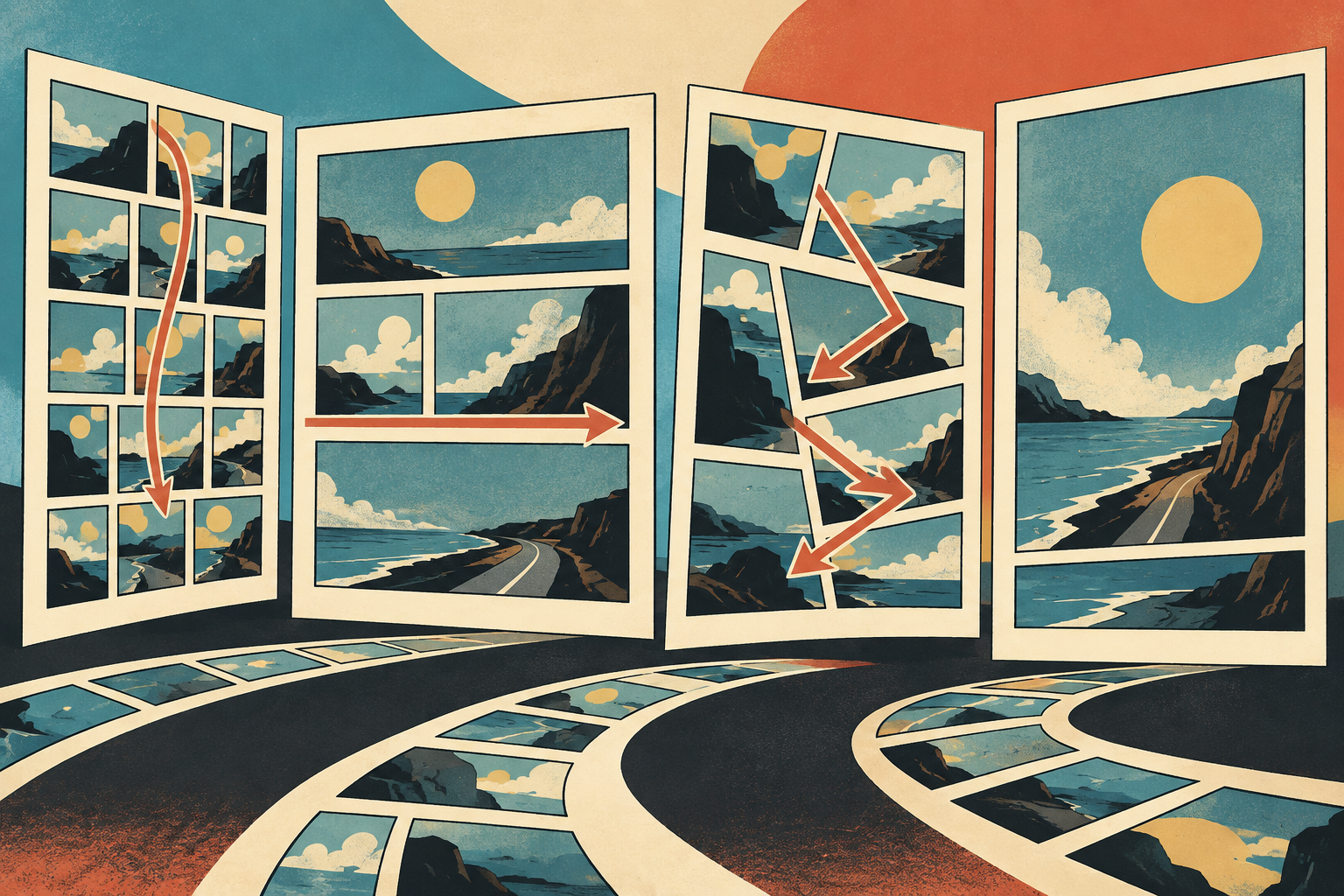
The useful editorial question is narrower: what changes when a story moves from one publishing context to another? The answer cannot be inferred from the format’s name alone. It requires comparing editions, pages, contents, covers and bibliographic records. Without that comparison, claiming that one version altered pacing, sequence or the reading experience would exceed the evidence available here.
Publishing also organizes reading
Format can guide questions about reading. Does the work appear as part of a periodical or as a standalone volume? Is it presented alongside other material? What editorial information accompanies the pages? These are analytical questions, not facts that can be settled by the short records gathered here.
Varillas’s article explicitly lists comics magazines, fanzines, minicomics, albums and graphic novels in its title. That breadth helps prevent “comics” from being treated as if it described a single publishing object. It does not, by itself, show that one category is freer, longer or more permanent than another. Claims of that kind would require consulting the study and specific copies, which the materials in this query do not make possible.
Circulation and documentary life
Circulation raises different questions from storytelling. A magazine may matter as a publication, as a set of pages or as part of a collection; a fanzine or album may call for different descriptive criteria. We cannot say here how a particular title was distributed or what readership it reached. We can say that studying a comic beyond the character on its cover requires attention to how the material is identified, grouped and preserved.
The Reina Sofía Museum Library describes its comics and fanzines collection as the result of research, analysis and documentation of holdings. This institutional description offers a relevant fact: access to such material also depends on selection and documentation. The collection should not be mistaken for a comprehensive history of the medium, and the available source does not detail its criteria or holdings.
From copy to archive
RetroPause’s article on magazines, collections, museums and digital access addresses the passage from material regarded as ephemeral to material that is preserved or digitized. Its summary identifies the issue, but supplies no cases, dates or preservation policies that can safely be narrated here. It is therefore important to distinguish the general argument—that preservation changes the conditions of consultation—from claims about a particular project or publication.
A post by the Spanish National Library mentions its comics bibliography guide, pointing to another aspect of access: finding bibliographic references. A guide does not replace a copy or an archival description, but it can help orient research. The available post also mentions the illustrated magazine Monos and the term “pintamonas”; the supplied information is not enough to develop a history of that magazine or connect it to specific editorial changes.
Industry, interpretation and limits
Á. M. Pons’s academic article on the Spanish comics industry describes comics as a popular cultural form and notes their importance in the 1940s. The available summary does not give details of series, print runs, distribution practices or changes in format. It can therefore provide broad industrial context, but not proof that a particular editorial decision changed how a work was read.
Keeping documented facts separate from interpretation matters. A format suggests questions about sequence and access; only the examination of comparable editions can establish that a specific change affected reading. Likewise, an institutional collection enables another kind of consultation, but does not by itself reveal how each copy originally circulated.
A history that needs copies
The available sources establish a working framework: compare formats, examine conditions of circulation, and study archival and access practices. They do not allow us to attribute changes in reading to a specific work or reconstruct a complete history of Spanish comics publishing.
The conclusion is methodological. To understand what an edition did to a narrative, editions must be compared and changes recorded—sequence, pagination, presentation or publishing context—where copies and their records support the claim. Until then, format is a productive question, not an automatic explanation. An archive can broaden what we see, but the specific copy remains necessary evidence.
- Decade
- Contemporary
- Region
- Spain
- Level
- Enthusiast
- Entities
- Museum, Museo Reina Sofía, Rubén Varillas
Sources and references
- El cómic, una cuestión de formatos (2): revistas de cómics, fanzines, mini-cómics, álbumes y novelas gráficasdoi.org · 2026-10-03
- Cuando una revista pasa a ser archivo: el cómic entre colecciónwww.retropause.com · 2026-10-03
- Si quieres profundizar en la historia y bibliografía sobre ...www.facebook.com · 2026-10-03
- Cómics y fanzineswww.museoreinasofia.es · 2026-10-03
- La industria del cómic en España: radiografía de ¿un mito ...arbor.revistas.csic.es · 2026-10-03