The medium is part of the reading experience
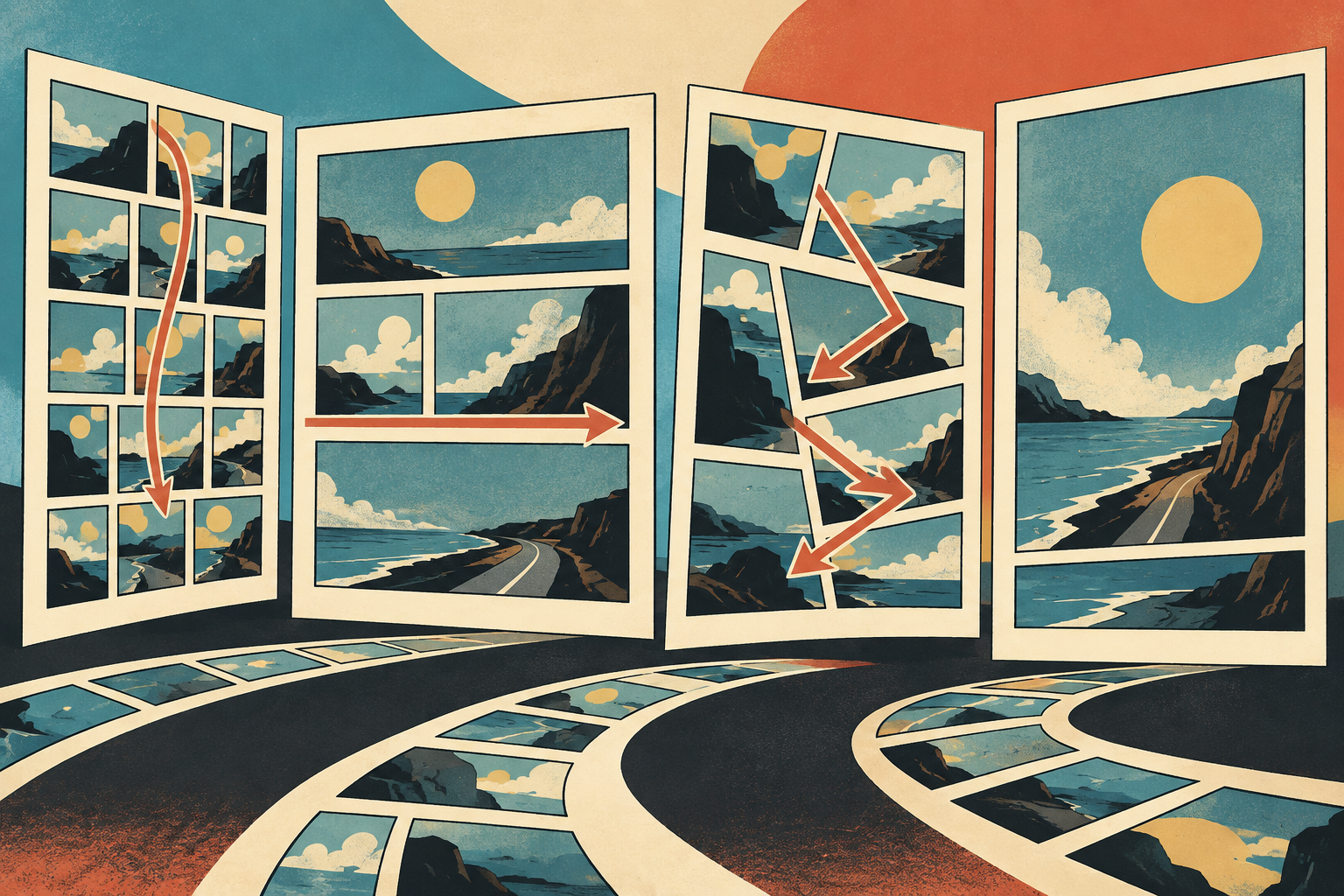
A comic does not reach its reader as an abstract sequence of images. It arrives arranged on pages and published in a particular format. Page size, sequence and the placement of images can shape the experience, though none alone explains a work. Studying a magazine or album therefore means looking beyond the character on the cover: it also means considering how the story is presented and the conditions under which it circulates.
Rubén Varillas’s study of formats names magazines, fanzines, minicomic books, albums and graphic novels in its title. That range is a useful starting point: publications should not be treated as interchangeable versions of one object. Editorial form can affect how a story is encountered, followed and accompanied by other material. What that means in any particular case must be checked against the issue and its documentation, not inferred automatically from a label.
What can change when an edition changes
The research question is not only what a comic contains, but what editorial changes may have altered the way it reads. A careful approach compares concrete evidence: page organization, the order of instalments where documented, other material in a magazine, and visible differences between editions. Such observations can support hypotheses about pacing, continuity or publishing context. They do not, by themselves, prove the intentions of creators or publishers.
That distinction matters. If one version shares its editorial space with other content, its reading experience may differ from that of a volume devoted to one work. But without comparable copies or documentation, it would not be rigorous to state what readers felt or what an editor intended. Format provides clues; interpretation should distinguish what can be observed from what is inferred.
Magazines and independent publishing
The supplied bibliography encourages attention to different categories rather than an assumed hierarchy among them. Varillas’s article addresses magazines, fanzines, minicomic books, albums and graphic novels. Another supplied record, the book From Archive to Museum: A Place for Independent Publishing, identifies independent publishing and its relation to archives and museums as a subject of study. Its title alone does not establish its conclusions, but it does support an editorial question: what is missed when a publication is studied only as a story, rather than as an object produced and preserved?
A responsible answer begins with what can be verified. A copy’s format, visible structure and information actually printed in it can be recorded. Further claims—for example, about distribution, readership or the reason for a particular presentation—require additional sources. Difficulty locating a publication is not permission to fill the gap with a plausible story.
From copy to archive
A magazine can preserve traces beyond any single page: relationships between instalments, the composition of an issue and available publication information. RetroPause’s supplied resource on a magazine becoming an archive explicitly frames the relationship among collection, museum and digital access. It is a useful context for thinking about preservation, but it does not replace examining each collection or justify generalizations about its practices.
Digital access can make materials easier to consult, while a physical copy allows examination of its material characteristics. These are different modes of access, not proof that one is complete and the other dispensable. Comparisons should specify what was consulted and which features can be verified in each version. A digital reproduction, for instance, should not automatically be treated as evidence of every material feature of the original.
Interpreting clues without turning them into certainties
The event announced by La Regenta on the value of comic collections places preservation and cultural and artistic heritage among the subjects its participants would discuss. The supplied academic record on comics and the museum likewise indicates research connecting these fields. These references support the relevance of studying comics as publications and cultural objects; the short descriptions supplied here do not justify attributing more specific arguments to their authors.
When examining an edition, it helps to separate three levels: what the copy shows, what the documentation confirms and what the researcher interprets. This prevents a work’s later reputation from being projected onto its publication circumstances, or an editorial category from being mistaken for a uniform reading experience. It also leads to better questions: what changed, what evidence establishes it, and what reading effects can be proposed without presenting them as proven facts.
One way to read, not a complete explanation
Format can change the conditions in which a comic is presented and read, but it cannot by itself explain a work’s quality, reception or historical importance. Further research requires copies, publication data and sources against which each claim can be checked. The references available here support an initial inquiry into formats, collections, archives and museums; alone, they do not document the full history of any particular magazine.
Reading the medium as well as the story offers a way to understand graphic narrative more closely: the page is not neutral, and circulation belongs to a work’s context. Conclusions should remain proportionate to the evidence. A visible arrangement can be described; a possible effect can be interpreted; an editorial intention or reader response requires specific documentation.
- Decade
- Contemporary
- Region
- Spain
- Level
- Enthusiast
- Entities
- Museum, Rubén Varillas
Sources and references
- El cómic, una cuestión de formatos (2): revistas de cómics, fanzines, mini-cómics, álbumes y novelas gráficasdoi.org · 2026-10-04
- De archivo a museo: un lugar para la edición independienteopenalex.org · 2026-10-04
- El arte contemporáneo y el museo llevados al cómicopenalex.org · 2026-10-04
- Cuando una revista pasa a ser archivo: el cómic entre colecciónwww.retropause.com · 2026-10-04
- Del archivo al lector: el valor de las colecciones de cómiclaregenta.org · 2026-10-04