A magazine is not read in a vacuum
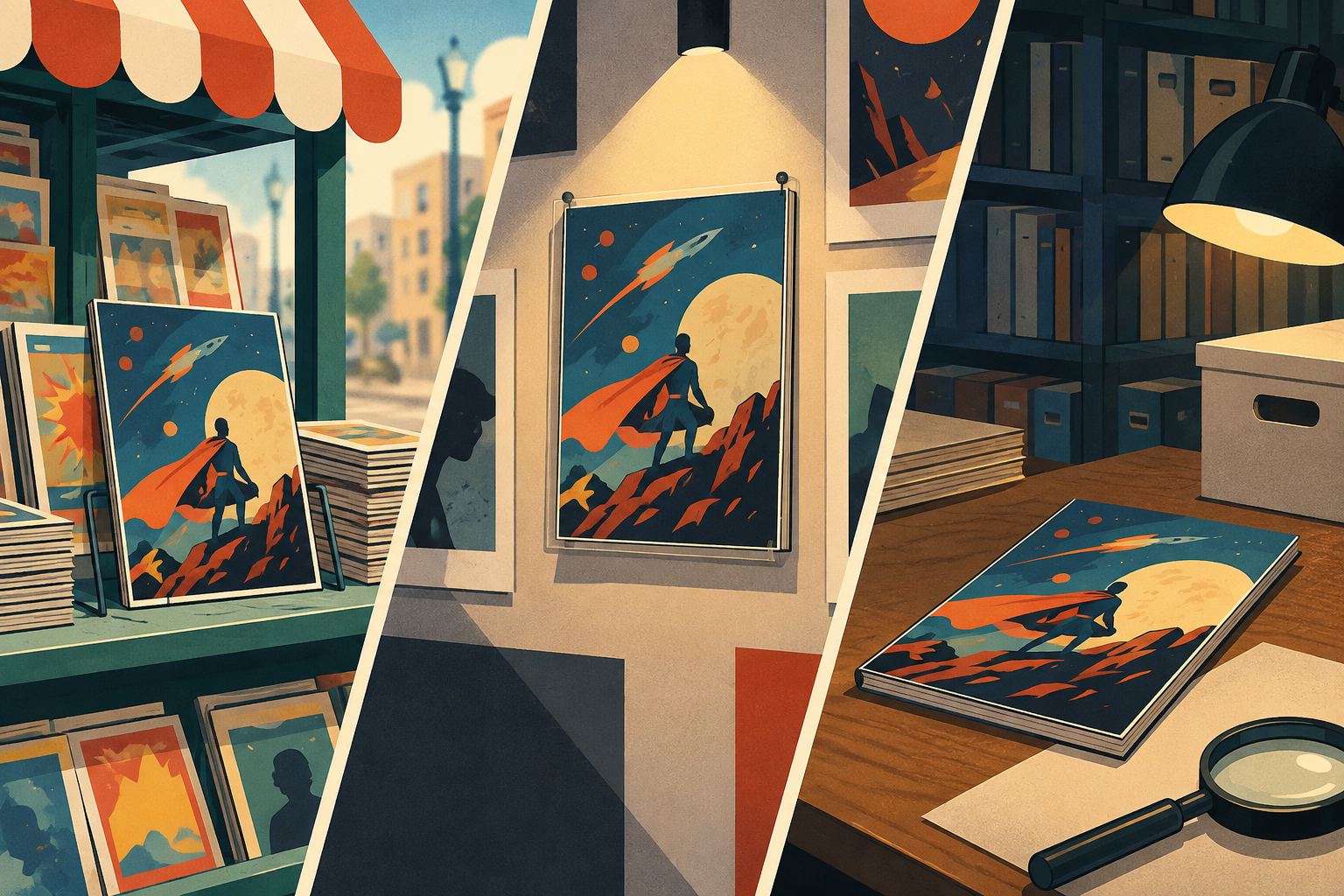
A comic magazine reaches its reader as a drawn narrative, but also as a published object in a particular setting. That distinction matters: encountering a publication in a routine sales environment is not the same as seeing it selected for an exhibition or described in an archive. Each frame directs attention differently. The first invites consideration of circulation; the second, of presentation; the third, of preservation and consultation.
The available documentation on Spanish magazines offers precisely that trio as a starting point: kiosk, exhibition and archive. It is not enough to reconstruct the material history of a specific title, but it does make an editorial question possible: how does reading change when a magazine changes location?
From issue to exhibition
The study on comic exhibitions notes that exhibiting comics is not a newly invented practice, even if it may seem recent. Its summary cites the exhibition Bande Dessinée et Figuration Narrative as a historical reference. This encourages us to set aside the assumption that comics acquire exhibition value only when presented as a cultural novelty. Still, the supplied material does not provide the exhibition’s date, installation or contents; those details require consulting the study itself.
Exhibiting a magazine introduces a different mediation from ordinary reading. Rather than necessarily following the pages in sequence, a visitor may encounter a selection, an arrangement or explanatory context. This is an interpretation of the medium, not a replacement for reading the complete issue. The available references do not establish the specific display choices made in any particular exhibition.
The kiosk as a frame for circulation
The reference to the kiosk shifts attention from the work in isolation to the conditions under which it meets its audience. But the supplied material documents no print runs, prices, publication frequency, geographical distribution or buying habits for any particular magazine. It would therefore be imprudent to turn the familiar image of the kiosk into a sales history unsupported by the sources.
It can, however, serve as an analytical question: what do we gain by thinking of the magazine as a circulating publication rather than only as a sequence of panels? Editorial format can guide reading, but establishing specific changes would require comparable issues and publishing data. Rubén Varillas’s academic article, whose title treats magazines, fanzines, mini-comics, albums and graphic novels as formats, offers a route into that comparison. The supplied record identifies its subject, not its detailed findings.
The archive preserves and frames
An archive offers another kind of approach: identifying, organizing and consulting publications. A catalogue about the history of Spain through comics includes a section on cataloguing comics, according to the supplied material. That fact confirms the importance of describing materials, but it does not justify attributing methods, comprehensive criteria or a specific inventory to the catalogue when those details are absent from the record provided.
Cataloguing makes it possible to locate and relate objects; it is not the same as having every page in front of us or knowing the full circumstances of circulation. The archive should therefore be understood both as a tool and as a frame: what can be consulted depends on what has been preserved, identified and described. In this case, there is not enough information to say which specific magazines were represented or omitted.
Which editorial changes alter reading?
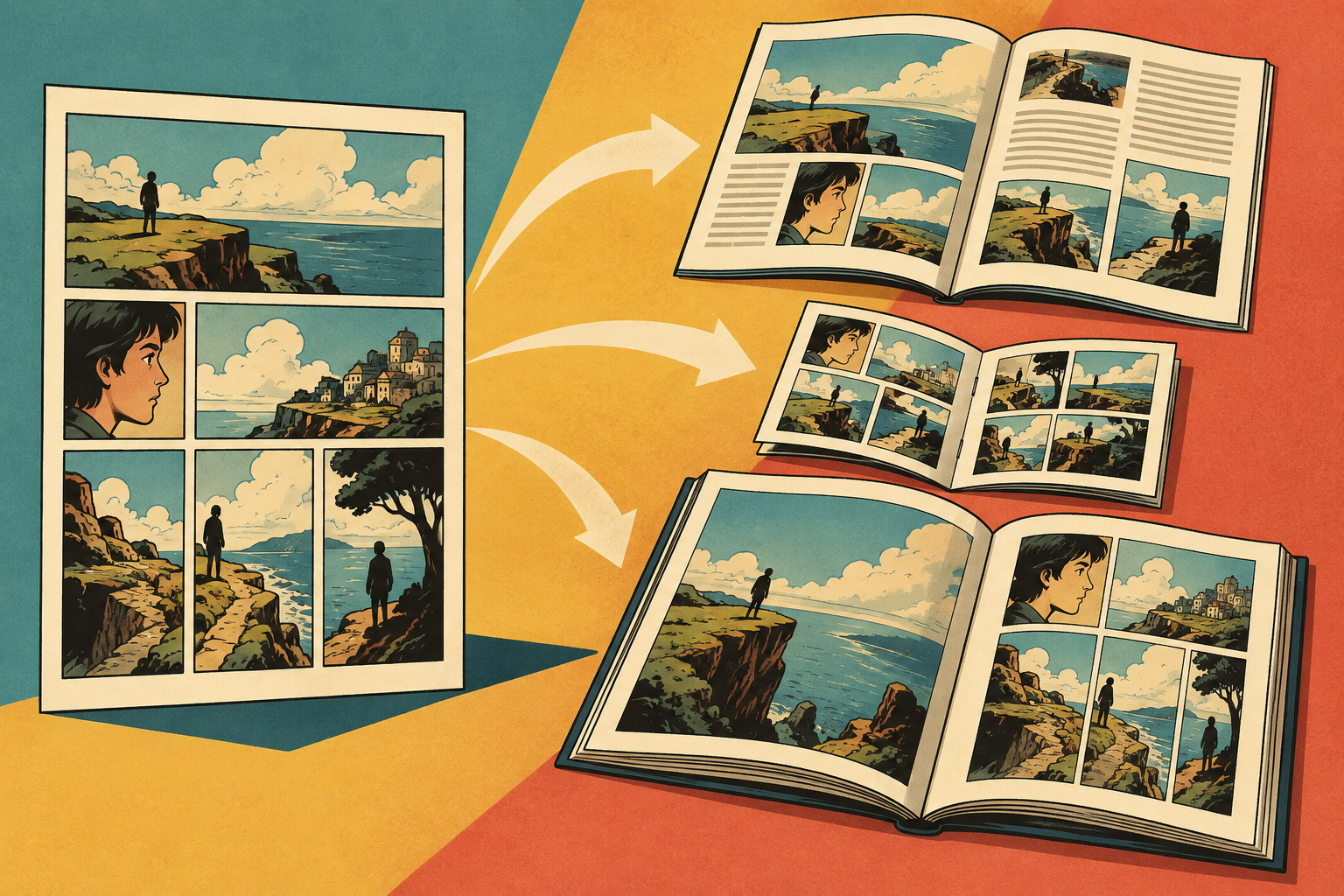
The question requires more than comparing labels such as magazine, album and fanzine. A defensible answer about a particular publication would require comparing issues and recording verifiable changes: structure, sequence, dimensions, content or page arrangement. The references provided warrant studying formats and places of presentation, but they do not by themselves establish a specific editorial change in a Spanish magazine.
This distinction keeps three questions apart: the drawn narrative, the medium in which it appears and the conditions in which a reader encounters it. An exhibition changes the frame of access; an archive organizes consultation; a sales circuit belongs to circulation. Whether any of these changes alters the interpretation of a work is a hypothesis to test against specific materials, not a fact that can be generalized here.
What we know and what remains open
The supplied sources support the claims that comic exhibitions have been studied, that exhibition has historical precedents, that comics formats are a subject of specific research, and that an approach to Spanish magazines can distinguish among kiosk, exhibition and archive. They do not provide a complete chronology, identify an edition change in a particular title or describe the experience of readers in a particular period.
That limit does not empty the question; it makes it more precise. Further work would require selecting a magazine, locating several issues, consulting publication and circulation data, and comparing its presence in documented catalogues or exhibitions. Until then, the soundest conclusion is also the most restrained: the place of encounter helps shape how a magazine is presented and studied, while changes to its edition must be demonstrated issue by issue.
- Decade
- Contemporary
- Region
- Spain
- Level
- Enthusiast
- Entities
- Rubén Varillas
Sources and references
- El cómic, una cuestión de formatos (2): revistas de cómics, fanzines, mini-cómics, álbumes y novelas gráficasdoi.org · 2026-10-08
- Cuando la revista de cómic cambia de lugar - RetroPausewww.retropause.com · 2026-10-08
- Las exposiciones de cómics. Historia y contexto globalerevistas.publicaciones.uah.es · 2026-10-08
- Las exposiciones de cómics: historia y contexto global - Dialnetdialnet.unirioja.es · 2026-10-08
- Catálogo de la historia de España a través del cómic (1940 ...www.comares.com · 2026-10-08
- Las mejores revistas de historietas de los años 50 a hoywww.pixartprinting.es · 2026-10-08