Looking beyond the surviving print
A preserved film cannot, by itself, tell the whole story of its circulation, production, or reception. Associated documentation can open other lines of inquiry, provided we distinguish what a document establishes from what it merely suggests. A study on cinema and archives explicitly highlights so-called non-film materials, including press archives, as sources for film history and filmmaking. This shifts the question: besides asking which images survived, we can ask what materials help place them in context.
What associated materials can show
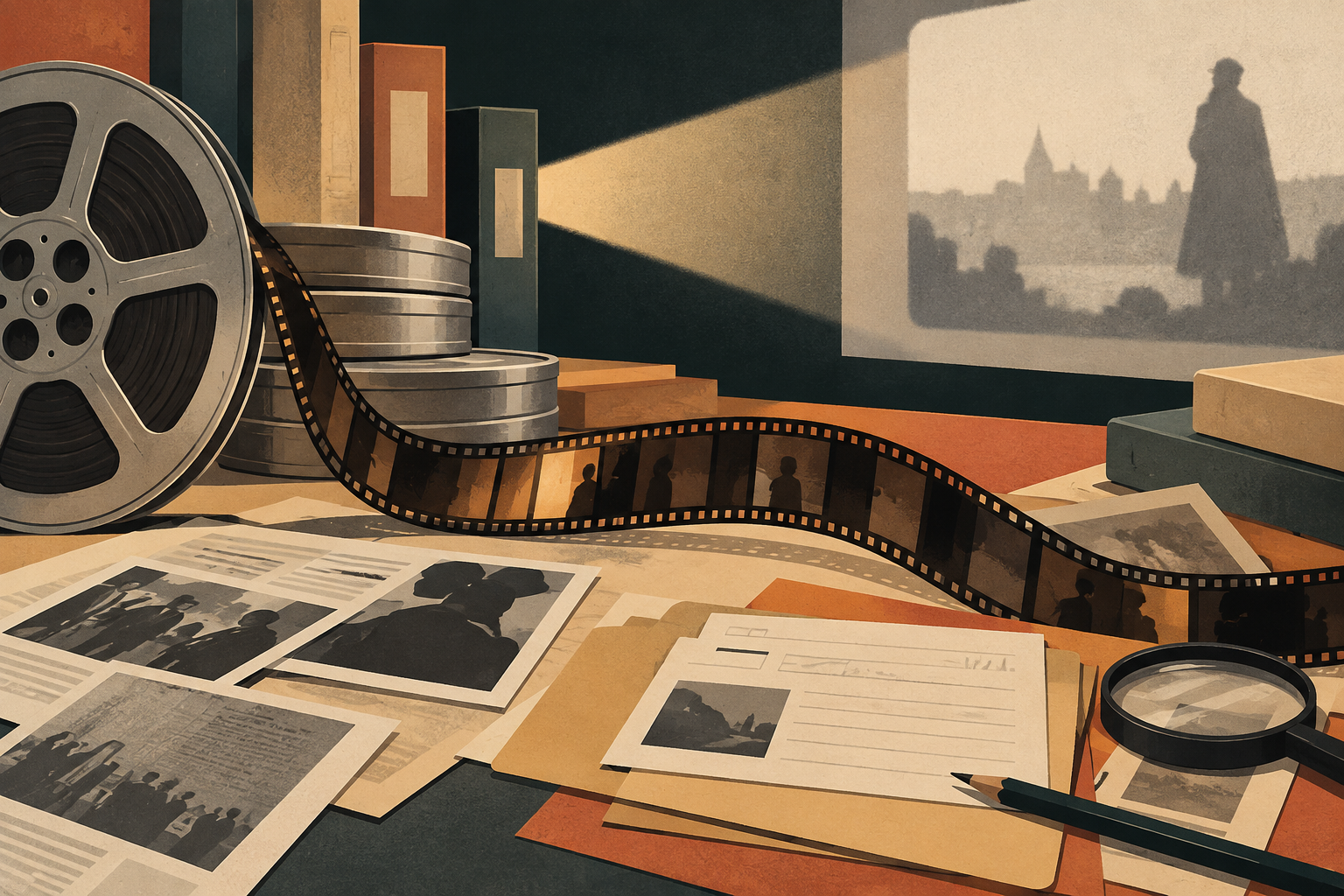
Non-film documents can offer clues about the institutions, practices, and public discourse connected with cinema. Their usefulness depends on their form, provenance, and demonstrable relationship to a film or cinematic activity. A press clipping, for example, is evidence of a particular publication; by itself, it does not prove how an entire audience responded. The editorial principle is simple: describe an item and its limits before drawing conclusions.
Different collections tell different stories
The guide to Bogotá’s documentary collection lists archival materials related to pioneers of film exhibition and production, as well as collections from companies in the sector. It shows how institutional records can raise questions that watching films alone cannot answer. It does not, however, justify generalisations about all Colombian archives or independently reconstruct the reception of a particular work.
The history of Mexico’s Cineteca Nacional offers a different kind of context: that of an institution devoted to preserving, cataloguing, exhibiting, and promoting cinema. The available account describes changes of venue and activities, as well as the loss of materials associated with the 1982 fire. This case is a reminder that an archive’s history includes breaks and gaps. Without further records, it does not establish the extent of every loss or its effect on research into specific films.
Documentation in the digital age
A 2007 academic article on applications of film documentation in the digital age provides a framework for thinking about how information on cinema is organised and consulted. Its title and bibliographic record identify its subject and author, but are not enough to attribute specific conclusions that are absent from the supplied evidence. It should be treated as a bibliographic lead requiring direct reading, not as a substitute for the article itself.
Likewise, academic records on cinema as a source for history or on film history can help locate debates, but a catalogue record is not the same as reviewing an argument in full. Sound research combines access to materials with verification of their catalogue data, provenance, and context.
The unanswered question of cinema and video
Comparing reception in cinemas and on video requires sources that document both situations—for example, identifiable distribution or press materials and contextualised evidence about exhibition or circulation. The references available here support research into documentation associated with cinema, but do not provide enough evidence to establish how the reception of a particular film changed when it moved from cinema to video. Nor do they substantiate a specific video-store history or describe its practices.
That limitation does not invalidate the question; it defines the next step. Before making a comparison, relevant records for a particular film, territory, and period would need to be found and cross-checked. Without them, presenting an answer as fact would turn a research possibility into an unsupported conclusion.
Reading an archive without filling its silences
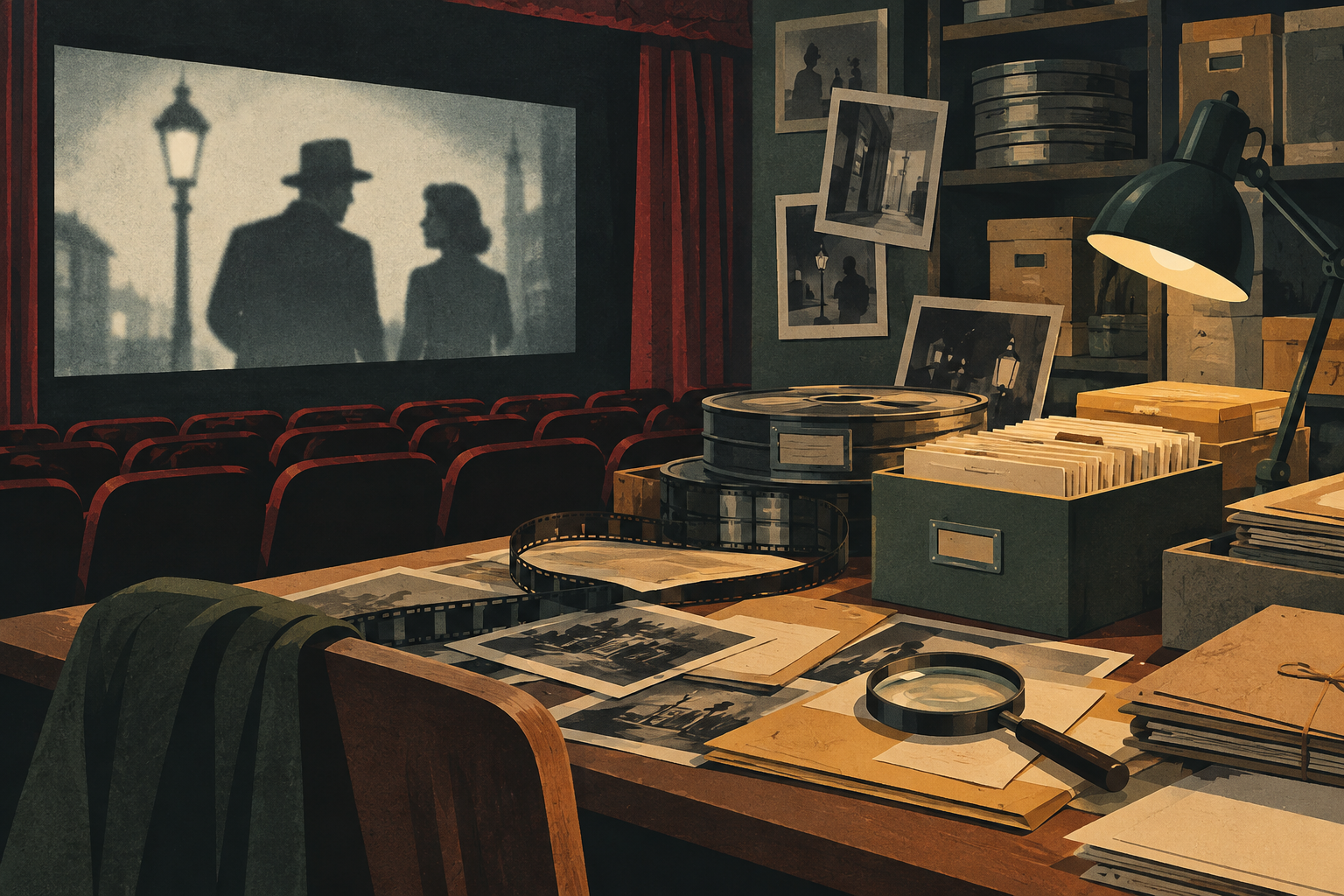
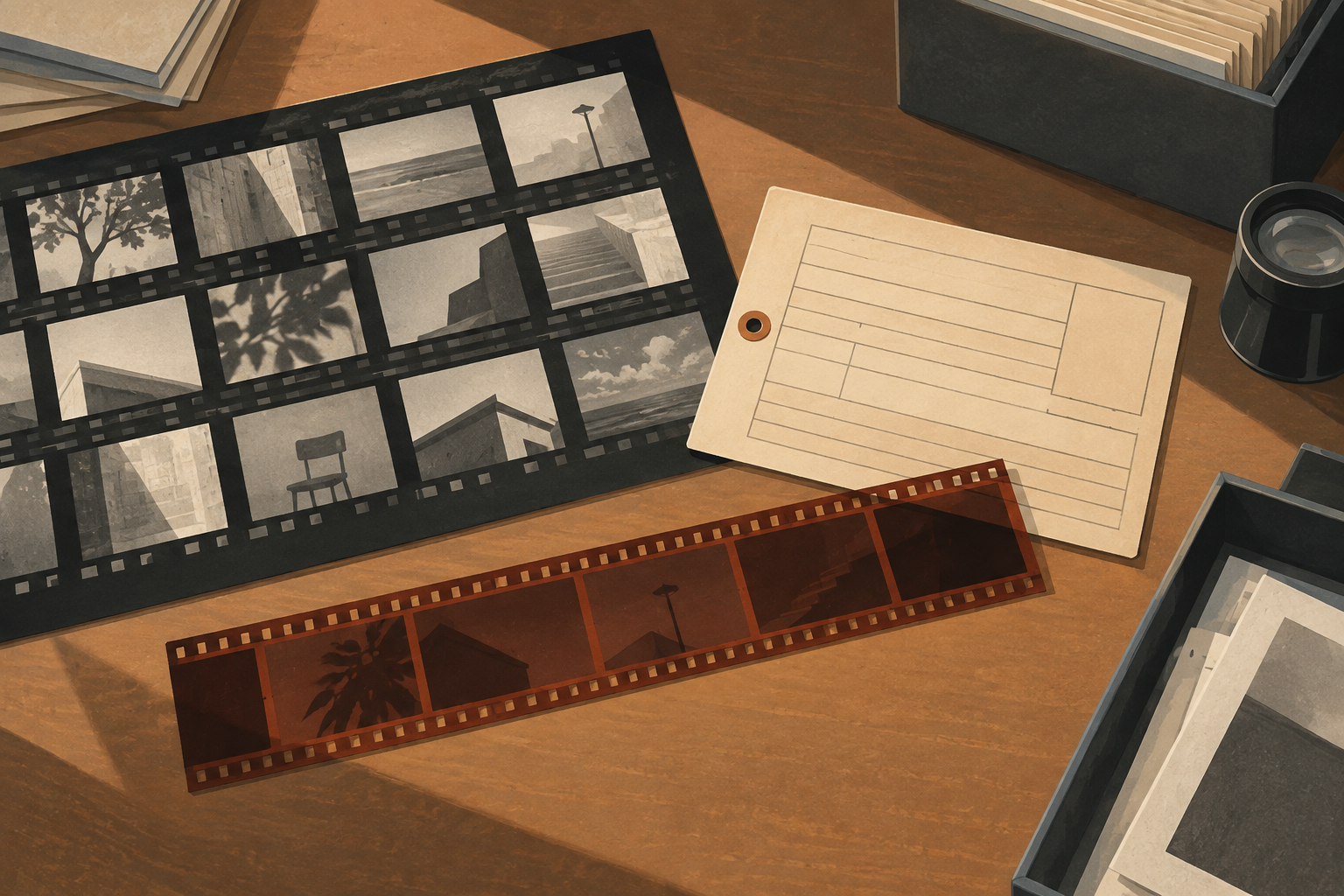
Posters, clippings, catalogue cards, and other materials can be valuable when they exist and their connection to the subject is documented. They should not replace the film or be treated as automatic proof of a uniform audience response. Nor does the absence of an item prove that it never existed: it only establishes that it is not present in the material consulted.
Documentation broadens the view of cinema, while also setting limits. Its strongest contribution is to make visible the questions and relationships that the sources can support. Transitions between formats and differences in reception remain open to investigation; on the evidence available here, they cannot be presented as settled conclusions.
- Decade
- 2000s
- Region
- Global
- Level
- Enthusiast
- Entities
- No linked entities
Sources and references
- Fondo Concejo de Bogotáarchivobogota.secretariageneral.gov.co · 2026-10-01
- Cine en la era digital: aplicaciones de la documentación cinematográfica (Alfonso López Yepes, director)doi.org · 2026-10-01
- Secuencias. Revista de Historia del Cineopenalex.org · 2026-10-01
- El cine como fuente de la Historiaopenalex.org · 2026-10-01
- Cine y el Archivo: Investigación, preservación, creaciónconcentrica.cua.uam.mx · 2026-10-01
- Cineteca Nacionales.wikipedia.org · 2026-10-01