The 1970s represented a significant turning point for the global film industry. It was not merely an evolution in scripts or directing techniques, but a deep reconfiguration of how audiences interacted with projected images. This period saw the coexistence of two seemingly opposing forces: the pursuit of an increasingly intense sensory experience in the theater and the beginning of a fragmentation in audiovisual consumption habits. Historical evidence suggests that projection technology and studio marketing strategies played a crucial role in this transformation, laying the foundations for contemporary cinema.
The Rise of a New Visual Standard
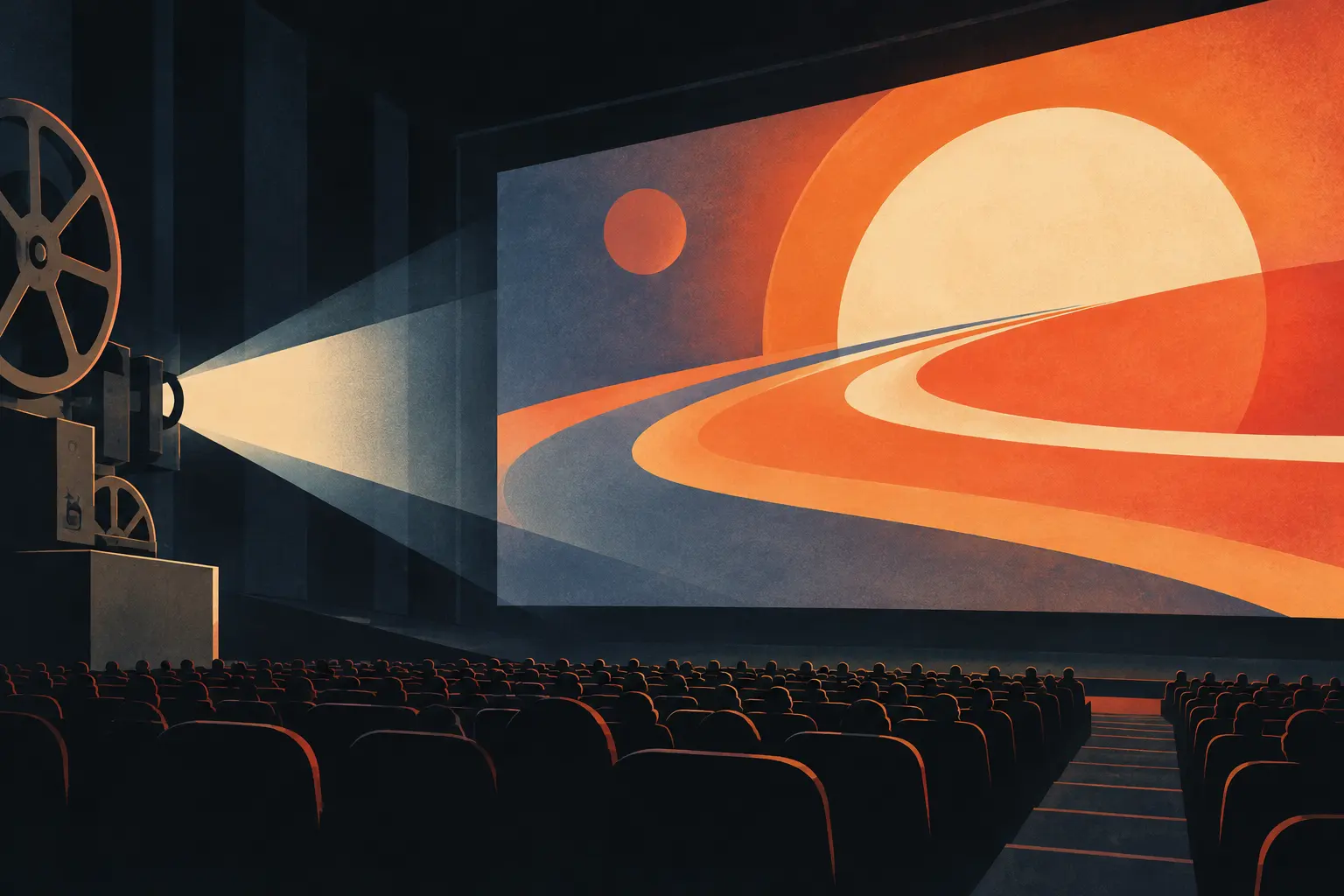
One of the most documented milestones of this era was the introduction of IMAX in 1970. This format was not simply an incremental improvement, but a radical proposal that offered a screen ten times larger than the conventional one. The intention was clear: to create a technical immersion that differentiated the theater experience from any other entertainment medium. This physical scale sought to justify the trip to the cinema at a time when audience attention was beginning to disperse toward other media. The magnitude of IMAX represented an attempt to reaffirm the primacy of cinema as a collective and monumental event.
The Influence of Special Effects on Narrative
Parallel to the expansion of the screen, the industry was experiencing a revolution in special effects. Historical sources indicate that directors like George Lucas were influenced by the work of Stanley Kubrick, whose technical innovation laid the groundwork for later works such as Star Wars. This transfer of technical knowledge was not an isolated phenomenon, but part of a broader trend toward the integration of technology into narrative. Hollywood studios began to seek major productions that could capitalize on these visual advances, understanding that technical spectacle was a key factor in attracting masses to dark theaters.
Posters as a Tool of Perception
The way films were advertised also evolved during this decade. An analysis of the posters of the era reveals a shift in the perception of cinematic value. Posters ceased to be simple notices and became marketing pieces that promised a unique experience. This communication strategy reflected the studios' need to highlight their productions in an increasingly competitive market. The image of the poster aligned with the promise of technical immersion, creating an expectation in the viewer that the theater had to fulfill to avoid disappointment.
The Fragmentation of the Audience
Despite these efforts to centralize the experience in the cinema, the 1970s also witnessed the beginning of a fragmentation in audience reception. The emergence of new domestic media, though still in development, laid the groundwork for a split in viewing habits. The viewer began to have options beyond the theater, forcing the industry to reevaluate its value proposition. This tension between the monumentality of the screen and the intimacy of the home became a central axis of studio strategy for the rest of the decade.
The Context of Spanish and Mexican Cinema
The transformation was not exclusive to Hollywood. In Spain, cinema in the 1970s experienced an evolution toward what has been termed the "third way" or middlebrow cinema, seeking a balance between art and entertainment. Similarly, in Mexico, the film industry lived through a "frozen revolution," where political and economic restrictions influenced the production and reception of films. These regional contexts show that changes in technology and marketing were not applied uniformly, but were adapted to the local realities of each market.
Limitations of Historical Evidence
It is important to note that the understanding of this era is limited by the availability of primary sources. Many of the conclusions are based on retrospective analyses and the interpretation of industry documents. The lack of detailed quantitative data on theater attendance in 1970 makes a precise evaluation of the immediate impact of formats like IMAX difficult. Furthermore, audience perception at the time did not always align with current narratives, requiring a critical approach when interpreting the available evidence.
Conclusion
The 1970s were a defining period for modern cinema. The introduction of IMAX and the evolution of special effects established new standards of technical immersion, while the fragmentation of the audience forced the industry to reinvent its relationship with the viewer. These changes were not linear, but involved a complex interaction between technology, marketing, and cultural context. Understanding this dynamic is key to appreciating how the cinematic experience we know today was constructed.
- Decade
- 1970s
- Region
- Global
- Level
- Enthusiast
- Entities
- Star Wars
Sources and references
- Capítulo cuarto. La «tercera vía» y el cine español middlebrow en la década de 1970doi.org · 2026-10-22
- Sobre Israel Rodríguez, El nuevo cine y la revolución congelada. Historia política del cine mexicano en los setentadoi.org · 2026-10-22
- CRONOLOGÍA DE LA HISTORIA DEL CINElas1000nochesyuna.com · 2026-10-22
- Películastranslate.google.com · 2026-10-22
- Las 50 mejores películas de los años 70, ordenadaswww.fotogramas.es · 2026-10-22
- Ranking de las mejores películas de la historia del cine.www.imdb.com · 2026-10-22