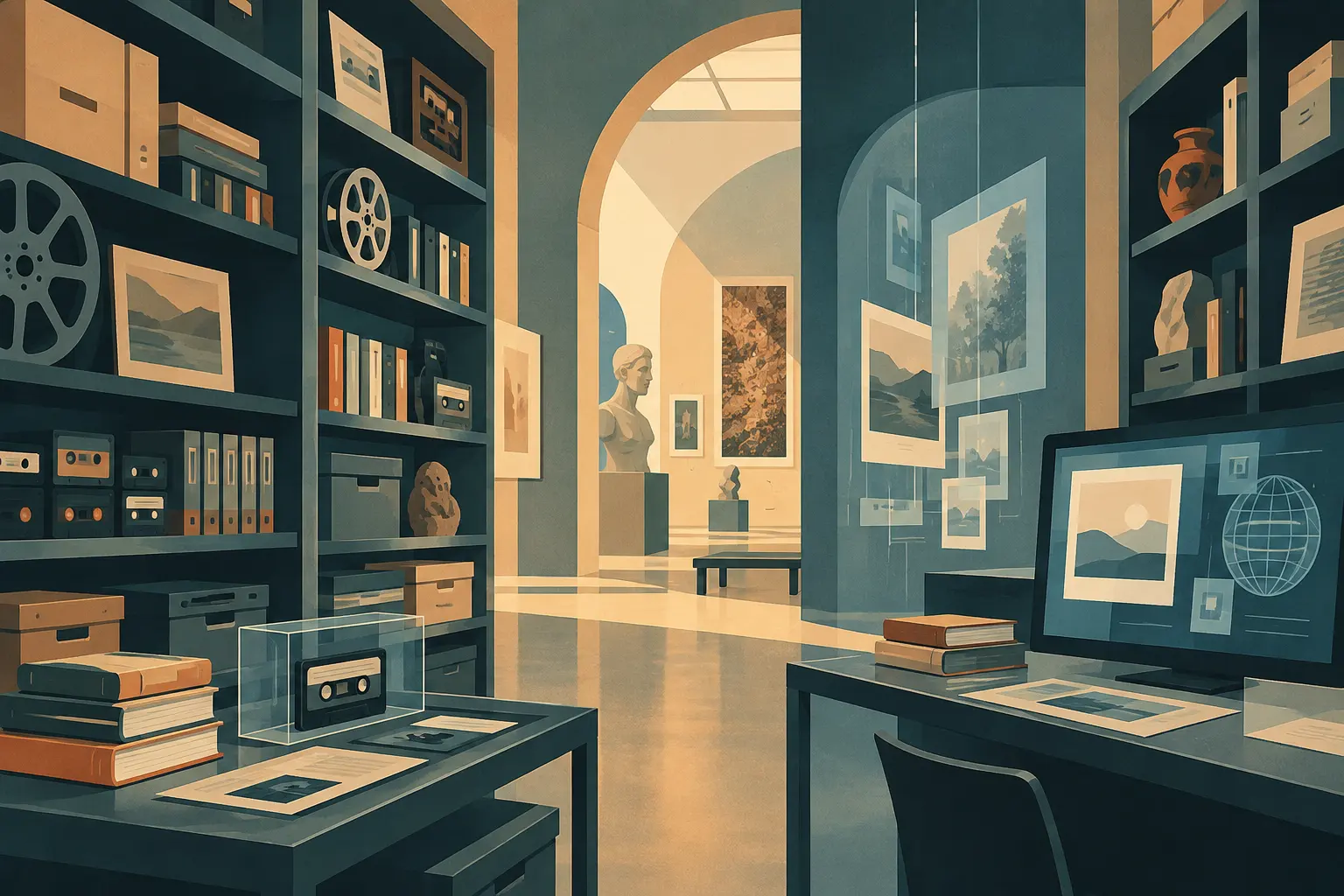
Television has ceased to be merely an entertainment medium to become a fundamental historical document. Museums, traditionally focused on static objects, face the challenge of preserving the ephemeral nature of television broadcasting. Institutions such as the National Museum of American History or the Reina Sofía Museum have begun to incorporate audiovisual archives that not only store tapes but contextualize the social reception of programs. This process involves the digitization of unknown material and the creation of narratives that connect the broadcast schedule with the daily life of audiences. The archive thus becomes a narrative agent that allows studying how television was presented and to whom it was directed, going beyond the mere exhibition of devices. Collaboration between archivists, preservers, and museum professionals is key to ensuring these pieces do not lose their history and remain sources of study and emotional experience for future generations.
The Challenge of Ephemerality
The ephemeral nature of the television signal poses a unique problem for cultural preservation. Unlike a sculpture or a painting, a television program exists in time and disappears once broadcast, unless it is recorded. Traditional museums, designed to exhibit physical objects, must adapt their methodologies to capture this temporal dimension. The integration of audiovisual archives allows institutions to not only store data but to preserve the experience of reception. This involves documenting not just the content, but the social context in which it was consumed, including the programming schedule and audience reactions.
The Role of Audiovisual Archives
Audiovisual archives have become an essential tool for contemporary museums. Institutions such as the National Museum of American History, which houses more than 1.8 million objects and three shelf-miles of archival collections, are expanding their reach to include digital material. This approach allows museums to offer a more complete view of cultural history. The digitization of unknown material opens new possibilities for research and education, allowing visitors to access content that would otherwise have been lost. Furthermore, these archives facilitate the creation of narratives that connect the past with the present, showing how television has evolved and how it has impacted society.
Narrative as an Agent of Change
The archive is not just a repository of data, but a narrative agent. By contextualizing the social reception of programs, museums can explore how television was presented and to whom it was directed. This goes beyond the mere exhibition of devices, allowing for a deeper understanding of the culture of the time. Collaboration between archivists, preservers, and museum professionals is fundamental to ensuring that these pieces do not lose their history. Together, they can create narratives that not only inform but also generate an emotional experience for visitors. This collaborative approach ensures that television heritage is preserved in an integral way, respecting both its historical value and its cultural relevance.
Digital Tools and Access
Digital tools play a crucial role in the preservation and access to audiovisual archives. Platforms like YouTube have become a tool for social transformation for contemporary art museums, allowing the dissemination of content to a global audience. Digitization not only facilitates preservation but also improves access, allowing visitors to explore archives from anywhere. This democratizes access to cultural heritage, making it more inclusive and accessible. Additionally, digital tools allow for interaction, enabling visitors to actively participate in the construction of the narrative, which enriches the museum experience.
The Social Context of Broadcasting
The social reception of television programs is a crucial aspect that museums are beginning to explore. By contextualizing the broadcast schedule with the daily life of audiences, museums can offer a more complete view of how television impacted society. This includes studying audience reactions, the discussions generated by programs, and the role of television in shaping cultural identity. This approach allows museums to not only preserve the content but also its social impact, which is essential for a complete understanding of cultural history.
Interdisciplinary Collaboration
Collaboration between archivists, preservers, and museum professionals is key to the success of these initiatives. Each discipline brings a unique perspective that enriches the preservation and exhibition of television heritage. Archivists ensure the integrity and accessibility of materials, preservers focus on physical and digital conservation, and museum professionals design narratives and experiences for visitors. This interdisciplinary collaboration ensures that television heritage is preserved in an integral way, respecting both its historical value and its cultural relevance. Furthermore, it fosters innovation, allowing the creation of new forms of exhibition and access that enrich the museum experience.
Legacy for Future Generations
The preservation of television heritage is essential for future generations. By integrating audiovisual archives into their collections, museums ensure that these pieces do not lose their history and remain sources of study and emotional experience. This legacy includes not only the content but also the social and cultural context in which it was produced. By preserving this dimension, museums allow future generations to understand how television has impacted society and how it has contributed to the formation of cultural identity. This approach ensures that television heritage is not only preserved but also used as a tool for education and reflection, enriching the understanding of cultural history.
- Decade
- Contemporary
- Region
- Global
- Level
- Introduction
- Entities
- Museum, Televisión, Museo Reina Sofía, Museo Nacional de Historia Americana
Sources and references
- Memoria, inteligencia artificial y ciudadanía digital: el archivo como agente narrativo en la era de la desinformacióndoi.org · 2026-10-24
- El uso de YouTube en los museos contemporáneoswww.researchgate.net · 2026-10-24
- Recuerdos en movimiento: Archivo Audiovisual de CMEFMwww.casamuseoeduardofrei.cl · 2026-10-24
- Museo Nacional de Historia Americana (NMAH)translate.google.com · 2026-10-24
- la historia del arte y del museo ante el reto audiovisualwww.museoreinasofia.es · 2026-10-24
- Museos y archivos del cineunesdoc.unesco.org · 2026-10-24
- Patrimonio culturales.wikipedia.org · 2026-10-24