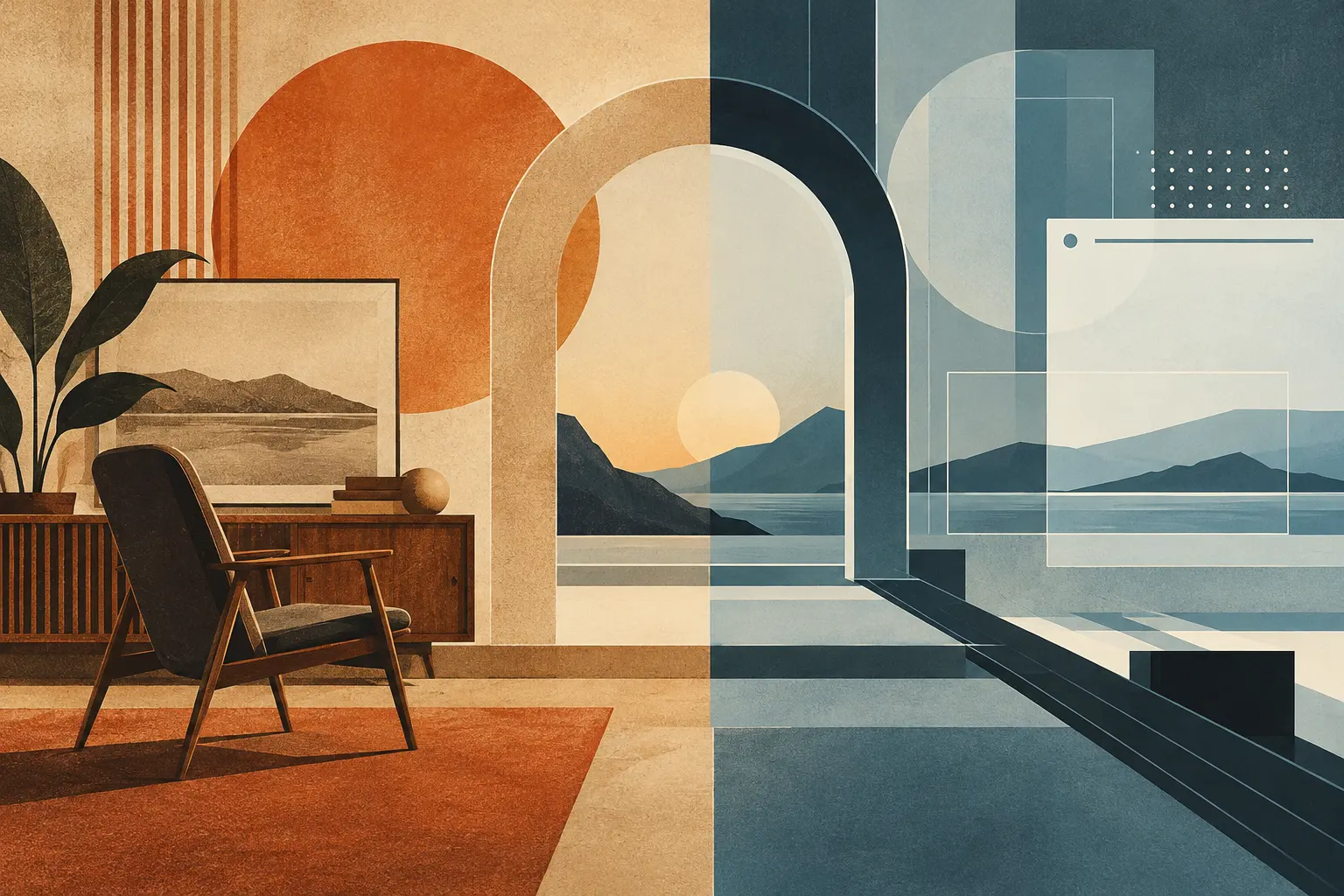
Contemporary design has stopped treating nostalgia as a mere visual ornament to turn it into a structural pillar of brand communication. Neoretro is not a simple replica of past forms, but a complex strategy that seeks to validate the quality and authenticity of a product through collective memory. This phenomenon transcends aesthetics to delve into consumer psychology, where historical reference acts as a cognitive shortcut that reduces uncertainty about the new. By evoking previous eras, neoretro design suggests a solidity and craftsmanship that consumers associate with higher intrinsic value, thus differentiating itself from the mass and ephemeral production of the present.
Memory as an anchor of value
Academic studies on purchasing behavior indicate that consumers do not react to retro style in a uniform manner. There is a clear segmentation where certain demographic groups associate retro design with specific decades, such as the eighties, or with broader historical periods. This association is not arbitrary; it is linked to the perception of craftsmanship and durability. When a product presents neoretro traits, the buyer tends to perceive greater care in details and an intention of permanence, which directly influences their willingness to pay a higher price. Collective memory functions here as an anchor of value, endowing the object with a symbolic charge that exceeds its utilitarian functions.
Perceived authenticity versus copy
One of the central tensions of neoretro is the distinction between authentic reinterpretation and superficial copy. Brands use this style to communicate positive associations of ideas, but success depends on the coherence between the message and the execution. If the design is perceived as an empty imitation, the effect is reversed and the product may be seen as obsolete or fraudulent. Authenticity in this context does not refer to the age of the object, but to the honesty of the reference. A successful neoretro design dialogues with the past without denying the present, integrating historical elements in a way that reinforces the current user experience rather than interrupting it.
The balance between function and form
Modern functionality remains the indispensable requirement for neoretro to be viable. Nostalgia cannot justify the loss of usability or incompatibility with current technologies. The challenge for the designer lies in integrating retro visual elements without compromising ergonomics or efficiency. This requires a deep understanding of how users interact with objects today. If the historical reference imposes itself over the logic of use, the design fails. Conversely, when the retro form aligns with an optimized function, a synergy is created that enhances the perception of quality. Technological innovation must be invisible but present, serving as support for the aesthetic expression.
The risk of aesthetic obsolescence
The line between nostalgia and obsolescence is thinner than it appears. A design that relies excessively on dated references runs the risk of aging quickly, especially if the cultural context changes. What is perceived as timeless today may be seen as a passing trend tomorrow. This risk is particularly high in industries where innovation cycles are fast. To mitigate this danger, brands must avoid superficiality and seek a genuine connection with the user. The strategy should not be based on the exploitation of nostalgia, but on the construction of a coherent narrative that gives meaning to the historical reference. Only then can the design transcend the moment and maintain its relevance.
Emotional connection as a purchase driver
Brands that bet on neoretro know they are exploiting a solid emotional bond. Nostalgia is a powerful emotion that connects the individual with their past and their community. By activating this emotion, design generates a loyalty that goes beyond the functional characteristics of the product. However, this connection must be carefully managed. If it is perceived as manipulation, it can generate rejection. The key lies in the authenticity of the intention. The consumer must feel that the brand shares their memory and values, not that it is simply trying to sell them a product with a nostalgic wrapper. This emotional resonance is what turns neoretro into an effective and sustainable marketing tool.
Limitations of current evidence
Although studies suggest a positive correlation between retro style and quality perception, the evidence is not conclusive in all contexts. The effectiveness of neoretro varies according to the sector, demographics, and culture. There is no universal formula that guarantees success. Furthermore, current research focuses mainly on initial perception and purchase intention, with less data on long-term satisfaction or customer retention. It is necessary to continue investigating how the actual use experience modifies the initial perception generated by the design. The complexity of the variables involved makes any generalization premature. Designers and marketers must approach neoretro with caution, analyzing each specific case and monitoring market responses continuously.
Conclusion: Coherence as the key to success
Neoretro is not a passing fashion, but a design strategy that requires a delicate balance between history and modernity. Its success does not lie in the quantity of retro references used, but in the coherence of their integration. Authenticity, functionality, and emotional connection are the pillars that support this strategy. By transforming collective memory into a design criterion, brands can create products that resonate deeply with consumers. However, this power entails a responsibility. Neoretro design must be honest, functional, and respectful of the user's intelligence. Only then can it fulfill its promise of offering an experience that is both familiar and new, nostalgic and contemporary.
- Decade
- Contemporary
- Region
- Global
- Level
- Introduction
- Entities
- No linked entities
Sources and references
- Estudio de los factores de compra de productos retro y ...www.sciencedirect.com · 2026-10-22
- Moderno y auténtico. Definiendo el estilo neorretro en ...translate.google.com · 2026-10-22
- (PDF) Estudio de los factores de compra de productos retro ...www.researchgate.net · 2026-10-22
- Marketing retro o retro marketing | PPTXes.slideshare.net · 2026-10-22
- La nostalgia como estrategia de venta. | AMVOblog.amvo.org.mx · 2026-10-22