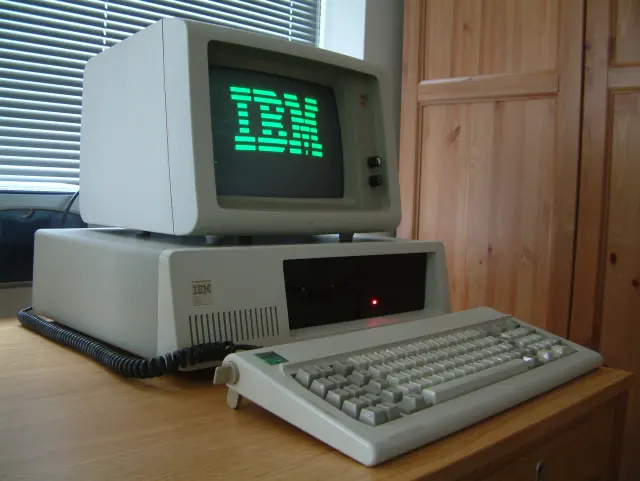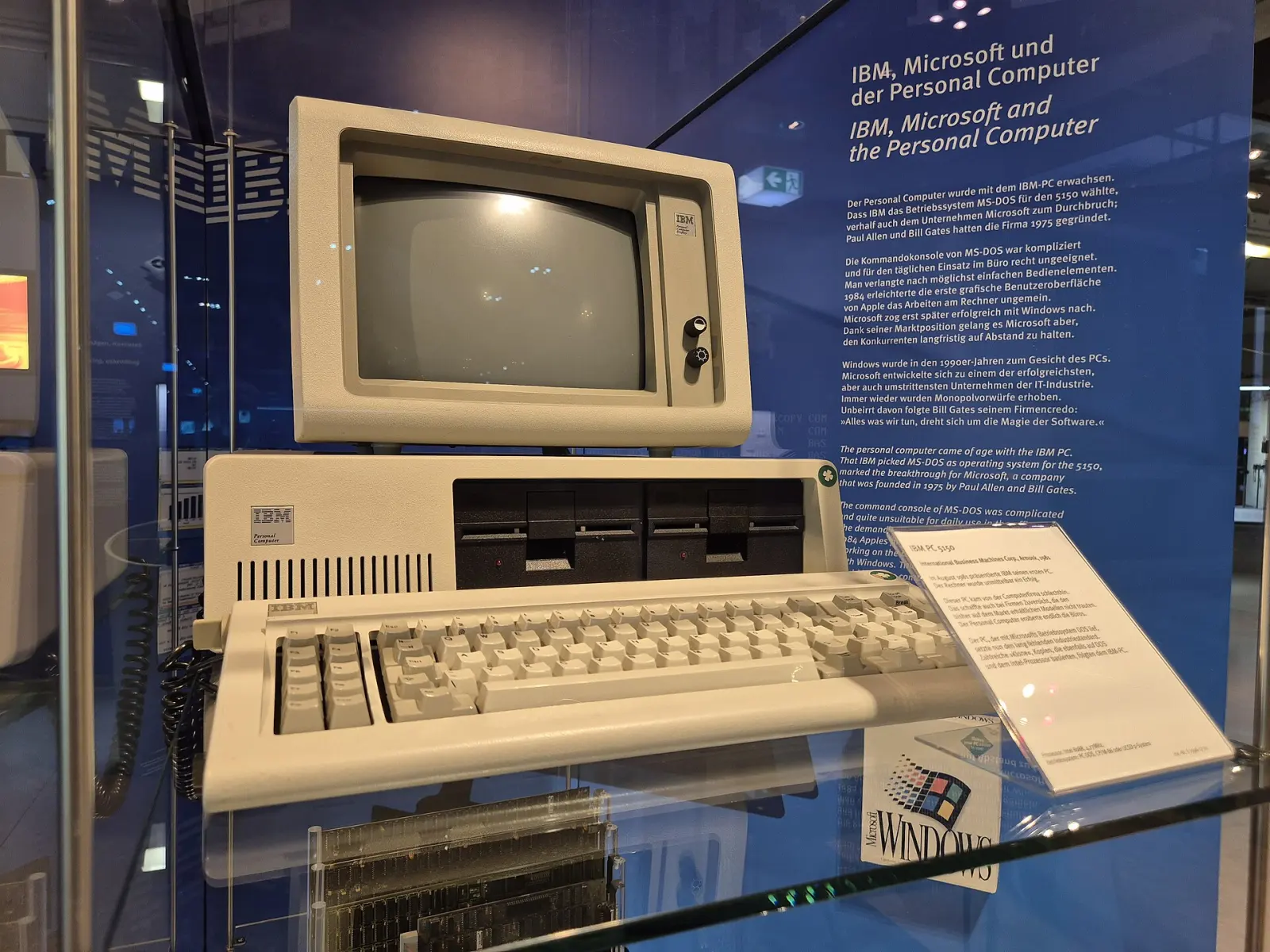
The IBM PC did not inaugurate the personal computer: the Apple II, Commodore PET and TRS-80 were already on the market in 1977. Its significance was different. IBM’s name lent business credibility to a category still associated with hobbyists, while a design built around components and software from other suppliers helped the machine become a reference point for compatibility.
A project designed to move quickly
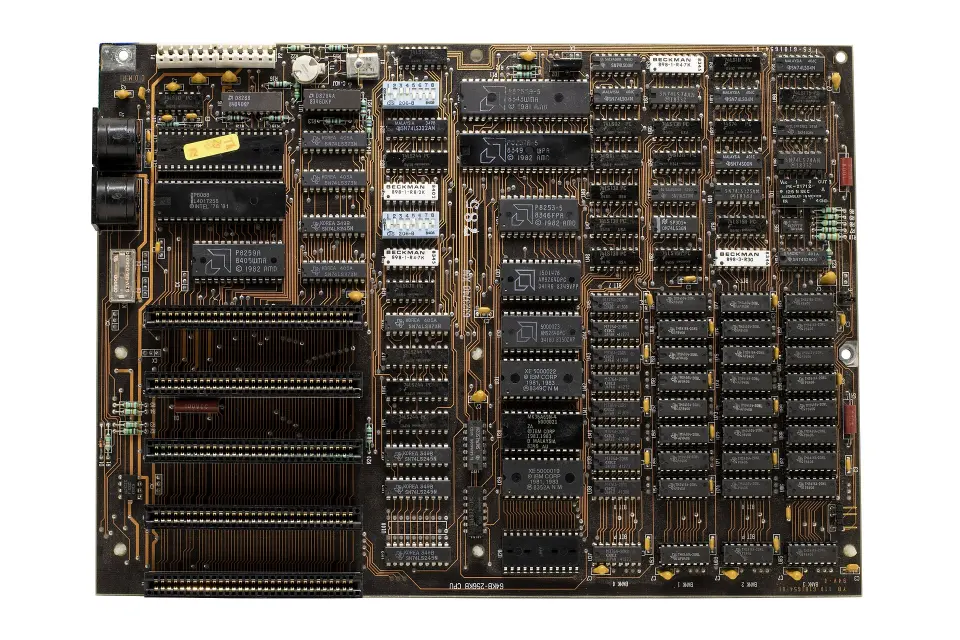
IBM introduced the Personal Computer on 12 August 1981. The project was developed in Boca Raton, Florida, outside the company’s usual procedures. In a fast-moving market, the team chose a pragmatic approach: assemble available components rather than manufacture every part from scratch. The computer used an Intel 8088 microprocessor, and Microsoft supplied the operating system.
That division of responsibilities had lasting consequences. IBM kept the product’s name and design, while Microsoft retained the rights to DOS. At the time, this arrangement made it possible to bring the machine to market without developing every element in-house. In the longer term, it meant the operating system could also spread to other manufacturers’ computers.
The machine offered connections and expansion options that let buyers add peripherals and choose programs from different suppliers. That flexibility mattered to people adapting the computer to specific tasks and to businesses seeking to handle some work locally rather than rely exclusively on a central computing facility. Accounts of the early years mention sales through retailers such as ComputerLand and a range of commercial and consumer software; home use, however, did not follow one universal pattern.
A trusted name and the growth of compatibility
IBM’s entry helped change how personal computers were perceived. For many organizations, the backing of a company known for business systems made small computers look like a serious option rather than a technological hobby. That credibility helped create room for personal computers in the workplace.
At the same time, software for the PC and DOS continued to grow. The more applications became available, the more useful compatibility was to buyers; and the larger the user base became, the more attractive the platform was to software developers. The standard therefore took shape not through IBM’s machine alone, but through decisions made by programmers, component suppliers and manufacturers adopting its technical reference.
The openness that encouraged this expansion also limited IBM’s control. Other manufacturers could sell compatible machines, often at lower prices, while independent suppliers provided components and peripherals. IBM continued to make personal computers, but the market no longer depended on one company. Later hardware decisions intended to restore its influence did not undo that change.
From the office desk to the home
The IBM PC’s historical significance lies not in having invented the personal computer, but in helping normalize a particular way of using one: a general-purpose machine on a desk, expandable with peripherals and able to run software from different vendors. At work, it could provide a local alternative for certain tasks; at home, it could serve practical needs, programming or entertainment, depending on available software and individual users’ interests.
The story also shows that a platform is built from more than a processor or a design. Connections, supporting suppliers and software-licensing decisions matter too. IBM helped legitimize the PC and establish a technical reference, but its architecture and software-rights decisions allowed that reference to spread beyond its creator’s control. The history of the IBM PC is, in large part, a story of the tension between openness and control.
Documentary gallery
- Decade
- 1980s
- Region
- North America
- Level
- Enthusiast
- Entities
- Intel, IBM PC, Apple II
Sources and references
- Cómo el IBM PC ganó y luego perdió el mercado de las ...translate.google.com · 2026-10-25
- 40 Empresas en el mercado de computadoras refinadas y ...www.sphericalinsights.com · 2026-10-25
- Una nueva era de la PC - News Center Latinoaméricanews.microsoft.com · 2026-10-25
- Sonyes.wikipedia.org · 2026-10-25
- Macintoshes.wikipedia.org · 2026-10-25
- Acer Inc.es.wikipedia.org · 2026-10-25